

In This Article
Imagine setting out for a full day at the park, visiting friends across town, or finally taking that shopping trip you’ve been planning—without constantly watching your battery indicator. That’s the freedom a long range electric wheelchair delivers. For many wheelchair users, limited battery life has been the invisible fence keeping them close to home, always calculating distances and worrying about being stranded.
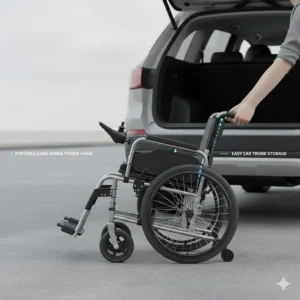
The mobility device landscape transformed dramatically over the past few years. While traditional power chairs offered maybe 8-12 miles on a charge, today’s extended battery wheelchair models are shattering those limitations with ranges reaching 20, 25, even 35 miles per charge. This isn’t just incremental improvement—it’s a complete paradigm shift for anyone who relies on powered mobility.
Research from the U.S. Access Board confirms that enhanced mobility directly correlates with improved quality of life, social participation, and psychological wellbeing for wheelchair users. When you’re no longer tethered to charging stations, independence takes on a whole new meaning. Modern lithium ion battery technology has made these extended ranges possible while actually reducing overall wheelchair weight—a win-win that seemed impossible just a few years ago.
Whether you’re a senior seeking independence, someone with a mobility limitation planning their return to work, or a caregiver researching options for a loved one, understanding high mileage power chair technology helps you make informed decisions. Let’s explore what makes these extended-range champions tick and which models deliver real-world performance.
Quick Comparison Table: Top Long Range Electric Wheelchairs
| Model | Range | Battery Type | Weight | Price | Best For |
|---|---|---|---|---|---|
| Aotedor 2026 Upgraded | 35 miles | Dual 24V 20Ah + 10Ah lithium ion | 48.5 lbs | $1,299 | Maximum range + air travel |
| Aotedor 30-Mile Range | 30 miles | Dual 12Ah lithium | 36 lbs | $1,199 | Extended daily use |
| Porto Mobility Ranger Quattro XL | 30 miles | Dual lithium (Smart Power Tech) | 55 lbs | $2,499 | Heavy-duty performance |
| VERPAL 25-Mile | 25 miles | 20Ah 600Wh lithium | 35 lbs | $949 | Budget-conscious buyers |
| Klano KL80 | 25 miles | 20Ah lithium ion | 64 lbs | $1,399 | Off-board charging convenience |
| COOLHUT 20+ Mile | 20+ miles | Lead-acid dual battery | 62 lbs | $699 | Maximum weight capacity |
| Hassky 2026 Upgrade | 15 miles | 13Ah lithium | 58 lbs | $799 | All-terrain reliability |
💬 Just one click – help others make better buying decisions too! 😊
✨ Don’t Miss These Exclusive Deals!
🔍 Ready to reclaim your freedom with extended mobility? Click on any highlighted wheelchair model above to check current pricing, read verified customer reviews, and discover today’s special offers. These innovative power chairs will transform your daily independence!
Top 7 Long Range Electric Wheelchairs: Expert Analysis
1. Aotedor 2026 Upgraded Electric Wheelchair – The Range Champion
If maximum distance is your priority, the Aotedor 2026 Upgraded model delivers an industry-leading 35-mile range per charge thanks to its innovative dual battery system. The primary 24V/20Ah lithium battery handles extended daily use, while a secondary 24V/10Ah battery (under 300Wh) ensures airline compliance for travel.
Key Specifications:
- Dual brushless 500W motors for smooth terrain handling
- 330 lbs weight capacity with aerospace-grade aluminum frame
- Weighs just 48.5 lbs without batteries
- 5-speed settings (S1-S5) with LED lights and horn
- One-step folding mechanism
Customers consistently praise the exceptional range, with one verified buyer noting they completed a full day at Disney parks with battery to spare. The electromagnetic brake system automatically engages when releasing the joystick, providing confidence on slopes up to 12 degrees.
Pros:
✅ Industry-leading 35-mile range
✅ Dual battery system (daily use + air travel)
✅ Lightweight yet heavy-duty construction
Cons:
❌ Premium price point
❌ Dual battery management requires planning
Target Users: Active individuals requiring maximum range, frequent travelers, those covering diverse terrain daily
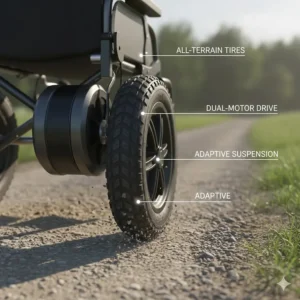
2. Aotedor 30-Mile Long Travel Range – Best Overall Value
The Aotedor 30-Mile model strikes an excellent balance between extended range and portability. With dual 12Ah lithium batteries delivering 30 miles per charge, this chair weighs only 36 lbs, making it remarkably easy to transport and store.
Key Specifications:
- Dual 12Ah high-efficiency lithium batteries
- 330 lbs capacity with aviation alloy construction
- Electromagnetic braking system with anti-tip wheels
- 360-degree joystick (left or right mounting)
- Puncture-free solid tires
Real-world testing shows this model maintains performance across varied surfaces—grass, gravel, and pavement—without noticeable battery drain differences. The upgrade to high-efficiency motors from leading brands ensures power isn’t wasted, maximizing that impressive range.
Pros:
✅ Excellent 30-mile range
✅ Ultra-lightweight at 36 lbs
✅ Superior stability on slopes
Cons:
❌ Smaller seat width than heavy-duty models
❌ Limited color options
Target Users: Daily commuters, park enthusiasts, users prioritizing easy vehicle transport
3. Porto Mobility Ranger Quattro XL – Premium Performance Choice
For those who refuse to compromise on features or durability, the Porto Mobility Ranger Quattro XL represents the high-end segment. Its dual lithium batteries with Smart Power Technology draw from both batteries simultaneously, optimizing power distribution and achieving genuine 30-mile ranges even with heavier users.
Key Specifications:
- Smart Power Technology dual battery system
- 21.5-inch seat width (world’s widest folding model)
- Removable seat cushion and backrest (washable up to 95°C)
- Sensi-Touch joystick requiring just one-finger control
- Enhanced suspension for all-terrain navigation
Customer testimonials frequently mention the exceptional comfort during all-day use and the chair’s ability to handle Disney parks, state fairs, and extended shopping trips on a single charge. One buyer reported: “5 miles in at this point and only lost 2 bars. This ole girl hauled me up hill and down hill one after the other and never balked.”
Pros:
✅ Premium build quality
✅ Widest folding seat available
✅ Exceptional comfort for extended use
Cons:
❌ Higher price point
❌ Heavier than ultra-light models
Target Users: Users requiring maximum comfort, bariatric needs, full-day outdoor adventures
4. VERPAL 25-Mile Electric Wheelchair – Budget-Friendly Champion
The VERPAL 25-Mile model proves you don’t need to spend over $2,000 for serious range. With a high-capacity 20Ah 600Wh lithium battery, this chair delivers 25 miles per charge while maintaining an affordable price point that makes extended-range mobility accessible to more users.
Key Specifications:
- 20Ah 600Wh lithium ion battery
- 360W dual motor system
- 270 lbs weight capacity
- 360-degree precision joystick
- Aerospace-grade alloy frame
Despite its budget-friendly positioning, this wheelchair doesn’t skimp on safety features. The electromagnetic brake, seat belts, and puncture-resistant tires provide comprehensive protection. Users appreciate the responsive controls and smooth operation, particularly in tight indoor spaces.
Pros:
✅ Excellent value for 25-mile range
✅ Responsive precision controls
✅ Strong safety feature set
Cons:
❌ Lower weight capacity than heavy-duty models
❌ Basic cushioning
Target Users: Budget-conscious buyers, first-time power chair users, indoor/outdoor combination use
5. Klano KL80 Electric Wheelchair – Convenient Charging Design
What sets the Klano KL80 apart is its off-vehicle charging capability—you can charge the battery without removing the entire seat assembly. This seemingly small feature makes a massive difference in daily convenience, especially for users with limited upper body strength.
Key Specifications:
- 20Ah high-performance lithium ion battery
- Dual 300W motors (600W total)
- 25-mile extended range
- Off-vehicle charging cable included
- Manual/electric mode switching
The robust 600W motor system conquers slopes that leave lesser chairs struggling. Users report confident navigation on 12-degree inclines, and the posi-traction capabilities ensure stability across grass, gravel, and uneven terrain. The electromagnetic brake provides instantaneous stopping power.
Pros:
✅ Convenient off-vehicle charging
✅ Powerful 600W motor system
✅ Versatile manual/electric operation
Cons:
❌ Heavier at 64 lbs
❌ Less portable than ultra-light models
Target Users: Users prioritizing charging convenience, those needing powerful motors, manual override preference
6. COOLHUT 20+ Mile Electric Wheelchair – Maximum Weight Capacity
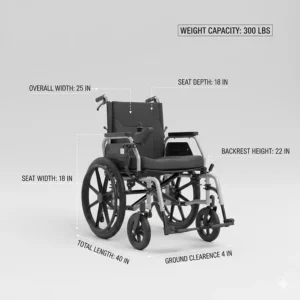
The COOLHUT model targets users requiring the highest weight capacity available. Supporting up to 350 lbs while delivering 20+ mile ranges, this chair uses lead-acid batteries that, while heavier, provide exceptional durability and require less frequent replacement than some lithium alternatives.
Key Specifications:
- High-quality lead-acid battery system
- Dual 250W brushless motors
- 350 lbs maximum capacity
- 360-degree intelligent joystick
- 17.3-inch roomy seat
The honeycomb wheels and solid, non-marking tires handle virtually any surface—grass, speed bumps, gravel, bricks, mud, and even snow. Smart brake safety automatically activates power-off protection on any terrain, preventing tipping on inclines or declines. Reflective backrest strips enhance nighttime visibility.
Pros:
✅ Highest weight capacity (350 lbs)
✅ Durable lead-acid battery technology
✅ Excellent all-terrain capability
Cons:
❌ Heavier overall weight
❌ Lead-acid batteries require more maintenance
Target Users: Bariatric users, those prioritizing maximum weight capacity, all-weather outdoor use
7. Hassky 2026 Upgrade Electric Wheelchair – All-Terrain Specialist
The Hassky 2026 Upgrade excels where pavement ends. With shock-absorbing springs, anti-tipping wheels, and emergency braking specifically engineered for challenging terrain, this 15-mile range wheelchair conquers steep 12-degree inclines and wet slopes with remarkable confidence.
Key Specifications:
- 13Ah lithium battery (15-mile range)
- 500W dual motor system
- 350 lbs capacity
- Advanced suspension system
- All-terrain safety features
While offering a more modest 15-mile range compared to our top picks, the Hassky makes up for it with superior terrain handling. Users consistently report feeling secure on slopes where other chairs feel unstable. The emergency braking system provides protection even if you release controls mid-incline.
Pros:
✅ Excellent terrain handling
✅ Superior slope performance
✅ Comprehensive safety features
Cons:
❌ Lower 15-mile range
❌ Heavier at 58 lbs
Target Users: Rural users, those navigating hilly terrain, safety-conscious buyers, outdoor enthusiasts
Understanding Lithium Ion Battery Technology in Wheelchairs
The shift from traditional lead-acid to lithium ion battery systems represents the most significant advancement in wheelchair technology since the introduction of joystick controls. But what makes lithium batteries so revolutionary for mobility devices?
The Science Behind Extended Range
Traditional lead-acid batteries deliver approximately 30-35 watt-hours per kilogram of weight. Modern lithium ion batteries? They pack 150-200 watt-hours per kilogram—nearly five times the energy density. This means you can carry the same amount of power in one-fifth the weight, or carry five times more power for the same weight penalty.
For wheelchair users, this translates directly into extended ranges without turning the chair into an immovable beast. The IATA guidance on battery-powered mobility aids acknowledges lithium batteries’ superior performance while establishing safety standards for air travel, typically capping individual batteries at 300 watt-hours for airline approval.
Cycle Life and Long-Term Economics
Here’s where the math gets interesting. Lead-acid batteries typically survive 500-800 charge cycles before capacity degrades significantly. If you charge daily, that’s 1-2 years maximum lifespan. Lithium ion batteries? They deliver 1,000-2,000 full charge cycles—potentially 4-10 years of service.
Yes, lithium batteries cost more upfront. A quality lithium battery might run $400-600 compared to $150-200 for lead-acid. But over a decade, you’ll replace 6-8 lead-acid batteries versus one lithium battery. The lithium option actually costs less while providing better performance throughout its life.
Weight Reduction Benefits
Every pound matters when you’re maneuvering a wheelchair or lifting it into a vehicle. Lithium batteries can weigh 50-70% less than equivalent lead-acid batteries. On a dual battery system, that could mean saving 20-30 pounds of battery weight alone.
This weight reduction cascades into other benefits: easier vehicle loading, reduced strain on motors (extending their life), improved handling, and even increased range since motors work less to move lighter loads.
Maintenance Freedom
Lead-acid batteries demand regular attention—checking water levels, ensuring proper ventilation, preventing sulfation through consistent charging. Miss these maintenance tasks and battery life plummets.
Lithium batteries? Charge them when convenient and forget about them. No water checks, no sulfation worries, no special ventilation requirements. For users with limited hand dexterity or mobility, this maintenance-free operation can be the difference between independence and reliance on others.
Dual Battery Systems: How They Maximize Your Range
The concept seems simple: two batteries equal twice the range. But modern dual battery system implementations offer surprising sophistication beyond simple doubling.
Parallel vs. Sequential Discharge
Basic dual battery setups drain batteries sequentially—use battery one completely, then switch to battery two. More advanced systems like the Smart Power Technology in the Porto Mobility Ranger Quattro XL draw from both batteries simultaneously in parallel configuration.
Parallel discharge offers several advantages:
- Balanced load sharing extends both batteries’ lifespans
- Lower current draw from each battery reduces heat generation
- System continues functioning even if one battery develops issues
- More consistent power delivery throughout the charge cycle
Airline-Compliant Split Configurations
The Aotedor 2026 Upgraded model demonstrates clever engineering with its dual battery approach. The primary 24V/20Ah battery provides maximum range for daily use, while the secondary 24V/10Ah battery stays under 300 watt-hours for airline compliance.
This split configuration means travelers can remove the large battery for local use while keeping the smaller battery installed for air travel—getting through TSA checkpoints without hassle while maintaining mobility at the destination.
Smart Battery Management Systems
Quality dual battery setups incorporate battery management systems (BMS) that:
- Monitor individual cell voltages to prevent overcharge/overdischarge
- Balance charging across battery packs for optimal longevity
- Provide accurate range estimates based on actual load conditions
- Protect against short circuits and thermal runaway
These management systems are invisible to users but critical for safety and performance. According to research on lithium battery safety, proper BMS implementation reduces fire risk while maximizing battery lifespan.
How to Choose the Right Long Range Electric Wheelchair
Selecting an extended battery wheelchair involves balancing multiple factors. Here’s a systematic approach to finding your ideal match:
1. Calculate Your Actual Range Requirements
Don’t just guess—track your typical daily travel over a week. Include trips to mailboxes, around stores, to friends’ homes, and outdoor activities. Add 30-40% buffer to your maximum single-day distance. That’s your minimum range requirement.
Remember that manufacturer ranges assume ideal conditions: flat terrain, moderate temperature, average weight loads, proper tire inflation. Real-world usage often delivers 70-80% of rated range, especially in cold weather or hilly areas.
2. Evaluate Weight Capacity vs. Total Weight
Higher capacity wheelchairs handle heavier users but typically weigh more themselves. Calculate the total weight you’ll transport (chair + user + any carried items). Then consider who will be lifting the chair for vehicle transport. A 65-lb chair might be manageable for a strong adult but impossible for an elderly spouse.
3. Assess Terrain Compatibility
Indoor-focused users need tight turning radiuses and smooth operation across thresholds. Outdoor adventurers require suspension systems, larger wheels, and powerful motors. All-terrain models often sacrifice some indoor maneuverability for outdoor capability—determine which environment dominates your usage.
4. Match Battery Technology to Usage Patterns
Daily users benefit most from lithium batteries’ rapid charging and maintenance-free operation. Occasional users who might let chairs sit for weeks should consider lead-acid batteries’ more forgiving deep-discharge characteristics. Frequent travelers require airline-approved lithium battery configurations under 300Wh.
5. Consider Portability Requirements
Will this chair travel regularly in vehicles? If yes, weight and folding mechanism become critical. One-step folding systems and ultra-light construction justify premium pricing for users who transport daily. Those keeping chairs primarily at home can prioritize range over portability.
6. Budget for Total Cost of Ownership
Initial purchase price tells only part of the story. Factor in:
- Battery replacement costs and frequency
- Expected maintenance (motors, tires, controllers)
- Warranty coverage and duration
- Accessory costs (cushions, storage bags, weatherproofing)
A $1,500 chair with lithium batteries might cost less over five years than a $900 chair with lead-acid batteries requiring multiple replacements.
7. Test Drive Before Committing
If possible, test multiple models in relevant environments. Pay attention to:
- Joystick responsiveness and precision
- Seat comfort during extended sitting
- Noise levels (motors, brakes, wheel noise)
- Ease of folding/unfolding mechanism
- Visibility of control panel in various lighting
Personal comfort and confidence matter enormously. The highest-rated chair means nothing if you don’t feel secure operating it.
Maximizing Your Wheelchair’s Battery Life and Range
Getting the most from your 20 mile range per charge or 30-mile capacity requires smart usage and maintenance habits:
Charging Best Practices
Charge early and often: Modern lithium batteries prefer partial charges over deep discharges. Charge whenever convenient rather than waiting for complete depletion. Keeping batteries between 20-80% charge extends their lifespan significantly.
Avoid extreme temperatures: Charge batteries in moderate temperature environments (50-85°F). Charging frozen batteries can cause permanent damage, while charging in excessive heat accelerates degradation.
Use manufacturer-specified chargers: Aftermarket chargers might seem cost-effective but often lack proper voltage regulation and safety cutoffs. Incompatible chargers can dramatically reduce battery life or create safety hazards.
Range-Extending Techniques
Optimize tire pressure: Under-inflated tires increase rolling resistance, forcing motors to work harder and drain batteries faster. Check tire pressure monthly and maintain manufacturer recommendations.
Minimize weight carried: Every extra pound reduces range. Clean out storage pouches regularly and carry only necessary items for each trip.
Plan routes strategically: GPS apps can help identify flat routes versus hilly alternatives. When range is tight, choose flat paths even if slightly longer—you’ll likely arrive with more charge than battling hills.
Moderate your speed: Maximum speed drains batteries fastest. Cruising at 70-80% of top speed often extends range by 15-20% with minimal time penalty.
Seasonal Considerations
Cold weather significantly impacts battery performance. Lithium batteries can lose 20-30% capacity in freezing temperatures. Store chairs in climate-controlled spaces when possible, and consider insulating battery compartments for winter use.
Conversely, extreme heat accelerates battery aging. Avoid leaving chairs in direct sunlight or hot vehicles. If storing long-term, charge to approximately 50% rather than full charge for optimal longevity.
Safety Features Every High Mileage Power Chair Needs
Extended range becomes meaningless if safety issues limit where you dare travel. Essential safety features include:
Electromagnetic Braking Systems
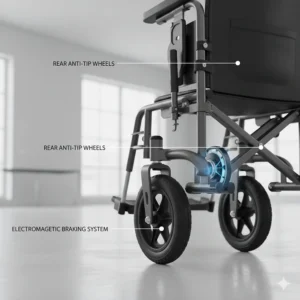
Quality power chairs employ electromagnetic brakes that engage automatically when you release the joystick. This prevents rolling on slopes and ensures immediate stops in emergencies. Test this feature on mild inclines before relying on it for steeper terrain.
Anti-Tip Wheels or Mechanisms
Rear anti-tip wheels prevent backwards tipping on steep inclines. Adjustable designs let you optimize for different terrains—higher settings for rough ground, lower for obstacle navigation. Never disable anti-tip features unless absolutely necessary.
Slope Performance Ratings
Manufacturers specify maximum safe slope angles (typically 10-12 degrees). These ratings assume ideal conditions and proper weight distribution. Add a margin of safety—if rated for 12 degrees, limit yourself to 10-degree slopes in real-world use.
Battery Capacity Indicators
Accurate battery monitoring prevents unpleasant surprises. Better systems show remaining percentage rather than generic bars. Learn your chair’s indicator behavior—some remain optimistic until 20% remaining, then drop rapidly.
Lighting and Visibility
LED headlights, taillights, and reflective elements matter for evening use. Many accidents occur because others don’t see wheelchairs in low light. Consider adding supplemental visibility enhancements if traveling near traffic.
Common Myths About Extended Battery Wheelchairs
Myth: Longer range always means heavier chairs
Reality: Modern lithium technology delivers 25-35 mile ranges in chairs weighing under 40 lbs. Battery chemistry matters more than capacity for weight.
Myth: You must fully discharge batteries before recharging
Reality: This “battery memory” effect applied to old nickel-cadmium batteries. Lithium batteries prefer partial discharge cycles and suffer when fully depleted.
Myth: Cheaper chairs with high range specifications offer equal value
Reality: Rated range often assumes unrealistic conditions. Quality manufacturers provide real-world range estimates; budget brands frequently inflate numbers.
Myth: All lithium batteries are airline-approved
Reality: Airlines restrict individual batteries to 300 watt-hours. Verify your specific battery configuration meets requirements before attempting air travel.
FAQ
❓ How long does it take to fully charge a long range electric wheelchair battery?
❓ Can I upgrade my existing wheelchair with a higher capacity battery?
❓ What's the real-world difference between 20-mile and 30-mile rated ranges?
❓ Are dual battery systems more reliable than single large batteries?
❓ How do I know when it's time to replace my wheelchair batteries?
Conclusion: Investing in Freedom Through Extended Range
The decision to invest in a long range electric wheelchair transcends simple mobility—it’s about reclaiming independence, expanding life’s possibilities, and refusing to let battery limitations define your boundaries. Whether you’re choosing the 35-mile champion Aotedor 2026 Upgraded model, the value-packed VERPAL 25-Mile, or the all-terrain Hassky specialist, you’re investing in freedom measured in miles, not minutes.
Modern lithium ion battery technology has demolished the range anxiety that plagued earlier power chair generations. Combined with dual battery systems, smart power management, and aerospace-grade construction, today’s longest battery life wheelchair options deliver reliability our parents’ generation never imagined possible.
Remember that the “best” chair isn’t determined by maximum range alone. Consider your typical usage patterns, terrain requirements, portability needs, and budget constraints. A perfectly matched 20-mile range wheelchair that fits your lifestyle beats an uncomfortable 35-mile beast that sits unused.
The wheelchair market continues evolving rapidly. Next year will likely bring even longer ranges, lighter weights, and smarter battery management. But today’s options already provide life-changing capability for users willing to invest in quality extended-range platforms.
Take time to research thoroughly, test drive when possible, and choose based on comprehensive factors rather than single specifications. Your wheelchair isn’t just a mobility aid—it’s your ticket to the world beyond your doorstep. Choose wisely, maintain properly, and enjoy the freedom that 20, 25, or 35 miles of range can deliver.
Recommended for You
- 7 Best Foldable Power Wheelchairs 2026
- 7 Best Compact Electric Wheelchairs for Tight Spaces 2026
- 7 Best Electric Wheelchair for Seniors 2026
Disclaimer: This article contains affiliate links. If you purchase products through these links, we may earn a small commission at no additional cost to you.
✨ Found this helpful? Share it with your friends! 💬🤗
