
In This Article
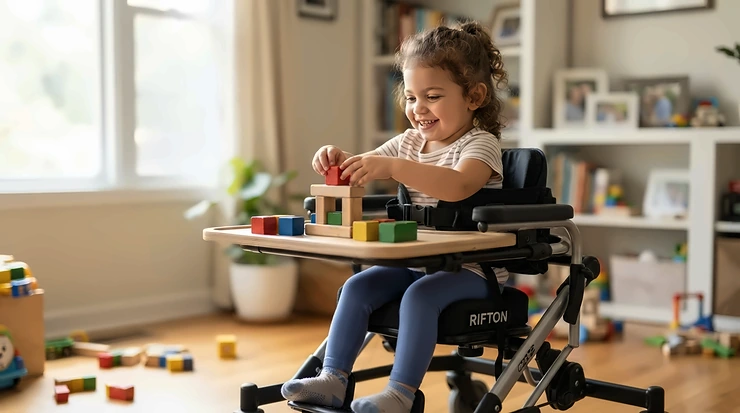
A lightweight toddler wheelchair for cerebral palsy is a small, easy-to-lift wheelchair built for children roughly under age four, with seat dimensions, positioning support, and weight that suit a young child’s body and a caregiver’s daily lifting. It typically adds head, trunk, and pelvic support, and may include tilt or recline.

Shopping for one is a strange kind of homework. You’re doing it between therapy appointments, insurance calls, and a small human with strong opinions about everything. So let’s make this part easier. This guide compares seven real chairs, explains what their specs mean in practice, and flags where the evidence runs thin. One honesty note up front: I haven’t seated a child in any of these, and I won’t pretend otherwise. What follows is analysis built on manufacturer specifications, supplier listings, and the review data that could actually be verified, which for specialty medical equipment is often sparse.
“Lightweight” matters because you’ll lift this thing into trunks, up porch steps, and through a hundred doorways. But weight is only one-third of the story. Fit and support matter more, because a featherweight chair that lets your child slump is a bad bargain. The CDC’s overview of cerebral palsy treatment notes there is no cure, yet early identification and treatment can improve lives. It also explains that early-intervention services for children under three can begin before a formal diagnosis. You don’t have to wait for paperwork to start asking for help.
Lightweight Toddler Wheelchair for Cerebral Palsy: Quick Comparison
Here’s the whole field at a glance. Seat widths and weights come from manufacturer or supplier listings and vary by configuration, so confirm them before you order.
| Product | Support Type | Seat Widths | Chair Weight | Best For |
|---|---|---|---|---|
| Feather Kids Wheelchair | Fixed back, seat belt, no tilt | 12″, 14″ | About 17 lb (12 lb without wheels) | Travel or second chair for kids needing light support |
| Convaid Rodeo | Tilt 5°–45°, optional recline | 10″–16″ | From 29 lb (10″ size) | Significant head and trunk needs, small seat depth |
| Drive Kanga TS | Tilt up to 45°, harness and headrest kit | 10″–14″ | About 40 lb | Tilt-in-space with included seating components |
| Zippie TS | Tilt 45°, folding or rigid frame | 10″–18″ | About 29 lb | Lightest tilt frame, growth, custom seating |
| Drive Pediatric Viper Plus | Hydraulic recline 90°–180° | 12″, 14″ | Under 43 lb | Kids who need to lie back for rest or care |
| Ziggo Pediatric Wheelchair | Fixed back, add-on headrest | 12″–18″ | About 28 lb (12″ size, no footrests) | Budget-conscious families |
| Drive Wallaby | Fixed back, pelvic belt | 12″, 14″ | About 33 lb (no footrests) | Everyday transport for kids with steadier posture |
Read the table as a ladder of support. The Feather Kids Wheelchair, Drive Wallaby, and Ziggo Pediatric Wheelchair sit on the lighter rung, with fixed backs and positioning parts you add yourself. The Convaid Rodeo, Drive Kanga TS, and Zippie TS climb to tilt-in-space, while the Drive Pediatric Viper Plus takes the recline route. That higher rung costs more, and the extra money buys built-in positioning and growth.
💬 Just one click — help others make better buying decisions too!😊
Top 7 Lightweight Toddler Wheelchair for Cerebral Palsy Picks: Expert Analysis
I chose these seven to span budget, mid-range, and premium, and fixed-back, tilt, and recline designs. Each entry explains what the numbers mean for a small child, and the review notes only reflect what could be verified.
1. Feather Kids Wheelchair — lightest frame in this lineup
That reputation rests on one number. The supplier lists the frame at about 12 pounds without rear wheels and roughly 17 with them, while most pediatric folders in this roundup land between 28 and 40 pounds. It folds to about 12 by 25 by 27 inches, comes in 12-inch and 14-inch widths, and carries up to 200 pounds. The 20-inch quick-release wheels pop off for the trunk, and a seat belt is included.
Here’s what the spec sheet won’t tell you: this is a transport-style chair, not a positioning system. The listing mentions no tilt, no built-in headrest, and no lateral supports. Based on the spec comparison, it suits a child who needs a secure seat but little head or trunk correction. It also works for a family that wants an easy-to-carry second chair. A toddler with low tone would likely need therapist-approved inserts, and the 13-inch seat depth looks long for a very small two-year-old.
Review sentiment: the retailer listing I found shows only five reviews, all five stars. That sample is too small to learn from, so treat it as unverified.
Pros:
- ✅ Frame weighs about 12 pounds without wheels
- ✅ Compact fold fits small trunks and closets
- ✅ Seat belt included from the start
Cons:
- ❌ No tilt or built-in head support
- ❌ 13-inch seat depth may run long for toddlers
Price: seller pricing varied and I couldn’t confirm a stable range, so check the current listing. The value is strong if lifting weight is your priority and weak if positioning is.

2. Convaid Rodeo — tilt-in-space with toddler-sized seat depth
This chair starts small. The 10-inch size lists a seat depth of 7 to 12 inches, a back height of 21 inches, and a chair weight of 29 pounds, and those numbers actually look like a toddler. Tilt runs from 5 to 45 degrees, an optional recline opens the seat-to-back angle between 90 and 110 degrees, and seat depth extends about 5 inches, which the maker pitches as roughly five years of growth.
In practice, tilt rotates the whole seat while keeping the child’s hip-to-back angle fixed, so gravity can help hold the head and trunk upright without sliding. Zippered pockets in the seat bottom accept foam inserts, which is where a therapist can add custom support. Two frame options, with or without seating, let a clinic pair it with aftermarket systems. The trade-off is that it’s made to order, so expect lead time and a supplier-led process.
Review sentiment: I couldn’t verify an independent review pool, since most pages are manufacturer or distributor material. Ask your clinic what they’ve seen in real use.
Pros:
- ✅ Seat depth range starts toddler-small
- ✅ Tilt up to 45° with optional recline
- ✅ About five inches of depth growth
Cons:
- ❌ Made to order, so slower to obtain
- ❌ No verified independent review pool
Price: quote-based, with no public sticker price. Comparable tilt chairs I found were listed from roughly $1,300 upward. It’s excellent value for significant head and trunk needs, and overkill for children who don’t have them.
3. Drive Kanga TS — one-handed 45° tilt that grows with your child
The frame comes in 10, 12, and 14-inch widths and adjusts in width without extra parts, so one chair can stretch across sizes. Listings show a 200-pound capacity, about 40 pounds of chair, and transit brackets. A supplier page describes crash testing to ISO 7176-19 for use in vehicles. The economical seating package includes a five-point harness, depth-adjustable abductor, hip guides, lateral supports, and a curved headrest.
That bundle is the draw. Many tilt frames arrive bare, leaving you to source head and trunk support separately, so this one trims the shopping list. The caveats are weight and depth. At roughly 40 pounds it’s the heaviest tilt option here, and Kanga-line listings show seat depths starting around 15 inches, which looks generous for a small toddler. Ask the supplier exactly how depth is reduced for a child your size.
Review sentiment: a trade directory page for the Kanga TS shows no reviews yet, and I couldn’t find a verifiable independent pool.
Pros:
- ✅ One-handed tilt up to 45 degrees
- ✅ Width-adjustable frame stretches across sizes
- ✅ Seating kit includes harness and headrest
Cons:
- ❌ About 40 pounds, heavier than rivals
- ❌ Listed seat depth starts near 15 inches
Price: supplier listings start around $1,300 and climb with configuration. The value is solid if the included seating saves you a second purchase.
4. Zippie TS — the lightest tilt-in-space frame here
Built from aluminum, the Zippie TS offers 45 degrees of tilt at a fixed pivot, a folding or rigid frame, seat widths from 10 to 18 inches, and depths from 13 to 20 inches. It weighs about 29 pounds and carries 165. Growth adjustments reach 2 inches in width and 5 inches in depth.
The folding-versus-rigid choice deserves real thought. A rigid frame has fewer moving parts and is lighter, but it can’t fold, so measure your trunk and your stairs. The folding frame collapses for cars and tight homes. The product material stresses compatibility with outside seating systems, which suggests seating is configured separately, so confirm what’s included. Like the Kanga, its listed 13-inch minimum depth means a very small toddler may need the clinic’s help getting a snug fit.
Review sentiment: I found no verifiable independent reviews. The strongest evidence is the chair’s long presence in clinics, which is anecdotal and worth asking your therapist about.
Pros:
- ✅ About 29 pounds, light for a tilt chair
- ✅ Folding or rigid frame choice
- ✅ Accepts many outside seating systems
Cons:
- ❌ Seating and headrest are separate decisions
- ❌ Quote-based buying through suppliers
Price: quote-based, with no reliable public range. Expect it to land in the same four-figure territory as other tilt frames, and treat it as good value when its low weight and growth range matter most.
5. Drive Pediatric Viper Plus — hydraulic recline from upright to flat
The backrest reclines from 90 to 180 degrees through a hydraulic mechanism, and the offset rear wheels add stability when the child is lying back. It comes in 12-inch and 14-inch widths, with flip-back desk arms and swing-away elevating legrests. The listing says it weighs under 43 pounds and rolls on 20-inch composite mag wheels.
Recline and tilt aren’t the same thing. Recline opens the seat-to-back angle, which helps with rest and with caregiving tasks like diaper changes. Some seating suppliers note that this can increase sliding or shear if a child isn’t well positioned, while tilt avoids that by keeping the angle fixed. Which one suits your toddler is a therapist’s call. Also note that the listings I reviewed don’t spotlight pediatric head support, so confirm what’s available.
Review sentiment: one retailer page features a comment praising the padded support and the recline. That’s a single data point, not a trend.
Pros:
- ✅ Recline from 90 to 180 degrees
- ✅ Offset wheels add stability when reclined
- ✅ Elevating legrests included
Cons:
- ❌ Under 43 pounds is still a real lift
- ❌ Head support details unclear in listings
Price: seller listings ranged from the mid-$400s into the $1,200s, a wide spread, so compare carefully. Value is good if you need genuine recline and weak if you mainly need tilt.
6. Ziggo Pediatric Wheelchair — budget-friendly with pop-off wheels
The 12-inch model weighs about 28 pounds without footrests, with a 12-inch seat width and depth and a 150-pound capacity. It’s a steel folding frame with a pelvic belt, flip-back arms, and quick-release wheels. Accessories sold separately include a headrest, trunk harness, anti-tippers, and elevating legrests. A reclining version also exists, with about 25 inches of back height including the headrest.
For tighter budgets, this is the sensible starting point, with a catch. A loaner-program listing describes the 12-inch chair as suited to children about three to seven. A two-year-old may swim in it unless a therapist adds inserts. The fixed back and bare-bones setup suit kids with steadier posture, and the add-ons turn it into a modestly supportive chair, though each one adds cost.
Review sentiment: I found no verifiable independent review pool for this chair.
Pros:
- ✅ Budget-friendly among pediatric folding chairs
- ✅ Headrest and trunk harness available as add-ons
- ✅ Reclining version exists in the same family
Cons:
- ❌ Marketed for roughly ages three to seven
- ❌ Positioning parts cost extra
Price: supplier listings suggest roughly the $350–$450 range for the base chair. That’s great value if your child fits it and an honest compromise if they need real positioning.
7. Drive Wallaby — transit-ready everyday folder
The Drive Wallaby comes in 12-by-12 and 14-by-14-inch seats, weighs about 33 pounds without footrests (37 with), and carries 150 pounds. A pelvic belt is standard, push handles adjust from 33 to 39 inches, and the footrests swing away. Optional extras include a headrest extension, elevating legrests, anti-tippers, a Poziform chest harness, and ankle positioners.
Two details deserve attention. The back height is only about 14 inches, which gives shoulder-level support at best. And the listing says the headrest extension is mainly for safety during transport, not for postural control. The transit rating also covers users between 50 and 80 pounds, and a typical two-year-old weighs roughly 25 to 30 pounds, so don’t count on that rating for a toddler. This chair suits a child with decent head control who needs reliable everyday mobility.
Review sentiment: I couldn’t verify an independent review pool.
Pros:
- ✅ Pelvic belt comes standard
- ✅ Height-adjustable push handles
- ✅ Optional harness and ankle positioners
Cons:
- ❌ 14-inch back offers little head support
- ❌ 19-inch seat-to-floor may feel tall
Price: supplier listings ran roughly $400–$750. Value is decent for a sturdy everyday folder and weak for a child who needs strong head and trunk support.
Pediatric Positioning: A First-30-Days Setup Guide
Good pediatric positioning is mostly unglamorous, and it works from the bottom up. These steps are general starting points to check against your therapist’s instructions.
- Seat the pelvis first. The pelvic belt should sit low across the hips with the child’s bottom back in the seat. If the pelvis slides, everything above it follows.
- Support the feet. Footplates should hold the feet comfortably, because dangling legs invite slouching and fidgeting.
- Add trunk supports next. Lateral supports, a harness, or chest straps come after the pelvis is stable, never before.
- Position the head last. A headrest should cradle without pushing the chin forward.
- Build sitting time gradually. Ask your therapist for a wearing schedule instead of guessing.
Then build a rhythm. Check skin for redness after each session, tighten hardware monthly, and wash removable upholstery (the Convaid Rodeo lists washable covers). The most common first-month mistakes are over-tightening harnesses, skipping check-ins as your child grows, and treating every slump as a seating failure when it may be fatigue. A short photo or video of your child sitting each week gives the clinic far better information than a memory.

Occupational Therapist Seating Assessment: What to Bring and Ask
An occupational therapist seating assessment is where a shopping list becomes a prescription. Positioning research is surprisingly individual. One review of positioning evidence for children with cerebral palsy found that exact seat angles should be determined child by child. So the person measuring your toddler matters more than any spec sheet.
Come prepared with:
- Short videos of your child sitting, eating, and playing
- Your daily routine, including car, stairs, and home layout
- Questions about what’s included versus sold separately
- Your funding path, whether insurance, early intervention, or out of pocket
A simple decision frame (starting points therapists commonly discuss, not prescriptions):
- If your child holds their head up but tires, a fixed-back chair with added support may be enough.
- If head control fades or the pelvis slides, ask about tilt-in-space.
- If rest and caregiving positions matter most, ask about recline.
- If you need a lighter second chair for travel, ask which basic folder fits your child’s shape.
Ask the therapist to explain every adjustment, because you’ll be making small ones for years.
Real-World Scenarios: Matching Chairs to Families
These three profiles are illustrative composites, not real patients, and each one needs a therapist’s confirmation.
Scenario A: low tone, head drops when tired. A two-year-old lives in a walk-up apartment and rides in a small car. Based on the specs, a tilt frame with a toddler-sized seat depth fits best, and the Convaid Rodeo is the one that starts small. The Zippie TS in its rigid version trims weight for stairs.
Scenario B: steadier posture, family travels often. A toddler sits well for short stretches but tires. A lightweight second chair makes airports and grandparents’ houses easier. The Feather Kids Wheelchair matches that need on paper, with therapist-approved inserts if recommended.
Scenario C: funding delay, interim chair needed. The family is waiting on approvals and wants something workable now. The Ziggo Pediatric Wheelchair with a headrest add-on, or the Drive Wallaby if head control is solid, offers a budget bridge. Ask local equipment loaner programs about short-term options as well.
✨ Ready to Compare Current Options?
🔍 Take your search for a lightweight toddler wheelchair for cerebral palsy to the next level with these carefully selected chairs. Click any highlighted product name to check current pricing and availability. A chair that fits well gives your child more comfortable time doing what toddlers do best, which is exploring everything!
How to Choose a Lightweight Toddler Wheelchair for Cerebral Palsy
- Start with the support need, not the product. Does the head drop, the trunk collapse, or the pelvis slide? Tilt, recline, and fixed backs solve different problems.
- Get measurements from your therapist. Seat width, depth, back height, and seat-to-floor height decide fit more than any brand.
- Weigh the frame against your daily lifting. Stairs and trunks turn a 12-pound difference into a real quality-of-life gap.
- Check built-in growth. The Convaid Rodeo lists about 5 inches of depth growth, the Zippie TS up to 2 inches in width and 5 in depth, and the Drive Kanga TS a width-adjustable frame.
- Plan the car ride. Transit ratings often start at weights above a toddler’s, so ask your therapist how your child should travel.
- Ask what’s included. Headrests, harnesses, and anti-tippers can add real cost.
- Match the buying path. Quote-based chairs move through suppliers, while retail listings let you buy directly.
Common Mistakes When Buying a Lightweight Toddler Wheelchair for Cerebral Palsy
The biggest mistake is shopping by age label. Plenty of pediatric chairs are sized for ages three to seven, and a toddler in one may sit too far forward or lack support, so measure instead of trusting the box.
The second is ignoring seat depth. A chair that’s too deep pushes a small child’s back off the backrest, and the slouch looks like a posture problem when it’s a sizing problem.
Third, confusing tilt with recline. They’re different mechanisms with different trade-offs, and suppliers describe them differently for a reason.
Fourth, treating a transport headrest as positioning. The Drive Wallaby listing itself says its headrest extension is primarily for transport safety.
Fifth, buying “to grow into.” Some growth is designed in, which is a good reason to look at the Convaid Rodeo or Zippie TS. But a chair too big today can hurt positioning today.
Finally, skipping the therapist. A well-meant online order can cost more in the long run than a proper assessment would have.
Toddler Wheelchair With Head Support: What Actually Holds a Head Steady
A toddler wheelchair with head support does three jobs at once, and a headrest is only one of them. The backrest has to reach high enough, the headrest has to cradle without pushing, and the chair’s orientation has to let gravity help instead of hinder.
Here’s how the seven break down:
- The Drive Kanga TS includes a curved headrest in its seating package.
- The Ziggo Pediatric Wheelchair offers a headrest as a separate accessory.
- The Convaid Rodeo accepts aftermarket headrests through its seating-frame option.
- The Drive Wallaby offers a headrest extension aimed mainly at transport safety.
- The Drive Pediatric Viper Plus lists no pediatric headrest details I could confirm.
- The Feather Kids Wheelchair lists no head support at all.
The pattern is clear: if a toddler wheelchair with head support is your priority, the tilt group does more of the work out of the box.
Head and Trunk Support: Why They’re a Package Deal
Head and trunk support work together, and trying to fix one without the other rarely goes well. A child whose trunk folds sideways will see the head tilt right along with it, no matter how good the headrest is. That’s why lateral supports, harnesses, and pelvic belts matter as much as the pillow behind the skull. Treat head and trunk support as one system, and ask your therapist to adjust them together.

Tilt-Back Wheelchair for Toddlers With Low Muscle Tone: Tilt, Recline, or Fixed?
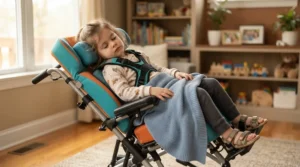
Low muscle tone, or hypotonia, means the trunk or limbs may feel floppy, as pediatric hospital resources describe it. For those children, a tilt-back wheelchair for toddlers with low muscle tone usually means one of two things: tilt-in-space or recline. They sound similar but behave differently.
Tilt rotates the whole seat while keeping the hip angle fixed, so the child stays folded in the same posture while gravity helps hold the head and trunk upright. Recline opens the hip angle so the child can lie back, which helps with rest and care. A supplier of the Drive Kanga TS says tilt-in-space wheelchairs are recommended for children who need help with head and trunk control.
The research is more cautious than the marketing. A systematic review of tilted seating covering 19 studies, mostly before-and-after designs, concluded that posterior tilt can reduce pressure under the pelvis. It also noted that no evidence-based guidelines exist for prescribing these systems, which is why practice varies so widely.
| Type | How It Works | Examples | Watch-Outs | Best For |
|---|---|---|---|---|
| Tilt-in-space | Whole seat rotates, hip angle fixed | Convaid Rodeo, Drive Kanga TS, Zippie TS | Heavier, higher cost | Head and trunk control needs |
| Recline | Backrest opens, hip angle changes | Drive Pediatric Viper Plus | Possible sliding if poorly positioned | Rest and caregiving positions |
| Fixed back | Seat angle stays constant | Feather Kids Wheelchair, Ziggo Pediatric Wheelchair, Drive Wallaby | Limited positioning options | Steadier posture, budget |
The table shows why tilt gets the attention for low tone: it changes orientation without changing posture. Recline earns its place when rest and care matter, but it asks more of the setup. Fixed backs are the least expensive, but they depend on add-ons to compete.
Small Lightweight Wheelchair for a 2-Year-Old: Sizing and Fit Guide
A small lightweight wheelchair for a 2-year-old lives or dies on five measurements:
- Seat width: the 10-inch sizes (Convaid Rodeo, Drive Kanga TS, Zippie TS) fit smallest. The others start at 12 inches.
- Seat depth: the Convaid Rodeo lists 7 to 12 inches at its smallest size, while others start at 12 to 15 inches.
- Back height: 14 inches on the Drive Wallaby is shoulder-level, while tilt frames offer 21 inches or more.
- Seat-to-floor height: the Drive Wallaby lists 19 inches, while the Drive Pediatric Viper Plus lists 16.
- Weight: a typical two-year-old weighs roughly 25 to 30 pounds, so a 40-pound chair outweighs the child.
Based on the numbers alone, the Convaid Rodeo is the only chair here with a seat depth range built for a truly small toddler, though a clinic can often adapt others. Don’t fall for “he’ll grow into it” without a plan. Measure, trial if possible, and ask your therapist to check the fit before you commit.
Long-Term Cost and Value: What These Chairs Really Cost
Sticker price is only the first line of the budget. Add-ons, growth, and how long the chair serves matter more.
| Product | Price Range (as found) | What to Add | Best For |
|---|---|---|---|
| Feather Kids Wheelchair | Check current price | Possible inserts | Travel and light support |
| Convaid Rodeo | Quote-based | Seating inserts | Significant positioning needs |
| Drive Kanga TS | Roughly $1,300 and up | Often little extra | Tilt with included seating |
| Zippie TS | Quote-based | Seating system | Light tilt frame, custom seating |
| Drive Pediatric Viper Plus | Mid-$400s to $1,200s | Head support, if needed | Recline for rest and care |
| Ziggo Pediatric Wheelchair | Roughly $350–$450 | Headrest, harness | Budget starting point |
| Drive Wallaby | Roughly $400–$750 | Headrest, harness | Everyday transport |
Prices reflect supplier listings at the time of research, vary by seller, and change often. Check current prices before deciding.
The lowest sticker prices come with the most add-ons. A base Ziggo Pediatric Wheelchair looks cheap until a headrest and harness arrive, and each can run under a few hundred dollars. By contrast, the Drive Kanga TS looks pricey but bundles seating. Spread cost over use: a chair that serves two or three years of growth costs far less per month than one outgrown in a single season. That’s the real value argument for the growth-built tilt frames.
Safety, Transport, and Funding: What to Check
Start with the vehicle. Some chairs list crash-tested transit brackets, like the Drive Kanga TS, and the Drive Wallaby lists a transit rating for 50 to 80 pounds. Toddlers are often below those ranges, so ask your therapist or a certified child passenger safety technician how your child should ride. Many families transfer to an age-appropriate car seat and fold the chair separately.
Inside the chair, anti-tippers, belts, and harnesses are safety equipment and need to be used correctly. Never leave a child unattended in a tilted or reclined position.
For funding, the CDC encourages calling your state’s early-intervention program, since evaluations are available free or at reduced cost. Hospital resources such as Nationwide Children’s cerebral palsy overview describe equipment as one part of an individualized treatment plan. Insurance rules vary, and most plans want a prescription and supporting documentation, so start the conversation early.
FAQ
❓ How much does a lightweight toddler wheelchair for cerebral palsy cost?
❓ Will insurance pay for a pediatric tilt-in-space wheelchair?
❓ Can I find a used or loaner toddler wheelchair?
❓ How long does a pediatric wheelchair last before my child outgrows it?
❓ Can I order a pediatric wheelchair without a therapist's recommendation?
Conclusion
Finding the right lightweight toddler wheelchair for cerebral palsy is less about the lightest number and more about the best match. The Feather Kids Wheelchair wins on lift weight but offers little positioning. The Drive Wallaby and Ziggo Pediatric Wheelchair are workable everyday folders for steadier posture. The Convaid Rodeo, Drive Kanga TS, and Zippie TS bring real tilt-in-space support, with the Rodeo’s toddler-sized depth range standing out. The Drive Pediatric Viper Plus serves families who need genuine recline.
Whichever direction you lean, let a therapist’s assessment have the last word, use the sizing numbers in this guide to ask sharper questions, and remember that thin review data means your clinic’s experience counts for a lot. You don’t have to solve this in a weekend. Take it one measurement at a time.
✨ Ready to Take the Next Step?
🔍 Compare these chairs with your child’s therapist, then click any highlighted product name to check current pricing and availability. The right seat helps your little one sit, play, and see the world from a better angle! 💛
Recommended for You
- Growth-Adjustable Wheelchair For Kids Ages 5 To 10: 7 Best Picks 2026
- Foldable Electric Wheelchair For Teens: 7 Best Picks For 2026
- Pediatric Wheelchair For School Use: 7 Best Picks (2026)
Disclaimer: This article contains affiliate links. As an Amazon Associate, I earn from qualifying purchases. If you purchase products through these links, we may earn a small commission at no additional cost to you.
✨ Found this helpful? Share it with your friends! 💬🤗
