

In This Article
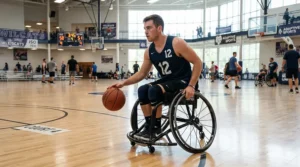
Picture two people showing up to their first wheelchair basketball practice. One rolls in on a heavy steel hospital-style chair. The other arrives in something built for the job. By minute ten, only one of them still has gas in the tank.

That gap is why choosing a lightweight sport wheelchair for beginners matters so much. The wrong chair doesn’t just slow you down. It makes you feel clumsy, tired, and convinced you’re “bad at this” when the equipment is the real culprit.
The good news is that the entry door to adaptive sport is wider than it’s ever been. Organizations like Move United, a member of the U.S. Olympic & Paralympic Committee, report a network of 200+ community-based programs spanning 50+ sports. The harder question is the gear. A budget sport wheelchair for adults new to adaptive sports has to be light enough to push, adjustable enough to grow with you, and honest enough about what it can’t do.
I researched seven real chairs across rigid, folding, and court-specific designs. You’ll get the specs translated into real-world meaning, plus the catches the marketing pages skip. Prices below are ranges only, so check current price before you buy.
Quick Comparison: 7 Beginner-Friendly Sport Chairs at a Glance
| Model | Frame Style | Approx. Weight | Capacity | Best For |
|---|---|---|---|---|
| Top End Pro BB | Rigid, fixed camber | ~21–23 lb | 250 lb | Court sports, aspiring athletes |
| Quickie GP/GPV | Rigid, adjustable | Varies by build | Varies by build | Everyday + sport hybrid |
| Quickie QRi | Rigid, open frame | ~22 lb | 265 lb | Value-minded rigid beginners |
| Ki Mobility Catalyst 5 | Folding, 7000-series aluminum | ~21–23 lb | 300 lb | Active daily use, light rec sport |
| Quickie QXi | Folding, three-arm cross brace | ~28–29 lb | ~265–300 lb | Simple, low-maintenance value |
| Top End Pro-2 All Sport | Aluminum, multi-sport | Varies by build | Varies by build | Clubs, trying several sports |
| Karman LT-980 | Folding aluminum | ~24 lb (no riggings) | 250 lb | Tight budgets, casual recreation |
Read this table as a map, not a verdict. The two Top End chairs and the Quickie GP/GPV are the closest to true sport equipment, while the Karman LT-980 is the lightest-on-the-wallet way to get a genuinely light chair under you. The Ki Mobility Catalyst 5 and Quickie QXi sit in the middle: great daily chairs that can handle recreation but won’t replace a purpose-built court chair.
💬 Just one click — help others make better buying decisions too!😊
Top 7 Lightweight Sport Wheelchair for Beginners: Expert Analysis
1. Top End Pro BB — built for fast court adjustments
The headline trick here is speed of setup. Manufacturer materials claim adjustments that can eat up to four hours on other chairs take about 15 minutes on this one.
The Top End Pro BB uses a fully welded aluminum frame with fixed camber, a fifth-wheel anti-tip, and quick-release axles. Listings put the weight around 21–23 lb with a 250 lb capacity. Fixed camber means the wheels are angled for stability and tight turns, which is exactly what basketball demands. The trade-off is that it’s a court chair first, so it’s less comfortable as an all-day daily driver.
Based on the spec sheet, this suits a beginner who already knows they want team sports and wants a chair they can tweak as their technique improves. I couldn’t find a large, verifiable pool of independent buyer reviews, so treat the “easy to adjust” claim as the manufacturer’s, not a crowd verdict.
Pros:
- ✅ Fast, tool-light adjustments as skills develop
- ✅ Welded aluminum frame with stiff, responsive feel
- ✅ Purpose-built for basketball-style court play
Cons:
- ❌ Less practical as an everyday chair
- ❌ Fixed camber limits flexibility across sports
Pricing is dealer-quoted and varies by configuration, so check current price. Value verdict: strong for committed court beginners, overkill for the curious.
2. Quickie GP/GPV — the rigid classic that does both jobs
This is one of the original ultralight rigid chairs, still around after 25+ years. That longevity is its own kind of review.
The Quickie GP/GPV offers a standard front frame or the tapered GPV for tighter maneuvering, plus up to 12° of wheel camber and optional performance wheels, according to Sunrise Medical’s own description. Translation: you can roll it to work Monday and onto a tennis or basketball court Saturday without owning two chairs. Twelve degrees of camber is gentler than a dedicated court chair’s, which is actually friendlier while you’re learning balance.
Based on the specs, it fits a beginner who wants one chair for real life and real sport. Public coverage is mostly manufacturer and dealer copy, which praises durability and ride comfort. I couldn’t verify independent review volume, so lean on a dealer trial instead.
Pros:
- ✅ Genuine dual-purpose daily and sport chair
- ✅ Camber and front-frame options for fitting
- ✅ Long track record in the category
Cons:
- ❌ Less aggressive court geometry than specialist chairs
- ❌ Rigid frame is bulkier to transport
Expect quote-based pricing, so check current price. Value verdict: arguably the smartest single-chair buy for beginners with a busy daily life.
3. Quickie QRi — the value-priced rigid entry point
The pitch is simple: rigid-frame efficiency without premium-tier complexity.
At roughly 22 lb, the Quickie QRi is an open-frame rigid chair rated to 265 lb, WC-19 transit approved, with 75°, 80°, or 85° front frame angles and about 3 inches of center-of-gravity adjustment. That adjustability matters more than it sounds. Shifting the axle changes how easily the chair tips back, which is the difference between feeling “wobbly” and feeling in control as a new pusher.
Sunrise Medical positions it as its value offering among rigid chairs. As analysis, that makes it a sensible bridge for someone leaving a heavy chair behind who isn’t ready for a custom build. No sport-specific camber is advertised, so think casual recreation, not tournament play. Independent review data was thin when I looked.
Pros:
- ✅ Rigid-frame efficiency at a value position
- ✅ Adjustable center of gravity for balance tuning
- ✅ Transit approved for vehicle travel
Cons:
- ❌ Not engineered for contact court sports
- ❌ Fewer sport-specific options
Pricing is dealer-quoted, so check current price. Value verdict: excellent stepping-stone for light recreation.
4. Ki Mobility Catalyst 5 — easiest folding chair to fine-tune
Folding frames usually mean compromise. This one fights that assumption with a dual-interlocking cross brace meant to cut flex.
The Ki Mobility Catalyst 5 uses 7000-series aluminum, lists around 12.8 lb transport weight and roughly 21–23 lb standard, handles 300 lb (350 lb heavy-duty), and offers 0°, 2°, or 4° camber. A UK retailer specifically calls its universal axle plate great for someone new to active chairs, because center-of-gravity changes are simple. The catch: 4° max camber is an everyday-active setting, not a basketball one.
My read: it’s a brilliant pick for beginners who want light sport-adjacent recreation like wheeling to a pickleball clinic, with serious portability. Ki Mobility offers a lifetime frame warranty. Independent review volume wasn’t something I could verify.
Pros:
- ✅ Folds small and lifts into a car easily
- ✅ Strong, rigid-feeling folding frame
- ✅ Lifetime frame warranty from the manufacturer
Cons:
- ❌ Camber too low for serious court play
- ❌ Premium-leaning price for a non-sport chair
Pricing is quote-based, so check current price. Value verdict: best “do-everything” folding option.
5. Quickie QXi — low-maintenance, long-term value
Here the selling point is durability and boring-in-a-good-way simplicity.
The Quickie QXi weighs roughly 28–29 lb, with listings showing 265–300 lb capacity depending on version. Sunrise says its frame emulated 20 years of durability testing, and common adjustments take under a minute with one tool. That’s a practical perk when you’re constantly tweaking position as your technique evolves.
It’s heavier than the ultralight crowd, which hurts if sport is your priority. Based on the specs, it suits a semi-active beginner who wants a dependable frame and values low servicing over raw lightness. Review data I could verify was limited.
Pros:
- ✅ Simple, fast adjustments with one tool
- ✅ Rigid-feeling three-arm cross brace
- ✅ Low seat heights available for foot propulsion
Cons:
- ❌ Noticeably heavier than rigid ultralights
- ❌ Not designed for court sports
Expect dealer pricing, so check current price. Value verdict: a smart pick if durability beats weight.
6. Top End Pro-2 All Sport — the “try everything” club chair
Think of it as the sampler platter of sport chairs.
The Top End Pro-2 All Sport is marketed for basketball, tennis, softball, badminton, floor hockey, and more. It offers five seat widths (10″ to 18″), adjustable seat heights, adjustable center of gravity, and a removable anti-tip bar. For clubs and first-timers, that range of widths is a big deal, since a snug fit controls your balance more than almost any other factor.
Weight varies by build, so confirm the number before ordering. Analytically, it’s tailor-made for a beginner who hasn’t picked a sport yet. Public review pools were small.
Pros:
- ✅ Five seat widths for accurate fitting
- ✅ Works across many court sports
- ✅ Adjustable center of gravity and heights
Cons:
- ❌ Specialists may outgrow it quickly
- ❌ Less suited to daily-life comfort
Pricing is dealer-quoted, so check current price. Value verdict: great for exploring sports without committing.
7. Karman LT-980 — the budget-friendly lightweight
Every price tier deserves an honest entry, and this is the budget one.
The Karman LT-980 lists 24 lb without riggings, a 250 lb capacity, an aluminum frame, a folding backrest, and swing-away footrests. Karman calls it the lightest chair at its price point. Retail listings I saw landed around the $350–$450 range at the time of research.
Here’s the honesty part: this is a lightweight everyday chair, not a sport chair. There’s no sport camber, so it’s for casual recreation like park paths, not court contact. Small review pools on retail listings echoed the weight claim, but treat that lightly.
Pros:
- ✅ Genuinely light for the price tier
- ✅ Folds for easy storage and travel
- ✅ Easy way to test lighter pushing
Cons:
- ❌ Not built for real sport use
- ❌ Limited adjustability compared to sport chairs
Value verdict: a smart low-risk starter for casual users, not athletes.
What Is a Lightweight Sport Wheelchair for Beginners?
A lightweight sport wheelchair for beginners is a manual chair, usually aluminum, built light enough to push efficiently and adjustable enough to fit a new athlete. It typically adds sport-friendly features like angled wheel camber and fine-tuned balance, while staying affordable and forgiving for someone still learning technique.
Notice the phrase “forgiving.” Elite chairs are custom-built around one athlete’s exact measurements. Beginner chairs trade a little precision for adjustability, because your body, balance, and skills will change fast in the first year.

How to Choose a Lightweight Sport Wheelchair for Beginners
- Start with your sport, not the spec sheet. Court sports want camber and a fifth wheel. Casual rolling wants comfort and portability.
- Prioritize fit over weight. Rehab industry coverage makes the point bluntly: overall weight is moot if the chair doesn’t fit.
- Check adjustability. A movable axle lets you tune stability as skills grow.
- Decide folding versus rigid based on how you’ll transport it.
- Confirm weight capacity with a comfortable margin.
- Budget for accessories. Gloves, tires, and cushions add up.
- Try before you buy through a club or dealer whenever possible.
For quick context, one study cited by Sunrise Medical on newer wheelchair users found that cutting weight by 10% raised velocity by about 3%. Real, but modest. Fit and setup usually beat grams.
Ultralight Frame Materials: Aluminum, Titanium, and Carbon Fiber
Ultralight frame materials sound like a luxury debate, but they shape both your budget and your ride.
Aluminum is the cheapest and most common. According to a rehabilitation industry overview, the shift to 7000-series aluminum is about 23% stronger, allowing thinner tubing and weights closer to titanium. Titanium offers vibration damping and the best strength-to-weight ratio of any metal, while carbon fiber is rising in popularity.
Here’s the counterintuitive part: a Journal of Rehabilitation Research & Development comparison found no significant durability differences between aluminum and titanium ultralight rigid chairs, with manufacturing quality and design mattering more than the metal. For a beginner on a budget, that’s liberating. You don’t need exotic ultralight frame materials to get a great ride. Premium titanium or carbon can wait until your skills justify it.
Folding vs Rigid Frame: Which Fits a New Athlete?
The folding vs rigid frame question comes down to energy versus convenience.
| Factor | Rigid Frame | Folding Frame |
|---|---|---|
| Weight | Generally lighter | Generally heavier (X-brace, hardware) |
| Energy efficiency | Less flex, more efficient | Improving with newer designs |
| Maintenance | Fewer moving parts | More joints to service |
| Transport | Bulkier, wheels off | Folds compactly |
| Best For | Frequent sport and daily efficiency | Car travel, tight storage |
Industry sources agree that rigid chairs tend to be lighter and more energy-efficient with fewer parts. But foldable designs like the Ki Mobility Catalyst 5 and Quickie QXi narrow the gap while folding for the trunk.
My recommendation based on this comparison: if you’ll push often and have a vehicle that fits wheels-off storage, go rigid with something like the Quickie QRi or Quickie GP/GPV. If you juggle shared cars or small spaces, a modern folding chair is a fair compromise.
Budget Sport Wheelchair for Adults New to Adaptive Sports: Where the Money Should Go
A budget sport wheelchair for adults new to adaptive sports works best when you spend on adjustability and fit first, not frame metal.
Think of it as a priority ladder. First: correct seat width, since a loose fit makes balance harder. Second: an adjustable axle, as found on the Quickie QRi. Third: reliable wheels and tires. Fourth: weight reduction. Last: titanium or carbon.
If your budget stretches only so far, an entry like the Top End Pro-2 All Sport can serve clubs well, while the Top End Pro BB is the focused upgrade. Also check the used market and club loaner programs, which are common in adaptive sport communities, before paying full price for a first chair.
Affordable Ultralight Wheelchair for Active Users: Long-Term Cost and Maintenance
An affordable ultralight wheelchair for active users should be judged by total cost of ownership, not sticker price.
Rigid frames carry fewer moving parts, so fewer things loosen. A VA-affiliated study of 12 titanium rigid chairs reported some failed static strength tests and shorter life expectancy than previously reported aluminum ultralights, which is a reminder that exotic doesn’t always mean durable. Warranties matter too. The Ki Mobility Catalyst 5 carries a lifetime frame warranty, and the Quickie QXi is marketed on low servicing needs.
A quick routine pays off: check tire pressure weekly, inspect axle bolts monthly, clean bearings seasonally, and replace gloves and tires as they wear. Over three years, that habit often saves more than the difference between a mid-tier and budget frame.

Cheap Lightweight Wheelchair for Recreational Athletes: What Cheap Can and Can’t Do
A cheap lightweight wheelchair for recreational athletes can absolutely get you moving. It just can’t be everything.
The Karman LT-980 shows the upside: around 24 lb at a budget price point. But there’s no sport camber, and limited adjustability means you’ll feel its ceiling quickly if you push hard. It’s good for park loops, family walks, or testing whether you enjoy active rolling.
Where cheap falls short is stability under lateral loads. Court sports throw you sideways, and sport chairs are built for that. If your first practice is on a basketball court, a transport-style chair will likely hold you back. For a cheap lightweight wheelchair for recreational athletes planning only light activity, though, it’s a perfectly respectable starting line.
Adaptive Sports Programs: How to Find Your First Team and Try Before You Buy
Adaptive sports programs are the best “test lab” you’ll ever find, and they often remove the need to guess.
Start with Move United’s network of community chapters. Local examples show what’s out there: Reno’s parks department offers wheelchair basketball, rugby, pickleball, and a Wheelchair Skills and Drills program for people just getting started. Many programs keep loaner sport chairs, so you can feel camber and fit before spending anything.
Practical steps:
- Search for a Move United chapter near you.
- Email the coordinator and ask about loaner chairs.
- Attend one session without buying anything.
- Note which chair features felt natural.
- Ask veterans what they’d change about their first chair.
Move United also lists adaptive sport grants among its services, so ask about funding before you pay out of pocket for a sport chair.
Your First 30 Days: Setup, Camber, and Maintenance
The first month is where good chairs become great or frustrating. Treat it like a tuning phase.
Start with the basics: seat height so your elbows sit near ninety degrees when your hands rest on the rims, and axle position so the chair rolls back just enough to feel controlled but not tippy. Camber is the wheel tilt that adds stability and turning agility. A wheelchair basketball camber study of nine collegiate players found 16° camber gave higher propulsion efficiency than 20°. Small sample, but it hints that more isn’t always better.
Common mistakes in the first 30 days: leaving tires underinflated, ignoring loose bolts, and cranking camber too high too fast. Adjust one setting at a time, test it for a week, and keep notes.
Real-World Scenarios: Three Beginner Profiles
Scenario 1: The commuter who wants pickleball on weekends. Budget is moderate, storage is tight, and a car trunk is the daily reality. A folding chair like the Ki Mobility Catalyst 5 fits, with low camber that suits casual play.
Scenario 2: The college student joining a basketball club. The club has loaner chairs, but they want their own. The Top End Pro BB fits court demands, and fast adjustments help as technique grows.
Scenario 3: The retiree testing active rolling on a tight budget. They want to see whether adaptive sport is for them. The Karman LT-980 keeps the risk low, and a club visit tells them whether to upgrade later to a Quickie QRi.
Notice the pattern: the right answer depends less on the chair’s rank and more on frequency of use, storage, and which sport you actually plan to try.
✨ Ready to See What’s Available Right Now?
🔍 Click any highlighted product name above to check current pricing and availability. These chairs are carefully selected starting points, and a quick dealer trial will confirm which one feels right under you.
Common Mistakes When Buying a Lightweight Sport Wheelchair for Beginners
The biggest trap is trusting a product name. A listing titled Drive Medical Silver Sport 1 reads like sport equipment, but it’s a steel-construction folding transport chair, a very different animal from a court-ready frame.
Other pitfalls: buying on weight alone while ignoring fit, skipping a trial session, overbuying titanium before your skills develop, and forgetting transport. A rigid chair you can’t fit in your car becomes a garage ornament. Also beware “ultralight” as a marketing word. It has no single legal definition, so compare actual listed weights and configurations instead.
Finally, don’t ignore capacity. Pushing near the weight limit stresses frames, so give yourself a margin.

FAQ
❓ How much does a lightweight sport wheelchair for beginners cost?
❓ Can I use an everyday wheelchair for adaptive sports?
❓ Does insurance cover a sport wheelchair?
❓ What camber angle do beginners need?
❓ Where can I try a sport wheelchair before buying?
Conclusion
Choosing a lightweight sport wheelchair for beginners isn’t about chasing the lowest number on a scale. It’s about matching a chair to your sport, your body, and your life.
If court sports are your goal, the Top End Pro BB and Top End Pro-2 All Sport are the closest fits. If you want one chair for work and play, the Quickie GP/GPV and Quickie QRi shine. If portability rules, the Ki Mobility Catalyst 5 and Quickie QXi fold neatly into real life. And if the budget is tight, the Karman LT-980 gets you rolling lighter, as long as you respect its limits.
Before you spend a dollar, visit an adaptive sports program, borrow a chair, and feel the difference. The best chair is the one that makes you want to come back next week.
Recommended for You
- Pressure Relief Cushion For Child Wheelchair Users: 7 Best Picks 2026
- Compact Teen Wheelchair For High School Hallways: 7 Best Picks 2026
- Pediatric Transport Chair Vs Self-Propelled Kids Wheelchair 2026
Disclaimer: This article contains affiliate links. As an Amazon Associate, I earn from qualifying purchases. If you purchase products through these links, we may earn a small commission at no additional cost to you.
✨ Found this helpful? Share it with your friends! 💬🤗
