In This Article
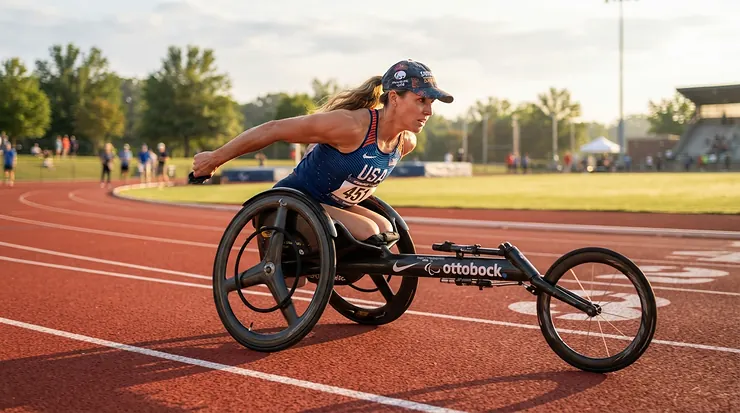
Push gloves for wheelchair athletes are fingerless or half-finger gloves with reinforced, grippy palms and a covered thumb. They protect your skin from friction, soften repeated impact on the push rim, and help you transfer power into every stroke. They matter for racers, court-sport players, and serious training-session regulars alike.

Here’s the thing nobody tells you when you first start pushing hard: your hands are the engine, the clutch, and the brakes. Every stroke is a small collision. According to NCHPAD’s overview of overuse injuries in wheelchair users, blisters, abrasions and lacerations show up in roughly 18% of wheelchair users, and well-fitting gloves are one of the simple defenses. Eighteen percent. That’s nearly one in five of us.
So choosing push gloves for wheelchair athletes isn’t a fashion decision. It’s equipment strategy. Get it right and you push longer, grip better in the wet, and skip the week of “why does my palm look like a topographic map?” Get it wrong and you’re nursing a hot spot by mile three.
This guide compares seven real options across budget, mid-range and premium tiers. It then goes deep on palm padding, blister prevention, and glove sizing, because those are the three things that decide whether a pair lives in your bag or in a drawer. One note on method: I’m drawing on published specs, retailer listings, and aggregated review sentiment, not claiming personal ownership of any pair. Where I couldn’t verify something, I’ll say so.
Quick Comparison: Push Gloves for Wheelchair Athletes at a Glance
Seven gloves, one glance. Price tiers reflect what I found at the time of research and will drift, so check the live listing before you buy.
| Glove | Best For | Palm Style | Finger Style | Price Tier |
|---|---|---|---|---|
| Rebz Full Thumb Fingerless Gloves | All-round value | Full leather palm | Fingerless, full thumb | Value tier |
| HZBEGX Half-Finger Anti-Blister Gloves | Blister-prone daily pushers | Padded anti-blister palm | Half-finger | Around $30 |
| BTR Born To Race Full Thumb Gloves | Hot-weather training | Leather finish | Fingerless, full thumb | Mid-range |
| Inspired Comforts Fingerless Full Thumb Gloves | Thumb protection, low-light visibility | Anti-slip padded palm | Fingerless, full thumb | Mid-range |
| NVT Wheelchair & Workout Gloves | Budget gym-plus-push crossover | Real leather palm with shock absorption | Fingerless | Mid-teens range |
| Hatch All-Purpose Padded Mesh Gloves | Breathable everyday training | Foam-padded grain leather | Half-finger | Roughly $25-$35 range |
| Impacto Sports & Wheelchair Gloves | Gel-padded endurance sessions | Gel-padded leather | Half-finger | Premium, roughly $70-$90 range |
Look at the spread. The NVT and Hatch options sit at the friendly end of the budget, while Impacto costs several times more. That premium buys gel padding aimed at shock absorption, which matters most if your sessions run long. If you mostly push short distances, Rebz and HZBEGX probably give you the best protection per dollar. Pay attention to the “Best For” column rather than chasing the most padded option.
💬 Just one click — help others make better buying decisions too!😊
Top 7 Push Gloves for Wheelchair Athletes: Expert Analysis
Each pick below follows the same logic: what the specs mean in practice, who it suits, and what aggregated review sentiment says. Review notes come from published roundups and listing feedback I could read. I could not verify live Amazon review counts, so treat sentiment as directional.
1. Rebz Full Thumb Fingerless Gloves — best all-round value
The headline here is the full thumb. Your thumb takes a beating on the rim, so covering it fully means fewer scrapes where it grips and pushes.
The Rebz pairs a full leather palm with a four-way stretch back and a wrist closure strap. On paper, that means the palm resists abrasion while the stretchy back lets the glove flex with your hand instead of bunching. Reinforced stitching in high-wear spots points to a glove built for daily mileage.
Who’s it for? Athletes who want one dependable all-rounder without paying premium prices. Based on the spec comparison, it covers the basics well: grip, thumb protection, and a secure wrap at the wrist.
Roundup reviewers consistently praise the thumb coverage and value positioning. A recurring caveat is limited thumb mobility, which some users notice during tight maneuvering.
Pros:
- ✅ Full leather palm resists abrasion
- ✅ Full thumb coverage protects high-stress area
- ✅ Four-way stretch back flexes with your hand
Cons:
- ❌ Thumb can feel restricted during fine maneuvers
- ❌ Leather palm may feel stiff at first
Sits in the value tier, so check the current price. It’s the pair I’d name first for someone who wants a safe default.
2. HZBEGX Half-Finger Anti-Blister Gloves — built around blister defense
If hot spots are your nemesis, start here. The HZBEGX puts anti-blister padding and shock absorption at the center of its design, and it carries reflective trim for early-morning or evening sessions.
Translation of the specs: padding sits where friction concentrates, and the half-finger cut keeps your fingertips free for gripping, touchscreens, and your water bottle. Easy finger loops make removal simpler, which roundup reviewers call out as helpful when hand strength is limited.
Think of it as the sensible choice for athletes who push daily on varied terrain. What most buyers overlook is that padding only works if the glove sits snug; loose padding just becomes a new friction layer.
Aggregated roundup sentiment is positive on blister protection, but sizing is the common complaint: multiple roundups say it runs small, so size up if you’re between sizes.
Pros:
- ✅ Anti-blister padding targets friction zones
- ✅ Reflective trim helps in low light
- ✅ Finger loops make removal easier
Cons:
- ❌ Sizing tends to run small
- ❌ Priced above the budget options
Around $30 at the time of research. Solid value for blister-prone pushers.
3. BTR Born To Race Full Thumb Gloves — lightweight and breathable
The pitch is airflow. The BTR leans on a lightweight, breathable build with a full thumb and a leather finish that some users like for its less-athletic look.
Why that matters: sweaty hands slip, and slipping hands compensate by squeezing, which tires your forearms faster. A breathable back helps manage that. For hot-weather training blocks, this is the logic worth weighing.
Honest caveat: reviewers disagree on sizing. One roundup says it runs large; another says to go up a size. When sources conflict like that, trust your own tape measure and the brand’s size chart over anyone’s generalization.
It’s flexible enough for pushing and for cycling-style cross training. That versatility is the appeal, though dedicated padding is lighter than gel-heavy competitors.
Pros:
- ✅ Breathable, lightweight construction
- ✅ Full thumb for rim contact
- ✅ Doubles for other activities
Cons:
- ❌ Conflicting reports on sizing accuracy
- ❌ Lighter padding than gel-focused options
Mid-range tier; check current price.
4. Inspired Comforts Fingerless Full Thumb Gloves — best for thumb protection and visibility
What stands out is the combination of full thumb coverage, an anti-slip palm, and reflective details. That’s a nice mix for athletes who train at dawn or dusk.
Standard fingerless gloves leave the thumb exposed to rough rims. Here the thumb is covered, which helps with both grip and scrape protection. One roundup specifically recommends it for people who’ve had thumb injuries.
The trade-off: the same roundup cautions that cushioning may feel thin for high-impact pushing, and multiple sources note sizing runs small. If you push hard and fast, you may want more shock absorption than this offers.
Pros:
- ✅ Full thumb coverage for rim contact
- ✅ Reflective details for low-light training
- ✅ Fingerless design keeps touchscreens usable
Cons:
- ❌ Padding may feel light for hard efforts
- ❌ Sizing tends to run small
Mid-range tier. A good pick when thumb protection tops your list.
5. NVT Wheelchair & Workout Gloves — budget crossover for the gym and the rim
This one wears two hats: it’s marketed for wheelchair use and weight training, with shock absorption, a fingerless grip, and wrist support. It also uses a real leather palm and a terry cloth thumb, per roundup descriptions.
The crossover is the point. If you lift before you push, one pair covers both. The wrist support helps keep your hand stable under load, which is useful for gym work, though rim propulsion asks for different grip behavior than a barbell does.
A reality check on availability: a price tracker showed the listing as third-party sold in mid-July 2026 at a mid-teens price, with Amazon itself out of stock then. Availability shifts, so confirm before planning around it.
Pros:
- ✅ Very affordable entry point
- ✅ Wrist support doubles for gym sessions
- ✅ Real leather palm for grip
Cons:
- ❌ Terry cloth thumb wears faster than leather
- ❌ Availability can fluctuate by seller
Mid-teens price range at the time of research. Best treated as a budget workhorse.
6. Hatch All-Purpose Padded Mesh Gloves — cool, washable, and sized in four steps
The Hatch keeps it simple: foam-padded grain leather palms, a cotton mesh back, and adjustable hook-and-loop closures. The material split is roughly 50% leather, 40% cotton and 10% foam, and it comes with a 90-day warranty per distributor listings.
In practice, the mesh back is the star for warm climates, and being machine washable (line dry) means you can actually keep these fresh. Sweat-soaked gloves sit differently on your skin after a week of grime, so washability isn’t a minor perk.
It’s an all-purpose design, so it’s better described as dependable than specialized. If you want maximum shock absorption for endurance work, there are stronger picks. For daily training and general use, it’s hard to fault.
Availability note: this is mainly sold through medical-supply retailers, so check whether your preferred seller stocks it.
Pros:
- ✅ Breathable mesh back for warm weather
- ✅ Machine washable and line dry
- ✅ Four size options with adjustable closure
Cons:
- ❌ Foam padding is modest for long efforts
- ❌ Less common on mainstream marketplaces
Roughly $25-$35 range across retailers I checked. Strong everyday value.
7. Impacto Sports & Wheelchair Gloves — gel padding for the long haul
The premium pick. Impacto pairs black leather palms with gel padding and a hook-and-loop wrist closure, with a nylon-and-terry-cloth back. The listing says it’s latex-free, which matters if you have a sensitivity.
The gel’s job is to take the sting out of repeated start-stop impacts and vibration. That’s genuinely relevant for athletes who log long sessions, because repeated impact is what turns “fine” into “sore.”
Sizing here is the most transparent I found. The listed chart works from hand circumference across the knuckles, running from X-Small up through XX-Large, so you can pick a size with confidence rather than guessing.
The catch is cost. You’re paying a premium for padding, and not every athlete needs it.
Pros:
- ✅ Gel padding absorbs impact and vibration
- ✅ Detailed circumference-based size chart
- ✅ Latex-free construction
Cons:
- ❌ Noticeably pricier than alternatives
- ❌ Bulkier palm can reduce rim feel
Roughly $70-$90 range at specialty retailers I checked, so verify the current price. Worth it for long-distance and heavy-volume training.
How the Seven Compare on Features That Matter
| Glove | Palm Padding | Thumb Coverage | Closure | Sizing Note |
|---|---|---|---|---|
| Rebz | Leather, reinforced | Full | Wrist strap | Check chart |
| HZBEGX | Anti-blister padding | Half-finger style | Finger loops | Runs small |
| BTR | Light | Full | Secure closure | Reports conflict |
| Inspired Comforts | Anti-slip padded | Full | Standard | Runs small |
| NVT | Shock absorption | Terry cloth thumb | Wrist support | Check chart |
| Hatch | Foam | Standard | Hook-and-loop | Four sizes |
| Impacto | Gel | Standard | Hook-and-loop | Circumference chart |
Reading across the table, padding is where the options diverge most, while closures are surprisingly similar. The Impacto and HZBEGX target impact and friction most directly. For sizing confidence, Impacto and Hatch publish the clearest guidance, while BTR reports conflict. If you’re torn, let your session length decide: short and fast favors lighter padding, long and steady favors more.
How to Choose Push Gloves for Wheelchair Athletes
Short answer: match the glove to your session length, your climate, and your hand shape, then verify sizing with a tape measure. Here’s the order I’d work through it.
- Decide your session profile. Sprint intervals reward feel at the rim, while endurance rewards cushioning. Longer pushes generally justify more padding.
- Pick your finger style. Fingerless and half-finger gloves keep your fingertips free for bottles, straps and touchscreens. Full-finger styles suit cold weather.
- Prioritize thumb coverage. The thumb works hard against the rim, so a covered thumb prevents a lot of scrapes.
- Check palm material. Leather resists abrasion, while softer fabrics wear faster. The palm is where the glove earns its money.
- Consider breathability. Mesh or ventilated backs reduce sweat, which reduces slip. Hot-climate athletes should weigh this heavily.
- Measure before you buy. Use your knuckle circumference or palm width, then compare to the size chart. Sizing mistakes ruin otherwise great gloves.
- Plan for care. If a glove can’t be cleaned easily, it won’t stay pleasant. Washability is a quiet advantage.
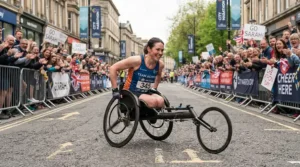
Palm Padding, Grip and Blister Prevention: Protecting What Pushes
Three ideas, one goal: keep your skin intact and your power transfer honest.
Palm Padding: Where the Cushion Actually Belongs
Palm padding is the layer between your hand and the rim, usually foam or gel, that spreads out and softens repeated impact. More isn’t automatically better. Thick padding can numb your feel for the rim, which hurts technique.
Foam suits everyday training because it’s light and flexible. Gel suits longer sessions because it targets impact and vibration. Choose based on mileage, not marketing.
Grip Gloves for Manual Wheelchair Users: Traction Without Strangling
Grip gloves for manual wheelchair users depend on a textured, rubberized or leather palm that bites into the rim, especially when wet. Retailer guides describe textured palms as the key to stable pushing.
Even elite athletes wrestle with this. A Nike research write-up recounts a 20-time Paralympic medalist gluing sandpaper strips into rubber gloves to fight slipping in wet races. If that’s the lengths pros go to, a purpose-built textured palm is clearly worth having.
Blister Prevention: Small Habits, Big Payoff
Blister prevention starts with fit, because loose gloves slide and slide creates blisters. NCHPAD also suggests talcum powder or petroleum jelly to reduce abnormal skin friction, and notes that well-fitting gloves help.
Practical add-ons: keep gloves dry, rotate pairs, and treat hot spots early instead of “pushing through.” A tiny red patch today is a blister tomorrow.
Fingerless Wheelchair Gloves for Training and Padded Wheelchair Gloves for Long Pushes
These two ideas often get blended, but they solve different problems.
Fingerless Wheelchair Gloves for Training: Freedom Over Coverage
Fingerless wheelchair gloves for training keep your fingertips bare, which matters when you’re adjusting straps, sipping water, or checking your phone mid-session. Airflow is better too, so your hands stay cooler.
The downside is exposed fingers. If your style puts fingers near the tire or spokes, check your technique first, or choose half-finger designs with a bit more coverage.
Padded Wheelchair Gloves for Long Pushes: Insurance Against Fatigue
Padded wheelchair gloves for long pushes earn their keep after the first hour. Cumulative impact is what tires your hands, not any single stroke.
For long efforts, gel or dense foam is the sensible direction, as with the Impacto. For shorter blocks, lighter padding like Hatch keeps your feel sharp. Consider rotating a padded pair for endurance days and a lighter pair for speed work.
Glove Sizing: Getting a Fit That Works With You
Glove sizing is the make-or-break detail, and it’s where otherwise great gloves go wrong. A glove that’s too loose shifts and blisters you. One that’s too tight can leave hands feeling cold, as one glove retailer’s sizing guide warns, and its advice is to go up a size if in doubt.
Here’s how to measure properly. Wrap a soft tape around your hand at the base of the knuckles, excluding the thumb. Some wheelchair-specific retailers instead ask for palm width. One UK supplier lists roughly 3 inches for small, 3¼ for medium, 3½ for large, and 3¾ for extra large.
Different brands use different systems, so never assume your “medium” translates. The Impacto chart works from circumference, and a Hatch heavy-duty retailer lists ranges of 7-8 inches for small/medium and 8½-10 inches for large/extra large.
Given the roundup reports, HZBEGX and Inspired Comforts reportedly run small, while BTR feedback conflicts. Measure twice, check the chart, and consider a return-friendly seller for your first pair.
Push Gloves vs Cycling Gloves vs Bare Hands
Plenty of athletes start with cycling gloves, and forum users in wheelchair communities often report decent results. But dedicated gloves target the rim, not the handlebar.
| Option | Grip on Rim | Thumb Protection | Padding Location | Best For |
|---|---|---|---|---|
| Bare hands | Variable | None | None | Short, casual moves |
| Cycling gloves | Moderate | Usually exposed | Palm center | Budget experimenters |
| Gardening gloves | Moderate | Limited | Minimal | Occasional use |
| Rebz-style push gloves | Strong | Full | Palm and thumb | Regular training |
| Impacto-style gel gloves | Strong | Standard | Gel palm | Long sessions |
Looking at the comparison above, bare hands are the cheapest option and the costliest to your skin. Cycling gloves are a reasonable bridge, since NCHPAD notes padded, cycling-style gloves have been suggested for similar pressure patterns. But the thumb exposure is the dealbreaker for many. If you push regularly, dedicated push gloves justify themselves quickly.
✨ Don’t Miss These Exclusive Deals!
🔍 Take your push gloves for wheelchair athletes shortlist to the next level with these carefully selected products. Click on any highlighted item to check current pricing and availability. These gloves will help you train with confidence and keep your hands ready for the next session!
Real-World Scenarios: Three Athletes, Three Gloves
Abstract advice only goes so far, so here are three profiles with reasoning.
The daily commuter with a gym habit. Say you push four miles to work and lift after. A budget crossover like NVT covers both, and its mid-teens price makes replacement painless. Wear it, wash it when needed, move on.
The weekend endurance pusher. Picture someone logging ten-mile sessions on paths every Saturday. Cumulative impact is the enemy, so the Impacto gel palm makes sense, even at premium cost. Spread across a season of long outings, the cost per session stays reasonable.
The thumb-injury returner. Someone coming back from a thumb strain wants maximum coverage and a stable fit. Inspired Comforts or Rebz both offer full thumbs. For someone with limited hand function who needs easy on-off, a design with a wide opening and hook-and-loop closure, like the RehaDesign Gator, is worth a look. Its listing describes dual textured grip pads and an inner lining that reduces dye transfer.
The pattern: your session profile beats brand loyalty every time.

Problem → Solution Guide for Push Glove Headaches
Even good gloves create problems. Here’s how to fix the common ones.
- Slipping in the wet. Look for textured or rubberized palms, and dry your gloves between sessions. Wet leather loses bite fast.
- Hot, sweaty hands. Choose mesh backs like Hatch or breathable builds like BTR. Rotate pairs so one can dry.
- Persistent hot spots. Re-check sizing first, then consider anti-blister padding such as HZBEGX. Treat early.
- Thumb pain. Move to a full-thumb design like Rebz. Persistent pain should go to a clinician.
- Dye-transfer stains. Leather gloves can blacken hands. One disability retailer notes lined designs avoid this contact.
- Shoulder or wrist soreness. Gloves can’t fix technique. The Paralyzed Veterans of America clinical guideline on preserving upper limb function is aimed at clinicians, and a randomized trial of 37 new manual wheelchair users found structured education built on it improved propulsion biomechanics. Ask your therapist about your stroke pattern.
Features That Actually Matter (And Those That Don’t)
Marketing loves adjectives, so let’s filter.
Matters: palm material, thumb coverage, fit, breathability, and closure security. These directly affect grip, protection and comfort.
Matters sometimes: gel padding (great for long sessions, overkill for short), reflective trim (useful if you train in low light), and finger loops (valuable if hand strength is limited).
Mostly hype: vague claims like “advanced technology” with no specifics, and “30% better push efficiency”-style promises that I couldn’t trace to independent testing. Treat unverified percentages with suspicion.
One more distinction: soft push gloves are different from hard racing gloves. Elite racers use rigid gloves in a punching motion, as the Australian Institute of Sport’s custom glove case study explains. The AIS 3D-prints custom-fitted gloves, and a Paralympian in that case study reported losing less power in each push. The gloves in this guide are training and everyday-athletic gear, not race-day shells.
Long-Term Cost and Care
Cheap gloves aren’t always cheap. If a mid-teens pair lasts a season and a premium pair lasts two, the math changes.
Realistic expectations: leather palms generally outlast fabric, and stitching is usually the first failure point. Cost-per-use is the metric to watch, not sticker price.
Care keeps them alive:
- Wash only if the label allows it (the Hatch is machine washable and line dry per listings).
- Air-dry away from direct heat, which can stiffen leather.
- Rotate two pairs if you train daily.
- Inspect stitching and palm wear monthly.
Prices shift constantly, so use ranges as direction, not promises. Check current price before purchase.
Common Mistakes When Buying Push Gloves for Wheelchair Athletes
A few pitfalls trip people up again and again.
- Guessing the size. Since brands use different systems, a guess often fails. Measure instead.
- Overbuying padding. Thick gel can dull rim feel. Match it to your mileage.
- Ignoring the thumb. Many gloves leave the thumb exposed, and that’s where wear concentrates.
- Skipping breathability. Sweat leads to slip, and slip leads to blisters.
- Trusting hype numbers. Unverified percentages aren’t evidence.
- Buying one pair only. A spare lets you wash and dry, which extends life.
Avoid these and you’re ahead of most buyers.
FAQ
❓ What size should I choose for push gloves for wheelchair athletes?
❓ Are fingerless wheelchair gloves good for training?
❓ Do padded wheelchair gloves help on long pushes?
❓ How do I prevent blisters from pushing?
❓ Can I use cycling gloves instead of wheelchair gloves?
Conclusion
Here’s the bottom line on push gloves for wheelchair athletes: the best pair is the one that fits your hands, your mileage, and your climate, not the one with the loudest marketing.
If you want a dependable default, start with Rebz. For blister-prone skin, look at HZBEGX. For hot climates, BTR and Hatch lean breathable. For thumb-first protection, Inspired Comforts makes sense. On a tight budget, NVT covers the basics, and for long, high-volume sessions, Impacto is the premium play.
Whatever you pick, measure first and care for the pair. A team of engineering students at the University of Illinois set out to make quality racing gloves more affordable and adaptable to different injuries, a reminder that good hand protection shouldn’t be reserved for the elite. Your hands carry every push, so give them the gear they’ve earned.
✨ Ready to protect your hands?
🔍 Compare the picks above, check current pricing and availability, and choose the pair that matches your training. Your next session will thank you!
Recommended for You
- Lightweight Sport Wheelchair For Beginners: 7 Top Picks In 2026
- Pressure Relief Cushion For Child Wheelchair Users: 7 Best Picks 2026
- Compact Teen Wheelchair For High School Hallways: 7 Best Picks 2026
Disclaimer: This article contains affiliate links. As an Amazon Associate, I earn from qualifying purchases. If you purchase products through these links, we may earn a small commission at no additional cost to you.
✨ Found this helpful? Share it with your friends! 💬🤗
