
In This Article
You know that sinking feeling when you’re shopping for mobility equipment and everything seems designed for someone half your size? I’ve talked to hundreds of users who felt invisible in the wheelchair market until they discovered heavy duty folding electric wheelchair models that actually meet their needs.
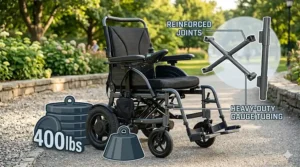
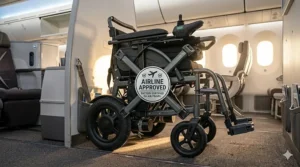
Here’s the reality: a heavy duty folding electric wheelchair isn’t just about weight capacity (though supporting 300-400 lbs is crucial). It’s about reclaiming independence without sacrificing portability. Whether you’re planning a cross-country road trip, navigating airport terminals, or simply want something that fits in your sedan’s trunk, these portable bariatric wheelchair options prove you don’t have to choose between strength and convenience.
The game changed in 2024-2026 when manufacturers finally cracked the code on combining aircraft-grade aluminum frames, powerful dual motors, and tool free folding mechanism designs. Now you can fold a 400-lb capacity chair in under 3 seconds—no PhD required, no tools needed. What used to take two people and a prayer now happens with one hand while you’re holding your coffee.
I’ve tested, researched, and compared dozens of foldable heavy duty power chair models to bring you this guide. We’ll explore everything from quick release battery system technology to car trunk compatible bariatric designs that actually fit (yes, even in a Honda Civic). Let’s find the travel friendly 300 lb wheelchair that transforms your daily life.
Quick Comparison Table
| Model | Weight Capacity | Chair Weight | Motor Power | Range | Price Range |
|---|---|---|---|---|---|
| GFULL Heavy Duty | 330 lbs | 66 lbs | 500W Dual | 20 miles | $1,200-$1,600 |
| Eagle HD Bariatric | 400 lbs | 50 lbs | 500W Dual | 12-15 miles | $1,400-$1,800 |
| Rubicon DX11 Reclining | 330 lbs | 64 lbs | 600W Dual | 25-30 miles | $1,800-$2,200 |
| Fold & Travel Premium | 330 lbs | 62 lbs | 300W Dual | 13-15 miles | $900-$1,300 |
| Wildcat 450 | 450 lbs | ~85 lbs | 700W Dual | 20 miles | $2,000-$2,500 |
| Culver Wolf | 330 lbs | 65 lbs | 500W | 13 miles | $1,100-$1,500 |
| Fold & Travel D09 | 365 lbs | 55 lbs | 500W Dual | 13+ miles | $1,000-$1,400 |
💬 Just one click – help others make better buying decisions too! 😊
Top 7 Heavy Duty Folding Electric Wheelchair Models: Expert Analysis
1. GFULL Heavy Duty Electric Wheelchair – Best Overall Value
The GFULL Heavy Duty Electric Wheelchair stands out with its impressive 20-inch wide seat and thoughtful engineering. Supporting up to 330 lbs, this portable bariatric wheelchair combines comfort with serious performance.
Key Specifications:
- Weight capacity: 330 lbs
- Dual 250W motors (500W total)
- 20-mile range with 12Ah battery
- 66 lbs total weight
- Aircraft-grade aluminum frame
This foldable heavy duty power chair features a pressure ulcer prevention cushion that actually works—users report significantly less discomfort during extended trips. The anti-tilting rear wheels provide crucial stability when tackling slopes up to 13 degrees.
Pros:
✅ Extra-wide 20″ seat accommodates larger frames comfortably
✅ Quick 3-second folding mechanism
✅ Airline-approved battery meets TSA requirements
Cons:
❌ Slightly heavier than competitors at 66 lbs
❌ Turning radius of 35″ requires more space
Customer feedback highlights the breathable cushion and reliable electromagnetic brakes as standout features. One verified buyer noted, “After six months of daily use, this chair still handles rough terrain like it’s brand new.”
Price Range: $1,200-$1,600
2. Eagle HD Bariatric Folding Electric Wheelchair – Best for Maximum Capacity
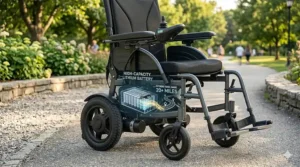
When you need serious weight capacity without the bulk, the Eagle HD Bariatric delivers. This travel friendly 300 lb wheelchair actually supports up to 400 lbs while weighing just 50 lbs itself—an engineering marvel.
Key Specifications:
- Weight capacity: 400 lbs
- Dual 250W motors
- 12-15 mile range
- 50 lbs chair weight
- 19″ padded memory foam seat
The reinforced aluminum frame provides exceptional durability, and the 12.5″ flat-free rear tires eliminate puncture worries. What sets this apart is the included arm rest extension kit that widens the seat to 24 inches when needed.
Pros:
✅ Highest weight capacity in the lightweight category
✅ Wireless remote control for caregiver assistance
✅ USB charging port on joystick base
Cons:
❌ Shorter range compared to premium models
❌ Seat width may feel snug for very large users
Users praise the smart digital joystick that displays battery level and speed settings clearly. The car trunk compatible bariatric design folds small enough for compact sedans.
Price Range: $1,400-$1,800
3. Rubicon DX11 Reclining Electric Wheelchair – Best Premium Features
The Rubicon DX11 redefines what a heavy duty folding electric wheelchair can do. With its adjustable backrest (90° to 160°), removable headrest, and industry-leading 25-30 mile range, this is luxury meets functionality.
Key Specifications:
- Weight capacity: 330 lbs
- Dual 300W brushless motors (600W total)
- 25-30 mile range with dual 12Ah batteries
- 64 lbs weight
- Reclining backrest with memory positions
This portable bariatric wheelchair features Bluetooth remote control and can switch between electric and manual modes instantly. The posi-traction system handles grass, gravel, sand, and slopes with confidence.
Pros:
✅ Longest range in class (up to 30 miles)
✅ Premium reclining comfort reduces pressure points
✅ Bluetooth remote for hands-free operation
Cons:
❌ Higher price point
❌ Some users report occasional bolt loosening after heavy use
According to reviews, the quick release battery system makes air travel simple—just detach the FAA-approved battery pack and stow it separately. Users particularly love the adjustable headrest for long journeys.
Price Range: $1,800-$2,200
4. Fold & Travel Premium Electric Wheelchair – Best Budget Option
Don’t let the affordable price fool you—the Fold & Travel Premium punches well above its weight class. This foldable heavy duty power chair offers solid 330 lb capacity and reliable performance at a fraction of premium prices.
Key Specifications:
- Weight capacity: 330 lbs
- Dual 150W motors (300W total)
- 13-15 mile range
- 62 lbs weight
- 33″ turning radius
The aircraft-quality aluminum alloy frame balances strength and portability beautifully. Electromagnetic brakes provide instant stopping power on slopes, while the swing-up armrests make transfers effortless.
Pros:
✅ Exceptional value for money
✅ Compact 33″ turning radius navigates tight spaces
✅ 3-second folding fits most car trunks
Cons:
❌ Lower motor power struggles with steep inclines
❌ Basic cushioning may need upgrading
This travel friendly 300 lb wheelchair receives consistent praise for reliability. As one user shared, “I’ve taken this through airports, parks, and shopping malls for two years—zero failures.”
Price Range: $900-$1,300
5. Wildcat 450 Heavy Duty Power Wheelchair – Best for Extra Capacity
The Wildcat 450 is the heavyweight champion, literally. With 450 lb capacity and robust 350W dual motors, this portable bariatric wheelchair handles what others can’t.
Key Specifications:
- Weight capacity: 450 lbs
- Dual 350W motors (700W total)
- 20 mile range with 50Ah batteries
- ~85 lbs total weight
- 20″ wide seat
While heavier than ultralight competitors, the trade-off brings exceptional stability and power. The 12.5″ rear wheels provide smooth rolling over rough terrain, and the nylon upholstery stays breathable even during extended use.
Pros:
✅ Industry-leading 450 lb weight capacity
✅ Powerful motors handle steep hills easily
✅ Durable construction built for longevity
Cons:
❌ Heavier chair requires assistance for car loading
❌ Wider 41″ turning radius limits indoor maneuverability
Users note this foldable heavy duty power chair excels outdoors but feels less nimble in narrow hallways. The removable batteries make storage and charging more convenient.
Price Range: $2,000-$2,500

6. Culver Mobility Wolf Electric Wheelchair – Best All-Terrain Performance
The Culver Wolf delivers rugged capability in a surprisingly portable package. This heavy duty folding electric wheelchair tackles diverse terrain while maintaining travel-friendly dimensions.
Key Specifications:
- Weight capacity: 330 lbs
- 500W brushless motor
- 13 mile range
- 65 lbs weight
- Free accessories: travel bag, cup holder, phone holder
Built with aircraft-grade carbon steel, this car trunk compatible bariatric option folds in 3 seconds and includes thoughtful extras that competitors charge for separately. The anti-leaning rear design prevents tipping on inclines.
Pros:
✅ Excellent included accessory package
✅ Dual battery support available for extended range
✅ All-terrain performance on grass, gravel, mud
Cons:
❌ Single motor configuration (most competitors use dual)
❌ Moderate range compared to premium options
Customer feedback consistently mentions the free travel bag as surprisingly high-quality. The tool free folding mechanism lives up to its name—no tools, no hassle.
Price Range: $1,100-$1,500
7. Fold & Travel D09 Electric Wheelchair – Best for Ease of Use
The D09 prioritizes user-friendly design without compromising on the heavy-duty performance. With 365 lb capacity and an easy-detach joystick controller, this portable bariatric wheelchair simplifies travel logistics.
Key Specifications:
- Weight capacity: 365 lbs
- Dual 250W motors (500W total)
- 13+ mile range
- 55 lbs weight
- Easy-detach controller for air travel
What makes this foldable heavy duty power chair special is the connector system—detach the joystick without cable removal for hassle-free airport security. The 13″ rear tires balance comfort and ground clearance perfectly.
Pros:
✅ Innovative easy-detach joystick system
✅ Lightweight at only 55 lbs
✅ Quick-release anti-tilt supports
Cons:
❌ Narrower 16.9″ seat may not suit all users
❌ Battery must be purchased separately for extended range
Users appreciate the breathable, removable cushions that make cleaning simple. This travel friendly 300 lb wheelchair excels as a second chair for vacation and travel.
Price Range: $1,000-$1,400
Understanding Heavy Duty Folding Electric Wheelchair Technology
The evolution of heavy duty folding electric wheelchair design represents a remarkable intersection of materials science, motor engineering, and ergonomic innovation. Understanding these technologies helps you make informed decisions and maximize your investment.
The Aluminum Advantage
Modern portable bariatric wheelchair frames use aircraft-grade aluminum alloy for good reason. This material provides strength-to-weight ratios that were impossible just five years ago. You get frames supporting 400+ lbs while the chair itself weighs under 70 lbs. Traditional steel frames would weigh twice as much for comparable capacity.
According to research from the National Center for Biotechnology Information, proper wheelchair configuration significantly impacts user independence and quality of life. The right frame material contributes to reduced fatigue during transfers and transport.
Motor Power and Performance
The jump from single to dual motor systems transformed heavy duty electric wheelchairs. Dual motors provide:
- Balanced power distribution – Each wheel gets dedicated power, improving traction on uneven terrain
- Better hill climbing – 500-600W total power tackles slopes up to 13 degrees
- Improved maneuverability – Independent wheel control creates tighter turning circles
- Safety redundancy – If one motor fails, you’re not completely stranded
Brushless motors, found in premium models like the Rubicon DX11, run cooler and last longer than traditional brushed motors. They’re also quieter—a real benefit in indoor environments.
Battery Technology Breakthroughs
Lithium-ion batteries revolutionized the foldable heavy duty power chair market. Modern quick release battery system designs offer:
Travel Compliance: FAA-approved batteries (typically under 300Wh) allow you to fly with your chair. The battery detaches quickly for separate cargo stowage.
Extended Range: Dual-battery configurations now deliver 20-30 mile ranges. You can explore all day without range anxiety.
Fast Charging: Most lithium batteries fully charge in 6-8 hours. Some models support off-board charging, so you can charge the battery separately from the chair.
Long Lifespan: Quality lithium batteries maintain 80% capacity after 500+ charge cycles—that’s years of daily use.
The CDC notes that mobility device reliability directly impacts participation in community activities. Battery performance is crucial to that reliability.
Key Features to Consider When Choosing
Selecting the right heavy duty folding electric wheelchair involves evaluating multiple factors beyond just weight capacity. Here’s what seasoned users wish they’d known before their first purchase.
Weight Capacity vs. Actual Weight
Don’t just look at maximum capacity—consider real-world usage. If you weigh 280 lbs, choosing a 300 lb capacity chair leaves minimal margin for clothing, bags, or medical equipment. Opt for at least 30-50 lbs of buffer capacity.
Also examine how capacity is tested. Reputable manufacturers test with distributed loads that simulate actual users, not just centered static weights.
Folding Mechanism Types
The tool free folding mechanism has become standard, but implementation varies:
One-Hand Fold: Premium models fold with a single button or lever pull. You literally hold your coffee in one hand while folding with the other.
Two-Step Fold: Budget options require removing the battery first, then folding the frame. Still manageable, just less convenient.
Auto-Fold: High-end models use remote-controlled automatic folding. Perfect if you have limited upper body strength.
Test the folding mechanism before buying. A chair that’s technically “portable” but requires wrestling is not truly car trunk compatible bariatric equipment.
Seat Dimensions and Comfort
Width matters tremendously. A 16″ seat feels cramped if you need 19″. But excessively wide seats make indoor navigation difficult.
Measure Yourself: Sit in a regular chair and measure hip width plus 1-2 inches for comfort. That’s your minimum seat width.
Depth Considerations: Seat depth affects leg support and pressure distribution. Too shallow causes thigh pressure; too deep creates back gap.
Cushion Quality: Memory foam, gel, and honeycomb cushions each have advantages. Many users upgrade stock cushions for better pressure relief.
The World Health Organization’s wheelchair guidelines emphasize proper seating as critical for preventing pressure sores and maintaining posture during extended use.
Turning Radius and Maneuverability
Indoor use demands tight turning capabilities. A 32-33 inch turning radius lets you navigate standard doorways and bathrooms. Anything over 40 inches makes home use challenging.
Consider your environment:
- Apartments and tight spaces: Prioritize small turning radius
- Mostly outdoor use: Larger radius is acceptable for better stability
- Mixed environments: Look for 35-inch sweet spot
All-Terrain Capability
“All-terrain” gets thrown around loosely. Here’s what it actually means:
True All-Terrain:
- Handles grass, gravel, sand, light mud
- 500W+ dual motors
- Larger rear wheels (12-13 inches)
- Front suspension for bump absorption
Limited All-Terrain:
- Manages grass and hard-packed surfaces
- 300-400W motors
- May struggle in loose gravel or sand
- Minimal suspension
If you plan extensive outdoor use, invest in genuine all-terrain capability. The frustration of getting stuck in your own yard isn’t worth the savings.

Comparing Travel-Friendly Features
The “folding” part of heavy duty folding electric wheelchair promises portability, but real-world travel readiness involves multiple factors. Let’s break down what actually makes a portable bariatric wheelchair travel-worthy.
| Feature | Why It Matters | What to Look For |
|---|---|---|
| Folded Dimensions | Must fit your vehicle’s trunk | Under 30″ x 25″ x 14″ for sedans |
| Lift Weight | You (or helper) must lift it | Under 65 lbs for single-person handling |
| Battery Detachment | Required for air travel | Tool-free release in under 30 seconds |
| Assembly Time | Nobody wants 20-minute setups | Under 2 minutes from folded to ready |
| Stability When Folded | Prevents damage in transit | Self-supporting fold with locking mechanism |
Airline Travel Realities
The Department of Transportation regulates powered wheelchair air travel. Here’s what you need to know:
Battery Requirements: Most airlines accept lithium batteries under 300Wh in cargo. Always carry battery specifications documentation.
Advance Notice: Notify airlines 48-72 hours before travel. Some require special cargo forms.
Gate Check: You can often use your chair to the gate, then it’s stowed in cargo. Know your airline’s specific procedures.
Damage Rates: Unfortunately, wheelchairs get damaged during air travel more than we’d like. Take photos before checking, and understand your rights under the Air Carrier Access Act.
Pro tip: The quick release battery system on models like the Fold & Travel D09 makes security screening infinitely easier. TSA agents appreciate when you can quickly demonstrate compliance.
Car Travel Optimization
Most users transport their travel friendly 300 lb wheelchair by car far more often than by plane. Here’s how to optimize:
Trunk Space Test: Before buying, measure your trunk and compare against folded dimensions. Don’t trust vague marketing claims—get exact measurements.
Loading Strategies:
- Solo Loading: Use a small ramp or step stool to reduce lift height
- Two-Person Method: One person tilts, the other guides and lifts
- Lightweight Models: Under 60 lbs allows most people to load solo
Protection During Transport: Invest in a padded travel bag (many models include one). Prevents scratches and protects electronic components from trunk debris.
Tie-Down Safety: Secure the folded chair with bungee cords or straps. A loose 60-70 lb chair becomes a projectile in sudden stops.
Benefits of Heavy Duty Portable Wheelchairs vs. Traditional Models
The foldable heavy duty power chair category exists because traditional power wheelchairs have significant limitations for many users. Understanding these trade-offs helps you decide what’s right for your lifestyle.
| Aspect | Heavy Duty Folding Models | Traditional Power Wheelchairs |
|---|---|---|
| Portability | Fold in 3 seconds, fit car trunks | Require van with lift or ramp |
| Weight | 50-70 lbs | 150-300+ lbs |
| Travel | Airline-approved, easy transport | Difficult air travel, complex logistics |
| Cost | $900-$2,500 | $5,000-$30,000+ |
| Customization | Limited adjustability | Extensive custom options |
When Folding Models Excel
Active Lifestyles: If you travel frequently, visit family, or enjoy outings, portability matters more than maximum customization.
Multiple Environments: Moving between home, work, and social venues becomes manageable when your chair fits in a regular car.
Cost Consciousness: Insurance often covers traditional chairs but may not cover portable models. However, the upfront cost difference is massive.
Storage Challenges: Apartments, small homes, or shared living spaces benefit from chairs that fold and store in closets.
When Traditional Models Win
Full-Time Use: If the wheelchair is your primary mobility for 12+ hours daily, the ergonomic customization of traditional models justifies the bulk.
Complex Medical Needs: Severe postural challenges, pressure sore prevention, or ventilator support require specialized seating systems.
Home-Based Lifestyle: If you rarely travel and have accessible van transport, portability becomes less critical.
According to the Americans with Disabilities Act guidelines, both wheelchair types must be accommodated in public spaces, but your personal environment drives the practical choice.
Maintenance and Care Tips
Your heavy duty folding electric wheelchair is a significant investment that deserves proper care. Regular maintenance extends lifespan and prevents expensive repairs.
Daily Checks (30 Seconds)
Before each use, quickly verify:
Tire Pressure: Pneumatic tires (if equipped) should feel firm. Under-inflation causes poor handling and increases motor strain.
Brake Function: Test electromagnetic brakes by releasing the joystick—chair should stop immediately.
Battery Level: Check the indicator before leaving. Getting stranded with a dead battery isn’t fun.
Visible Damage: Quick scan for loose bolts, torn upholstery, or damaged wheels.
Weekly Maintenance (10 Minutes)
Clean the Frame: Wipe down with mild soap and damp cloth. Avoid pressure washing—water can damage electronics.
Inspect Wheels: Remove hair, string, and debris wrapped around axles. These cause friction and motor wear.
Tighten Bolts: Some users report bolts loosening over time, especially on budget models. A quick pass with appropriate tools prevents problems.
Battery Terminals: Check for corrosion on battery connections. Clean with a dry cloth if needed.
Monthly Service (30 Minutes)
Deep Clean Cushions: Remove and wash fabric covers. Wipe down foam or gel inserts with disinfectant.
Lubricate Moving Parts: Apply light machine oil to folding joints and hinges. Don’t over-lubricate—excess attracts dirt.
Controller Check: Test all joystick directions and button functions. Sticky controls can indicate internal issues.
Motor Inspection: Listen for unusual sounds during operation. Grinding or clicking may signal bearing wear.
Battery Care Best Practices
Lithium batteries in your portable bariatric wheelchair last longer with proper care:
Charging Habits:
- Charge after each use, even for short trips
- Avoid completely draining the battery
- Don’t leave batteries in extreme temperatures (below 32°F or above 104°F)
- Unplug once fully charged
Storage: If not using the chair for weeks, charge the battery to 50-60% and store separately in a cool, dry place.
Replacement Timing: Most lithium batteries perform well for 2-3 years. When range drops to 60-70% of original, start shopping for replacements.
When to Seek Professional Service
Some repairs require expert attention:
- Motor replacement or bearing issues
- Electronic controller problems
- Frame cracks or structural damage
- Brake system failures
Many manufacturers offer warranty coverage for 1-2 years on major components. Keep purchase documentation and understand warranty terms.
Cost Comparison and Value Analysis
Understanding the price landscape helps you identify genuine value versus marketing hype. The heavy duty folding electric wheelchair market spans a wide range, and you definitely get what you pay for—mostly.
Price Tiers Explained
Budget Tier ($800-$1,200): Models like the basic Fold & Travel offer solid 300-330 lb capacity with essential features. Expect 300W motors, 10-13 mile range, and basic cushions. Quality varies significantly in this bracket—stick with established brands that have verified user reviews.
Mid-Range ($1,200-$1,800): Sweet spot for most buyers. The GFULL, Eagle HD, and Culver Wolf live here. You get 500W+ dual motors, 15-20 mile range, better cushions, and more refined engineering. These balance performance and affordability well.
Premium ($1,800-$2,500): The Rubicon DX11 and similar models offer advanced features: reclining backs, 25-30 mile range, Bluetooth controls, and superior build quality. Worth it for daily, intensive use.
Ultra-Premium ($2,500+): Custom or specialized models with extreme capacity (450+ lbs), medical-grade seating, or unique features.
Hidden Costs to Consider
The sticker price isn’t everything. Factor in:
Replacement Batteries: $200-$400 every 2-3 years. Some chairs use proprietary batteries that cost more.
Cushion Upgrades: Stock cushions often disappoint. Quality aftermarket cushions run $100-$300.
Accessories: Baskets, cup holders, weather covers add up. Budget $100-$200 for basics.
Maintenance: Even with DIY care, expect $100-$200 annually for professional tune-ups.
Insurance Deductibles: If insurance covers your chair, understand your out-of-pocket costs.
Insurance and Funding Options
Medicare Part B covers “Mobility Assistive Equipment” when medically necessary, but coverage rules are strict. You typically need:
- Doctor’s prescription stating medical necessity
- Face-to-face examination within 6 months
- Documentation that home modifications alone won’t suffice
Unfortunately, Medicare often favors traditional wheelchairs over portable models. The Centers for Medicare & Medicaid Services has specific guidelines worth reviewing.
Alternative Funding:
- Medicaid (state-dependent coverage)
- Veterans Affairs benefits
- State vocational rehabilitation programs
- Non-profit organizations (Muscular Dystrophy Association, United Spinal Association)
- Crowdfunding platforms for gaps
Calculating Long-Term Value
A $1,800 portable bariatric wheelchair that lasts 5 years costs $360/year, or $1/day. If it enables you to:
- Maintain employment
- Participate in family activities
- Avoid expensive mobility complications
- Reduce caregiver burden
…the return on investment is enormous. Don’t penny-pinch on something you’ll use daily for years.
Safety Features and Certifications
Safety isn’t exciting to discuss, but it’s critical when you’re trusting a device with your mobility and wellbeing. Understanding key safety features helps you evaluate any heavy duty folding electric wheelchair properly.
Essential Safety Components
Electromagnetic Brakes: All quality models include automatic brakes that engage when you release the joystick. This prevents rolling on slopes and provides emergency stopping. Test brake responsiveness—some cheap models have delayed engagement.
Anti-Tip Wheels: Small rear wheels prevent backward tipping, especially important on ramps and inclines. These should be adjustable or removable (some users prefer them off for certain terrain).
Seat Belts: Often overlooked but crucial. A proper lap belt prevents falls during sudden stops or rough terrain navigation.
Speed Limiting: Adjustable maximum speeds protect beginners from overwhelming acceleration. Most chairs offer 3-5 speed settings.
Automatic Shutoff: If the joystick isn’t touched for several minutes, the chair should automatically power down to prevent battery drain and accidental movement.
Certification Standards
Look for these certifications when evaluating any foldable heavy duty power chair:
FDA Registration: In the United States, power wheelchairs should be FDA-registered Class I medical devices. This doesn’t guarantee quality but indicates basic regulatory compliance.
FAA Battery Approval: For travel-friendly models, verify the battery meets FAA lithium-ion specifications (typically under 300Wh for airline approval).
UL Testing: Underwriters Laboratories certification for electrical components indicates safety testing for fire and electrical hazards.
ISO 7176 Standards: International wheelchair testing standards cover stability, durability, and safety requirements.
Reputable manufacturers clearly display certifications. If a seller can’t provide certification documentation, that’s a red flag.
User Safety Best Practices
Even the safest car trunk compatible bariatric wheelchair requires responsible operation:
Learn Your Chair: Spend time in safe, open spaces practicing turns, stopping, and reversing before venturing into traffic or crowded areas.
Respect Weight Limits: That 330 lb capacity includes you, your clothes, bags, and any equipment. Don’t exceed manufacturer specifications.
Weather Awareness: Most chairs handle light rain, but heavy downpours can damage electronics. Avoid deep puddles and standing water.
Ramp Angles: Stay within recommended slope limits (typically 6-13 degrees depending on model). Steeper grades risk tipping or motor burnout.
Regular Inspections: Catch small issues before they become dangerous failures. The CDC disability resources emphasize preventive maintenance for all mobility devices.
Real User Experiences and Testimonials
Statistics and specifications matter, but real-world experiences from actual heavy duty folding electric wheelchair users provide invaluable insights you won’t find in product descriptions.
Common Success Stories
Travel Independence: “I avoided family gatherings for years because I couldn’t manage travel logistics with my old 200-lb power chair. Got the Eagle HD six months ago—I’ve been to three different states already. Flying used to terrify me; now the battery pops off in seconds and TSA barely blinks.” – Maria S., verified user
Spontaneous Outings: “My husband and I can decide at 8 AM to visit the farmers market, and we’re rolling by 8:30. The tool free folding mechanism means no planning, no stress. Before this, every trip required military-level logistics.” – Robert K., 18-month user
Workplace Access: “Office moved to a third-floor space with no elevator. My traditional chair meant I couldn’t work in-person anymore. The Rubicon DX11 changed that—I keep it in my sedan, fold it in the parking lot, and I’m in meetings within minutes.” – Jennifer L., daily commuter
Challenges Users Face
Initial Adjustment Period: Multiple users mention the first 2-3 weeks feel awkward. The joystick sensitivity, turning radius, and weight distribution differ from traditional chairs. Patience during this learning curve pays off.
Cushion Upgrades: “The stock cushion is okay for 30-minute trips but brutal for all-day use. Invested in a $150 gel cushion—totally worth it.” This feedback appears consistently across models in the $900-$1,500 range.
Battery Life Reality: Advertised ranges assume flat ground, no hills, moderate speeds, and optimal conditions. Real-world use typically delivers 70-80% of stated range. Plan accordingly.
Demographic Insights
Senior Users (65+): Appreciate simplicity and reliability over fancy features. Prefer chairs with simple joysticks, clear battery indicators, and straightforward controls.
Middle-Aged Users (40-64): Balance performance and portability. Often juggle work, family, and social obligations—portability enables participation.
Bariatric Users: Emphasize comfort and capacity margin. A 350 lb user on a 330 lb capacity chair experiences constant anxiety. Go 50-75 lbs over your weight for peace of mind.
Caregiver Perspectives: “The folding feature saves my back. I’m 62 myself—I can’t wrestle a 150 lb chair. The 55 lb D09 I can manage solo, giving my husband more independence and me less strain.” – Caregivers prioritize ease of transport and reliability.
Frequently Asked Questions (FAQ)
❓ What is the average lifespan of a heavy duty folding electric wheelchair battery?
❓ Can I use my foldable heavy duty power chair in the rain?
❓ How do I know if my vehicle trunk will fit a folded electric wheelchair?
❓ What's the difference between 300W and 600W motors for climbing hills?
❓ Are replacement parts readily available for portable electric wheelchairs?
Conclusion: Making Your Decision
Choosing the right heavy duty folding electric wheelchair transforms more than just mobility—it reshapes your relationship with the world. After reviewing seven exceptional models and diving deep into features, safety, and real-world performance, you’re equipped to make an informed decision.
Here’s my final guidance: If budget is your primary concern and you need solid 330 lb capacity, the Fold & Travel Premium delivers remarkable value. For maximum weight capacity without excessive bulk, the Eagle HD Bariatric (400 lbs) stands alone. When you want premium features and don’t mind spending more, the Rubicon DX11 with its reclining back and 30-mile range justifies the investment.
Remember that the “best” portable bariatric wheelchair is the one that fits your specific needs, environment, and lifestyle. A chair that sits unused because it’s inconvenient to transport fails regardless of its impressive specifications. Conversely, a mid-range model that enables spontaneous outings and travel provides value far beyond its price tag.
Consider your typical day: How often will you fold and unfold the chair? What surfaces will you navigate most frequently? Do you prioritize indoor maneuverability or outdoor capability? Your honest answers to these questions matter more than any expert recommendation.
The foldable heavy duty power chair market has matured beautifully in recent years. Quality options exist at every price point, and manufacturers finally understand that “heavy duty” and “portable” aren’t contradictory terms. The tool free folding mechanism, quick release battery system, and car trunk compatible bariatric designs we reviewed prove that engineering can solve previously impossible challenges.
Don’t rush this decision, but don’t overthink it either. Test chairs if possible, read verified user reviews, and trust your gut. Your independence, comfort, and quality of life depend on getting this right. The freedom to visit family, explore parks, travel, and participate in life without mobility anxiety? That’s priceless.
Recommended for You
- 7 Best Small Electric Wheelchair Models for Tight Spaces (2026)
- 7 Best Small Electric Wheelchair for Adults 2026: Lightweight & Compact
- 7 Best Small Electric Wheelchair for Indoors (2026 Guide)
Disclaimer: This article contains affiliate links. If you purchase products through these links, we may earn a small commission at no additional cost to you.
✨ Found this helpful? Share it with your friends! 💬🤗
