

In This Article
A pressure relief cushion for child wheelchair users is a seat cushion engineered to spread a child’s body weight over a wider area, cut down on shear and heat, and keep bony spots like the sit bones and tailbone from taking a beating. It comes in gel, foam, air, or hybrid builds, sized for small bodies.

Here’s the thing nobody tells you at the first wheelchair fitting: the cushion matters more than the chair. A kid can outgrow a frame in two years. A skin injury can set a family back for months.
Children who can feel discomfort tend to wriggle, lean, and shift without thinking about it. Children with reduced sensation or limited movement can’t, and that’s where trouble starts. Pediatric hospitals list spina bifida, spinal cord injury, and other neurological conditions among the situations that raise a child’s risk of pressure injuries. The same source stresses that prevention is far easier than treatment.
So this guide does what a spec sheet can’t. It compares seven real pediatric-friendly options across gel, foam, and air, and explains what each design means for a growing body. You’ll also get sizing math, sensitive-skin tactics, and a plain-English look at when a seating clinic should be in the room. One honest caveat up front: this is shopping research, not medical advice, and the highest-risk kids need a clinician’s call.
Quick Comparison: Best Pressure Relief Cushions for Kids in 2026
| Cushion | Type | Price Range | Best For |
|---|---|---|---|
| JAY Zip | Contoured foam + viscoelastic top | Check current price (clinical tier) | Active kids with moderate skin risk |
| JAY GS | Foam base + fluid insert | Check current price (premium) | Growing kids with high postural needs |
| ROHO Enhancer | Two-compartment air | Check current price (premium) | Poor sitting balance, high skin risk |
| Varilite Junior | Multi-stiffness foam + air valve | Mid-$300s at one retailer | Kids who need adjustable comfort |
| Vicair Junior Vector O2 | Junior-sized air-cell cushion | Check current price (premium) | Pressure redistribution plus stability |
| Skil-Care Gel-Foam | Two-chamber gel + foam | Around $90-$100 range | Budget buyers, lower skin risk |
| Drive Gel “E” | Gel bladder in foam shell | Under $100 | Larger kids and teens, general use |
Notice the split. The budget end is gel and foam in a retail-friendly package. The premium end is built around clinical fitting, adjustability, and growth. The JAY GS and ROHO Enhancer target kids with real postural or skin-risk demands, while Skil-Care Gel-Foam and Drive Gel “E” are the “general use” end of the shelf. If your child falls into the high-risk group, the extra money buys engineering that a basic pad doesn’t have.
💬 Just one click — help others make better buying decisions too!😊
Top 7 Pressure Relief Cushions for Child Wheelchair Users: Expert Analysis
Every entry below translates specs into daily-life meaning. Review sentiment is reported only where I could find real, checkable sources. Many clinical cushions move through dealers and seating clinics, so Amazon availability varies. Confirm the seller and the exact size before ordering.
1. JAY Zip — built for kids, not shrunk from adults
Plenty of kids’ cushions are scaled-down adult designs. This one was conceived for small bodies from the start.
The design is a two-layer conforming foam base with a shaped well, topped by temperature-sensitive viscoelastic foam, plus a rolled front edge and orientation markers on the cushion and cover. In practice, the well cradles the pelvis so the sit bones settle in rather than perch on top. The rolled edge eases pressure behind the thighs, and the markers stop a tired caregiver from installing it backward. You can choose a Microclimatic spacer-fabric cover or a CoolOver cover aimed at heat and moisture, both known contributors to skin breakdown.
Based on the manufacturer’s positioning, the JAY Zip fits children with moderate skin-protection needs and mild to moderate postural needs, with a contoured version for higher demands. That makes it a sensible fit for an active child who can shift weight independently but isn’t low-risk. If your child can’t reposition, ask a clinician whether fluid or air is the safer bet.
I couldn’t find verifiable aggregated Amazon reviews for this model. Clinical cushions like this one appear to move largely through dealers, so public review pools are thin. Sunrise Medical lists a two-year limited warranty.
Pros:
- ✅ Kid-specific shaping with a pelvic well
- ✅ Cover options aimed at heat and moisture
- ✅ Orientation markers prevent installation mistakes
Cons:
- ❌ Foam only, so less forgiving for very high-risk skin
- ❌ Public review data is hard to verify
Price tier: clinical, so check current price. Verdict: strong value for moderate-risk active kids.

2. JAY GS — the cushion that grows with your child
Growth is the unglamorous problem in pediatric seating, and this is the cushion that treats it as a design feature.
The JAY GS pairs a contoured closed-cell foam base with a JAY Flow fluid insert. Its adjustable shelf and 2″ and 3″ positioning adjustments let a clinician tweak support as the child changes. Fluid pads come in standard, balance, and pressure-relief options, and covers include an AirExchange option for airflow or a moisture-resistant one for incontinence management. Fluid inserts also have a practical edge over air: the manufacturer describes the foam padding as maintenance-free, so there’s no daily inflation check.
The manufacturer positions it for moderate to aggressive asymmetric posture and high postural support needs. That’s a different customer than the JAY Zip. If your child leans, rotates, or needs deliberate pelvic positioning, the GS’s modular approach is the point. If posture is simple and skin risk is low, you’re paying for adjustability you won’t use.
Verified review sentiment is scarce, since this is a dealer-fitted product. Treat the clinic’s experience as your best “review.”
Pros:
- ✅ Adjustable shelf and positioning grow with the child
- ✅ Fluid insert with several pad options
- ✅ Choice of airflow or moisture-resistant covers
Cons:
- ❌ Premium tier and dealer-fitted
- ❌ More cushion than a low-risk child needs
Price tier: premium, so check current price. Verdict: worth it when posture and skin risk are both in play.
3. ROHO Enhancer — air-cell protection for poor sitting balance
Air is the old guard of pressure relief, and ROHO is the name most clinicians reach for first.
The ROHO Enhancer uses a two-compartment system with cell heights from 2″ to 4″, creating a contoured surface for stability. It ships with a cover and pump, and pediatric sizes exist. A Canadian catalog also lists single-compartment ROHO options, like a 13″ x 15″ x 3″ model with 7 x 8 cells, which gives a sense of how small the junior footprint gets. The 2-year limited warranty covers the cushion, while the cover gets a shorter window.
The honest trade-off with air is inflation. Under-inflate it and the child bottoms out; over-inflate it and they perch on top. Many seating clinicians teach families a hand-check routine for exactly this reason. For an active kid prone to sharp objects and rough play, puncture risk deserves a conversation, too.
Where it shines: children with poor sitting balance and high skin risk, since the Enhancer is marketed for exactly that. For a child with straightforward needs, simpler foam may be less hassle.
I couldn’t verify aggregated Amazon review data for the pediatric sizes.
Pros:
- ✅ Deep immersion with adjustable air pressure
- ✅ Two-compartment design aids stability
- ✅ Pediatric sizes and included pump
Cons:
- ❌ Needs regular inflation checks
- ❌ Puncture and leak risk for rough use
Price tier: premium, so check current price. Verdict: top-tier protection if you’ll commit to the maintenance.
4. Varilite Junior — self-inflating air with child-based sizing
Most air cushions want a pump. This one has a valve that does the heavy lifting.
The Varilite Junior is built from child-specific anthropometric data and combines lightweight multi-stiffness foam with an integrated self-inflating valve. Translation: the foam shapes itself to the child’s contours, and the valve lets you fine-tune comfort without hauling out a hand pump. It’s also described as lightweight and washable, which matters when “washable” gets tested weekly.
I’d frame it as a middle path. You get adjustable air comfort without ROHO-style inflation rituals, but you still get foam-based stability. It suits children who need serious pressure management and symmetric positioning, though a seating clinic should confirm it matches your child’s risk level.
One retailer listed it “as low as” about $365, with a stated lead time of 10-12 weeks. That timeline is a real-world warning: if your child is already in the chair full-time, you need a stopgap. I couldn’t find verified aggregated reviews.
Pros:
- ✅ Self-inflating valve, no separate pump
- ✅ Lightweight and washable design
- ✅ Sized from child-specific body data
Cons:
- ❌ Long lead time at one retailer
- ❌ Limited independent review data
Price: mid-$300s at the retailer checked, so confirm current price. Verdict: strong mid-premium value if you can wait.
5. Vicair Junior Vector O2 — junior-sized cells with a breathable cover
Pressure redistribution is usually a heat story, too. This cushion goes after both.
The Vicair Junior Vector O2 is filled with small junior SmartCells and stands about 9 cm (roughly 3.5″) tall, designed for a child’s physique. The standard Top cover has an open bottom so the cushion can breathe, and Comfair and Incotec cover options exist for comfort or incontinence needs. The height has a practical meaning: add 9 cm to a seat and you’ve changed how the child reaches the table, the floor, and the footrests. Re-check seat height before buying.
Where I’d lean on it: kids who need stable positioning plus pressure redistribution, particularly those who sweat or run warm. The breathable cover is the standout reason to look at it, though the cover choice also matters for incontinence.
No verified aggregated review data turned up, so lean on your clinic’s trial or return policy.
Pros:
- ✅ Junior-sized cells for small bodies
- ✅ Breathable open-bottom cover
- ✅ Incontinence-oriented cover available
Cons:
- ❌ Roughly 3.5″ height can disrupt seat geometry
- ❌ Hard to verify real-world reviews
Price tier: premium, so check current price. Verdict: great for warm, high-risk kids if the height fits.

6. Skil-Care Gel-Foam — the budget gel with a safety strap
Not every family needs a clinical rig. Sometimes you need a reliable, honest gel pad this week.
The Skil-Care Gel-Foam uses a two-chamber design: water-based gel on top to lower interface pressure and cool the surface, over high-density foam to prevent bottoming out. The cover is low-shear and removable, with an incontinence-proof vinyl layer beneath, plus a safety strap and anti-slip bottom. Catalog listings show sizes like 16″ x 16″ x 2.5″ and 20″ x 16″ x 2.5″, plus an ultra-thin 16″ x 16″ x 1″ version. Check that the smallest size fits your child’s chair.
A retailer page showed a high average rating with a large review count, but that pool spans adult buyers and many sizes. Treat it as a popularity signal, not proof that it suits a high-risk child.
My analysis: this fits a lower-risk child who can reposition, or serves as a short-term bridge while a clinical cushion is on order.
Pros:
- ✅ Gel top with foam base resists bottoming out
- ✅ Wipe-clean vinyl layer for incontinence
- ✅ Strap and anti-slip bottom
Cons:
- ❌ Sizes skew toward adults
- ❌ Not a substitute for clinical fitting
Price: around the $90-$100 range at one retailer, so check current price. Verdict: solid budget value for low-risk use.
7. Drive Gel “E” — general-use gel for bigger kids and teens
The Drive Gel “E” 2″ General Use (model 14888) is the cushion you’ll find everywhere, and that’s both its strength and its limit.
It features a viscous gel bladder encased in a polyurethane foam shell, a removable fluid-resistant zippered cover, a vinyl bottom, a carry handle, and TB117 flammability compliance. Listed at 18″ x 16″ x 2.6″ with a 250 lb capacity and a one-year limited warranty, it’s sized for older kids and teens, not small children. Capacity numbers matter less here than footprint: an 18″ width in a 12″ pediatric chair simply won’t fit.
For review sentiment, I found a real, mixed example. One buyer on a retailer listing praised the fit and construction but reported the gel leaking silicone fluid roughly every five months, with frustrating warranty support. That’s a single report, not an aggregate, but it’s a useful reminder to inspect gel cushions regularly for leaks.
The “general use” label deserves respect. If skin risk is high, move up the ladder.
Pros:
- ✅ Widely available general-use gel/foam design
- ✅ Carry handle and washable cover
- ✅ Budget-friendly entry point
Cons:
- ❌ Footprint is large for small children
- ❌ One reviewer reported leaking after months of use
Price: under $100 at the retailer checked, so confirm current price. Verdict: fine for bigger, lower-risk users; skip it for tiny, high-risk kids.
Practical Usage Guide: Setting Up and Maintaining a Child’s Wheelchair Cushion
Buying the cushion is half the job. The other half is making it work in a real house, with a real kid, on a real Tuesday.
First-use setup. Orient it correctly, since markers and shaped wells exist for a reason. Seat the child all the way back, secure any strap, and check that the cushion sits flat without riding up the sides. If it’s an air design, ask your clinic to show the hand-check method and repeat it until it’s routine.
First 30 days. Do a skin check at the end of each day, looking for redness that doesn’t fade and any new marks over the sit bones, tailbone, or hips. Persistent redness is a reason to call the clinician rather than wait. Watch for sliding, leaning, or complaints, because those are early signals that fit or positioning needs tuning.
Ongoing schedule.
- Daily: quick skin check, wipe the cover, confirm the cushion hasn’t shifted.
- Weekly: launder or wipe down per manufacturer directions; inspect seams and zips.
- Monthly: look for leaks (gel), deflation (air), or flattened spots (foam).
- After growth spurts: re-measure and re-check the fit.
The biggest first-month mistake is trusting the cushion to do everything. It doesn’t replace repositioning.
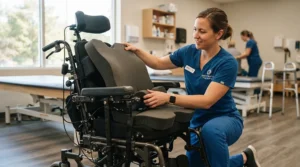
Real-World Scenarios: Matching Cushions to Kids
These are illustrative profiles, not prescriptions. Your clinician makes the final call.
Scenario A: a 6-year-old with spina bifida, full-time chair use, limited sensation. Budget is flexible because insurance or a funding program may help. This child is a candidate for the higher-protection tier: JAY GS if posture needs are complex, or ROHO Enhancer if sitting balance and skin risk dominate. Daily skin checks are non-negotiable.
Scenario B: a 10-year-old who’s active, uses the chair for school days, and has sensitive skin. Frequency is moderate and the child can weight-shift. JAY Zip fits well here, especially with a CoolOver or Microclimatic cover. Varilite Junior is a reasonable alternative if the family wants adjustable comfort and can handle the lead time.
Scenario C: a 13-year-old on a tight budget who needs a bridge while waiting for a clinic evaluation. Environment: mostly home and school, low-to-moderate risk. Drive Gel “E” or Skil-Care Gel-Foam can serve as a short-term stopgap, with a firm plan to get an evaluation soon.
The pattern: the higher the risk and postural need, the more the cushion should come from a clinical process rather than a shopping cart.
Problem → Solution Guide: Fixing Common Cushion Headaches
Problem: my child keeps sliding or leaning. Posture drift usually means the cushion isn’t giving enough lateral or pelvic support. A contoured design like the JAY GS or a positioning-focused cushion is the usual direction, with a clinician adjusting the setup.
Problem: heat and sweat. Heat and moisture are named contributors to skin breakdown. Look at breathable or temperature-aware covers, such as the Vicair Top cover on the Vicair Junior Vector O2 or the CoolOver option on the JAY Zip.
Problem: incontinence. Choose a moisture-resistant cover. The Skil-Care Gel-Foam includes a vinyl inner cover, and the JAY GS offers a moisture-resistant cover option.
Problem: the cushion feels flat or lumpy. Foam bottoming out, gel leaks, or air loss are the usual suspects. Inspect monthly, and replace rather than hope.
Problem: my child outgrew it. Growth-friendly designs like the JAY GS are made for this, and regular clinic re-checks catch it earlier.
How to Choose a Pressure Relief Cushion for Child Wheelchair Users
Here’s the decision path, in order of importance.
- Start with skin risk. Ask your clinician whether your child is low, moderate, or high risk. This drives everything else.
- Match the type to the risk. Foam suits lower risk, gel and fluid suit moderate-to-high, and air suits the highest-risk or poor-balance kids.
- Check postural needs. Asymmetry, leaning, and pelvic rotation point toward contoured, adjustable bases.
- Confirm size and height. Width, depth, and cushion thickness all change the fit. A cushion that’s too tall can wreck footrest and table height.
- Plan for maintenance. Air needs inflation checks; fluid and gel need leak checks; foam needs flatness checks. Pick the routine your household will actually keep.
- Verify the return and warranty terms. Dealers, retailers, and Amazon sellers differ. Know who supports the cushion after a problem.
Gel Wheelchair Cushion for Children vs Foam Cushion for Pediatric Wheelchair Seat vs Air
The gel wheelchair cushion for children
Gel and fluid designs conform to the body and help redistribute pressure under bony areas. They also tend to feel cooler at first touch. The trade-offs are weight and the leak risk some buyers report. The Skil-Care Gel-Foam, Drive Gel “E”, and the fluid insert in the JAY GS all live in this family.
The foam cushion for pediatric wheelchair seat
Foam is light and simple, with nothing to inflate or leak. Contoured, multi-layer foam like the JAY Zip can deliver real pressure reduction, but foam compresses over time. It’s the easiest to live with and the least forgiving when skin risk is high.
Air
Air offers the deepest immersion and the most adjustability, as with the ROHO Enhancer and Vicair Junior Vector O2. Cost, maintenance, and puncture risk are the price of admission.
| Type | Pressure Redistribution | Maintenance | Weight | Best For |
|---|---|---|---|---|
| Gel / fluid | Good to very good | Leak checks | Heavier | Skil-Care Gel-Foam, JAY GS |
| Foam | Fair to good | Low | Light | JAY Zip |
| Air | Very good to excellent | Inflation checks | Light | ROHO Enhancer, Varilite Junior |
| Flat foam pad (traditional) | Limited | Low | Light | Short-term, very low risk |
Looking at the table above, foam wins on simplicity and air wins on adjustability, while gel splits the difference. The traditional flat pad is the budget winner and the protection loser. If you’re comparing options for a child at real risk, the middle and right columns tell the story.
Seat Cushion Sizing: Getting the Fit Right
A great cushion in the wrong size is a bad cushion. Good seat cushion sizing comes down to a few measurements.
Width. Measure the widest part of the child’s hips or thighs. One pediatric seating guide from Hesperian Health Guides suggests adding about half an inch to each side. Another view: the seat should be as narrow as possible without squeezing the outer thighs.
Depth. Measure from the back of the buttock to the back of the knee, then subtract roughly an inch so the front edge doesn’t press behind the knee. A common rule of thumb is about one finger’s width of clearance. If you add room for growth, use a back support or firm filler rather than a deeper cushion that leaves the thighs unsupported.
Height. Include the cushion’s thickness when calculating seat height, since a 3″ cushion changes footrest and table clearance. This is where the roughly 3.5″ Vicair Junior Vector O2 needs a second look.
Sizing mistakes show up as sliding, pressure at the thighs, or a child perched at the front of the seat. Re-measure at every growth spurt.
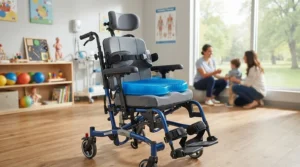
Wheelchair Cushion for Kids With Sensitive Skin
A wheelchair cushion for kids with sensitive skin isn’t about luxury. It’s about reducing the three skin enemies: pressure, shear, and moisture.
Covers matter as much as cores. A low-shear cover reduces friction. The JAY Zip offers a spacer-fabric Microclimatic cover and a CoolOver option aimed at heat and moisture. The Vicair Junior Vector O2‘s open-bottom Top cover lets the cushion breathe.
Moisture needs a plan. For kids with incontinence, a moisture-resistant cover protects the cushion, and prompt cleaning protects the skin. The Skil-Care Gel-Foam and JAY GS both offer such options.
Check the skin daily. Redness that doesn’t fade is the signal to call your clinician.
Skip the donut. Pediatric guidance warns against donut or ring cushions because they can increase injury risk.
Pressure Injury Prevention: What a Cushion Can and Can’t Do
Pressure injury prevention is a system, and the cushion is one part of it. Pediatric patient-safety groups report that pressure injuries occur in a meaningful share of pediatric cases, roughly 10% to 27% in their hospital data, and that they often progress after first detection. That’s a hospital context, but the lesson transfers: spot early, act early.
What helps at home, alongside the cushion:
- Movement breaks. One family guide suggests getting out of the chair for roughly 20-30 minutes every two hours when possible, and using push-ups or other relief techniques if a child must sit longer. Ask your clinician what’s right for your child.
- Daily skin checks. Hospitals build these into routine care for a reason.
- Good fit. A wrong-sized seat creates its own pressure points.
- Nutrition and hydration. Healing and skin health depend on both.
No cushion, however good, replaces repositioning. Think of it as the safety net, not the trapeze.
Working With a Pediatric Seating Clinic
A pediatric seating clinic is where cushion shopping turns into cushion fitting. These clinics typically involve occupational or physical therapists and seating specialists who assess posture, skin risk, mobility, and growth.
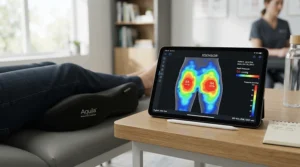
What to expect. A clinician evaluates how your child sits, moves, and transfers, then trials cushions and adjusts positioning. Many clinics also check how a cushion performs under the child, including pressure-mapping where available.
Why it matters. Clinical guidance for children, such as the NICE pressure ulcer guideline algorithm for children, points toward structured risk assessment, including tools like the Braden Q scale, and toward pressure redistribution for long-term wheelchair users. A clinic puts that into practice.
Funding. Coverage rules vary, and clinical cushions often need a prescription or letter of medical necessity. Ask the clinic what documentation insurers or funding programs require.
Questions to bring: What’s my child’s risk level? Which cushion types do you recommend, and why? How often should we re-check fit as they grow?
This isn’t medical advice, and your child’s care team has the final word.
Common Mistakes When Buying a Pediatric Wheelchair Cushion
Buying by price alone. The cheapest cushion can be the most expensive if it leads to a skin injury.
Ignoring cushion height. A tall cushion changes the whole seating geometry.
Choosing adult sizes “to grow into.” Too-wide or too-deep cushions can create pressure and instability.
Skipping the maintenance routine. Air that isn’t checked, gel that isn’t inspected, and covers that aren’t cleaned all fail quietly.
Trusting star ratings across ages. A 4.8 average on an adult-heavy listing says little about a six-year-old’s needs.
Using a donut cushion. Pediatric guidance specifically warns against them.
Skipping the clinic. For higher-risk kids, shopping without an evaluation is guesswork.
🔍 Take your search for a pediatric seating solution to the next level: compare the options above, tap any highlighted product to check current pricing and availability, and pair your pick with a clinic fit check!
Long-Term Cost & Maintenance: What You’ll Really Spend
Sticker price is only the opening bid. Total cost includes replacement covers, repairs, and re-fits as your child grows.
| Price Tier | Examples | Upfront | Long-Term Value Note |
|---|---|---|---|
| Budget (under $100) | Skil-Care Gel-Foam, Drive Gel “E” | Lowest | Fine for low risk; inspect for leaks and wear |
| Mid (mid-$300s) | Varilite Junior | Moderate | Adjustable air comfort; confirm lead time |
| Premium (check current price) | JAY Zip, JAY GS, ROHO Enhancer, Vicair Junior Vector O2 | Highest | Warranty, adjustability, clinic support |
The budget tier wins on upfront cost but asks more of you in vigilance. The premium tier costs more but brings warranties (the ROHO Enhancer and Sunrise Medical’s JAY line both list two-year coverage) and growth-friendly features like the JAY GS shelf. Spread over a growth cycle, a well-matched cushion can cost less per month of safe sitting than a mismatched cheap one. Also factor in the maintenance time: air demands more attention, foam the least.
FAQ
❓ How much should I budget for a pediatric pressure relief wheelchair cushion?
❓ Can I buy a pressure relief cushion for a child on Amazon?
❓ How long does a children's wheelchair cushion last?
❓ Will insurance cover a pediatric wheelchair cushion?
❓ Can a child sit on a gel cushion all day?
Conclusion
Choosing a pressure relief cushion for child wheelchair users comes down to matching risk, posture, and maintenance habits to the right design. For moderate-risk, active kids, the JAY Zip and Varilite Junior make a smart pair of starting points. For complex posture and growth, the JAY GS is the adjustable choice. For the highest skin risk or poor sitting balance, the ROHO Enhancer and Vicair Junior Vector O2 offer deeper air-based protection. Budget families have honest stopgaps in the Skil-Care Gel-Foam and Drive Gel “E”, as long as size and risk level line up.
Fit is the quiet hero. Measure carefully, include cushion height, and recheck at every growth spurt. Then add the habits no cushion replaces: daily skin checks, movement breaks, and a seating clinic that knows your child.
✨ Ready to Compare Options?
🔍 Take your search to the next level with these carefully selected cushions. Click on any highlighted item to check current pricing and availability, then bring your shortlist to your child’s clinician. A well-fitted cushion can help keep your child comfortable, protected, and ready for the day ahead!
Recommended for You
- Compact Teen Wheelchair For High School Hallways: 7 Best Picks 2026
- Pediatric Transport Chair Vs Self-Propelled Kids Wheelchair 2026
- Foldable Kids Wheelchair For Airplane Travel: 7 Best Picks (2026)
Disclaimer: This article contains affiliate links. As an Amazon Associate, I earn from qualifying purchases. If you purchase products through these links, we may earn a small commission at no additional cost to you.
✨ Found this helpful? Share it with your friends! 💬🤗
