
In This Article
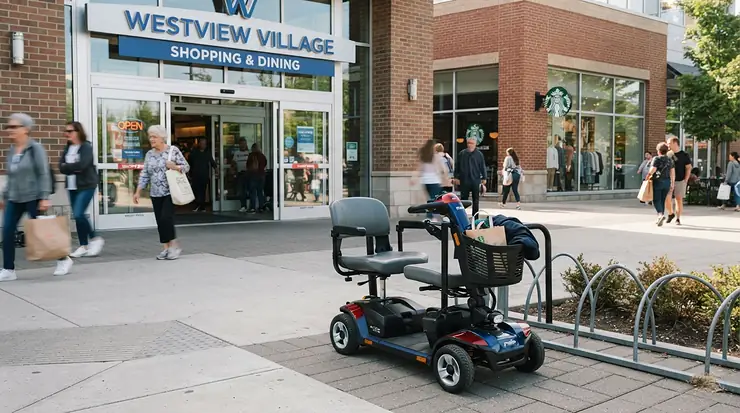
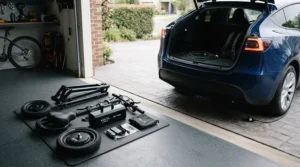
Here’s the moment that ruins so many mobility scooter purchases: you fall in love with a scooter online, picture yourself cruising through the farmers market, and then you actually try to lift it into your trunk. Suddenly that “compact” scooter feels like it’s made of wet cement. A genuinely portable mobility scooter for car trunk storage isn’t a nice-to-have feature — it’s the whole point. If you can’t load it yourself (or hand your spouse a piece that doesn’t throw out their back), the scooter stays in the garage and you stay on the couch. This guide breaks down seven real, currently available scooters engineered specifically to disassemble, fold, or auto-collapse into pieces that fit a sedan boot without a ramp, a hoist, or a small miracle. We’ll walk through actual weights, honest review themes, and the trade-offs nobody puts on the product page.
What Is a Mobility Scooter for Car Trunk Storage?
A mobility scooter for car trunk storage is a lightweight electric scooter — typically 27 to 60 pounds per component — engineered to fold in one motion or disassemble into liftable sections, so a single adult can pack it into a car’s trunk without a ramp, lift, or second person.
Quick Comparison Table
| Scooter | Total/Heaviest Piece | Load Method | Best For |
|---|---|---|---|
| Pride Go-Go Elite Traveller Plus | 35 lbs heaviest piece | 5-piece disassembly | Solo caregivers |
| EV Rider Transport AF+ | 44–49 lbs whole unit | One-button auto-fold | Zero-lift loading |
| Drive Medical ZooMe Auto-Flex | 55–60 lbs whole unit | Remote auto-fold, no disassembly | Frequent flyers |
| SmartScoot | 27 lbs heaviest piece | 3-piece disassembly | Lightest overall |
| Golden Technologies Buzzaround CarryOn | 47.5 lbs heaviest piece | 2-piece disassembly | Longest range |
| Freerider Luggie Classic | 52 lbs folded | Single-motion fold | Compact sedans |
| PAISEEC Folding Mobility Scooter | ~50 lbs assembled | Flat fold, no tools | Tightest budget |
Looking at the table, the split is really about lifting philosophy: the SmartScoot and Pride Go-Go Elite Traveller Plus ask you to lift small pieces multiple times, while the EV Rider Transport AF+ and Drive Medical ZooMe Auto-Flex ask you to lift one heavier unit exactly once. Budget shoppers gravitate toward the PAISEEC Folding Mobility Scooter, but as we’ll cover below, its advertised weight and its real-world assembled weight aren’t quite the same number.
A quick tap on any product name below shows current availability — no pressure, just options.
Top 7 Mobility Scooters for Car Trunk Storage: Expert Analysis
1. Pride Go-Go Elite Traveller Plus — easiest one-hand disassembly for solo caregivers
The feather-touch release on the Pride Go-Go Elite Traveller Plus is the feature every other brand seems to be quietly copying. One latch, five manageable pieces, done. With a 300-pound weight capacity and a heaviest section of around 32.5 to 35 pounds (the front frame on the 4-wheel version), this scooter splits weight distribution better than most auto-folders, which dump all 50-plus pounds on you at once.
The wraparound delta tiller also matters more than it sounds: for riders with arthritis or limited hand dexterity, one-handed steering removes a real daily barrier. Based on the spec comparison, this is the model to hand a spouse or adult child who’s never loaded a scooter before — the pieces are genuinely light enough to carry without straining, even up porch steps.
Aggregated owner feedback across mobility retailers consistently highlights the disassembly speed and reliability of the microprocessor controller, while a recurring theme in the same reviews flags the solid rubber tires as harsh on rough or cracked pavement compared to pneumatic alternatives.
Pros:
- ✅ Splits into 5 pieces, none over 35 lbs
- ✅ Wraparound tiller aids limited-dexterity users
- ✅ Auto-connecting cable speeds reassembly
Cons:
- ❌ Solid tires ride rough on cracked pavement
- ❌ Reassembly takes longer than single-fold designs
Typically listed in the $1,500 to $1,900 range depending on retailer and battery configuration, the Pride Go-Go Elite Traveller Plus earns its price through dependable engineering rather than flash — a solid pick if lifting one manageable piece at a time beats hauling one heavy block.
2. EV Rider Transport AF+ — true one-button auto-fold, zero pieces to carry
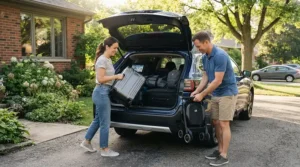
What most buyers overlook about the EV Rider Transport AF+ is that “auto-folding” isn’t a marketing exaggeration here — a handheld remote genuinely triggers the fold and unfold sequence, meaning you never touch a bolt or latch. At 44 to 49 pounds total (specs vary slightly by battery pack), it’s not the lightest scooter on this list, but it’s arguably the least physically demanding, since you’re rolling the folded unit to the trunk rather than disassembling anything. The 11.5Ah lithium battery is airline-rated, and the tight 31-inch turning radius makes it genuinely useful indoors, not just as a trunk-storage gimmick. On paper, this means shoppers who struggle with fine motor tasks (twisting knobs, aligning connector cables) get the most benefit here. Reviewers consistently note the remote-fold mechanism as the standout feature, and a common complaint centers on the narrow 15-inch seat feeling tight for larger-framed riders.
Pros:
- ✅ Remote-controlled fold needs zero disassembly
- ✅ Ultra-tight 31-inch turning radius indoors
- ✅ Airline-approved 11.5Ah lithium battery
Cons:
- ❌ Seat width runs narrow for larger riders
- ❌ Heavier than 2-piece disassembly rivals
Generally found in the $2,100 to $2,400 range, the EV Rider Transport AF+ suits anyone who wants trunk storage without ever bending over to lift a component — you’re paying for convenience, and it delivers.
3. Drive Medical ZooMe Auto-Flex — most caregiver-friendly load, no disassembly at all
The Drive Medical ZooMe Auto-Flex takes a similar remote-fold approach to the EV Rider but leans even further into the “don’t touch anything” philosophy — a wireless key fob collapses the frame and seat in about 15 seconds flat. Here’s what the spec sheet won’t tell you, but caregiver forums note constantly: because nothing detaches, there’s no risk of losing a bolt, misplacing a connector cable, or reassembling something incorrectly under time pressure in a parking lot.
At 58 to 60 pounds total, it is the heaviest single lift on this list, which matters if the person loading it has back or shoulder limitations. The 300-pound weight capacity and 13-mile range are solid for the segment, and the electromagnetic brakes add a safety margin on inclines.
Owner discussions frequently praise the “nothing to forget” simplicity, while a repeated concern is that the full 55-to-60-pound single piece is genuinely heavy for anyone without decent upper-body strength.
Pros:
- ✅ Fully automatic fold, nothing to reassemble
- ✅ 300-lb capacity with electromagnetic brakes
- ✅ 13-mile range beats most auto-folders
Cons:
- ❌ Heaviest single-lift piece on this list
- ❌ Wide price spread across retailers
Prices for the Drive Medical ZooMe Auto-Flex vary widely, commonly landing anywhere from $2,000 to $4,000 depending on retailer and accessory bundle — always check current price before assuming you’re comparing apples to apples.
4. SmartScoot — lightest overall footprint for trunk loading
If pure poundage is your deciding factor, the SmartScoot wins outright. At just 40 pounds fully assembled and a heaviest disassembled piece of only 27 pounds, it’s genuinely liftable by users who couldn’t manage the 50-plus-pound single units on this list. It breaks into three sections with no tools required, and the stainless-steel frame keeps it durable despite the low weight — this isn’t a case of “light because flimsy.”
The adjustable rear axle and 7 mph top speed (with a 3 mph low setting) give it more outdoor versatility than its size suggests. What reviewers seem to appreciate most is the width-adjustable frame, which lets one scooter fit a wider range of body types than fixed-width competitors — a detail spec sheets rarely emphasize but that matters enormously for comfort.
Verifiable pricing wasn’t consistent across sources at the time of research, so treat listed figures as a starting point rather than gospel; expect it to sit in a comparable bracket to other lithium-battery travel scooters in this guide.
Pros:
- ✅ Heaviest piece is only 27 lbs
- ✅ No tools needed for 3-piece breakdown
- ✅ Width-adjustable frame fits more body types
Cons:
- ❌ Top speed drops noticeably on inclines
- ❌ Pricing varies significantly by retailer
The SmartScoot is commonly priced in the $2,000 to $2,500 range at the time of research — check current listings, since this segment shifts often.
5. Golden Technologies Buzzaround CarryOn — longest range in a 2-piece disassembly
The Golden Technologies Buzzaround CarryOn splits the difference between “easy to lift” and “actually useful outdoors.” It disassembles into just two pieces (heaviest at 47.5 pounds), which is a faster process than the 5-piece Pride Go-Go, though each piece is heavier individually. What sets it apart is range: up to 18 miles on the standard lithium pack, comfortably the longest per-charge distance in this lineup.
Based on the spec comparison, this is the scooter for someone who wants trunk portability but also plans to actually cover ground — a trip to the farmers market and back, plus a stop at the pharmacy, without babysitting a battery gauge. The infinitely adjustable tiller is a small but genuinely useful touch for riders who’ve struggled with fixed-position controls on other scooters.
Reviewers frequently cite the extended range as the reason they chose this model over lighter but shorter-range competitors, with an occasional note that the two-piece design, while fast, still requires two separate lifts rather than one.
Pros:
- ✅ Up to 18-mile range, longest here
- ✅ Only 2 pieces to disassemble
- ✅ Infinitely adjustable tiller position
Cons:
- ❌ Heaviest piece still requires real lifting
- ❌ Optional airline battery sold separately
Typically found in the $1,400 to $1,800 range, the Golden Technologies Buzzaround CarryOn delivers strong value for buyers who weight range over ultra-light disassembly.
6. Freerider Luggie Classic — TSA-tested folding for frequent flyers
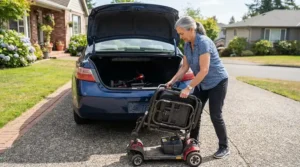
The Freerider Luggie Classic folds down in a single motion to roughly 52 pounds, and it’s one of the few scooters on this list explicitly built and marketed around airline and cruise-ship travel — not just car trunks. That dual-purpose design matters if your trunk-storage needs extend beyond weekly errands into actual vacations.
The 250-pound capacity is a touch lower than some rivals here, and the fold-to-roll mechanism means you’re wheeling the whole unit rather than lifting separated pieces, similar in spirit to the auto-folders but done manually with a foot pedal instead of a remote. What most buyers overlook is that TSA-approval claims mean the battery and dimensions meet documented airline thresholds — but airline policies still change, so a quick call to your specific carrier before a flight remains smart practice regardless of what any brand claims.
Owner discussions commonly praise the compact folded footprint for tight sedan trunks, alongside occasional notes that the foot-pedal fold takes a bit of practice to do smoothly on the first few tries.
Pros:
- ✅ Single-motion fold to travel-ready size
- ✅ Marketed and tested for airline travel
- ✅ Compact folded footprint for small trunks
Cons:
- ❌ Lower 250-lb weight capacity
- ❌ Foot-pedal fold has a learning curve
Generally priced in the $1,800 to $2,200 range, the Freerider Luggie Classic is the pick for anyone whose trunk-storage needs double as travel needs.
7. PAISEEC Folding Mobility Scooter — most affordable folding option under budget
The PAISEEC Folding Mobility Scooter earns its spot as the value pick, folding flat in seconds with a 270-watt motor that reviewers note handled grass and gravel paths without complaint. It includes a USB charging port and a sizable front basket, both genuinely useful for errands rather than just spec-sheet filler.
Here’s the honest caveat, and it’s an important one: the frequently advertised 35-pound weight figure typically excludes the armrests, seat cushion, backrest, and basket — once assembled with those components, real-world weight lands closer to 50 pounds. Buyers with limited upper-body strength should plan around that heavier number, not the marketing figure. Riders over roughly 5 feet 10 inches may also find the frame a touch short for fully comfortable seating.
Reviewers have specifically flagged the gap between advertised and assembled weight as the main thing to know before buying, while praising the responsive customer service and genuinely capable outdoor performance for the price point.
Pros:
- ✅ Folds flat, fits nearly any trunk
- ✅ USB port and basket included standard
- ✅ Handled grass and gravel in real testing
Cons:
- ❌ Assembled weight runs heavier than advertised
- ❌ Frame may feel short for taller riders
Commonly listed under $1,000, the PAISEEC Folding Mobility Scooter is the entry point here — just budget for the real assembled weight, not the headline number.
Scooter Disassembly 101: Folding vs. Breaking Down
Every scooter on this list falls into one of two camps, and understanding the difference changes which model actually suits you. An easy disassembly mobility scooter, like the Pride Go-Go Elite Traveller Plus or SmartScoot, breaks into two to five separate pieces that are individually lighter — you make multiple trips to the trunk, but no single lift is punishing. A folding or auto-folding scooter, like the EV Rider Transport AF+ or Drive Medical ZooMe Auto-Flex, collapses into one connected unit — faster to pack, but you’re lifting (or rolling) the entire weight at once. Scooter disassembly generally favors people with limited lifting capacity per attempt but decent stamina for repeated motion, while folding favors people who can manage one heavier lift but want speed and simplicity. Neither approach is objectively better; it’s a question of which physical limitation you’re working around.

Boot Scooter for Sedan Trunk: What Changes in a Smaller Car
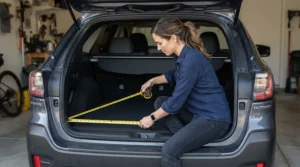
A boot scooter for sedan trunk use faces a tighter constraint than SUV or wagon owners ever have to think about: sedan trunks typically run 13 to 16 cubic feet, with openings often narrower and shallower than hatchback or crossover cargo areas. This is exactly why disassembly matters more in sedans than raw folded size does — a single folded unit like the EV Rider Transport AF+, at roughly 33.5 inches long and 16.5 inches wide, needs to clear the trunk lip at an angle, whereas the Pride Go-Go Elite Traveller Plus in pieces can be tetrised in around a spare tire well or golf clubs. Sedan owners should also account for the trunk’s height clearance under the rear parcel shelf, which can be the real limiting factor rather than floor space. What most buyers overlook is measuring their actual trunk opening width, not just cubic footage — a scooter that technically “fits” by volume can still refuse to clear an angled opening.
Car Trunk Mobility Scooter Weight & Trunk Dimensions: What the Numbers Really Mean
Car trunk mobility scooter weight isn’t just about whether you can lift it — it’s about whether you can lift it repeatedly, at the end of a tiring outing, possibly in the rain. The scooters here range from a 27-pound heaviest piece (SmartScoot) to a 60-pound single unit (Drive Medical ZooMe Auto-Flex), and that 2x-plus spread should weigh heavily (no pun intended) in your decision. Trunk dimensions compound this: a compact sedan trunk running 10 to 12 cubic feet leaves far less margin for error than a midsize sedan’s 15-plus cubic feet.
| Trunk Type | Typical Capacity | Best-Fit Scooters Here |
|---|---|---|
| Compact sedan | 10–12 cu ft | SmartScoot, PAISEEC Folding Mobility Scooter |
| Midsize sedan | 13–16 cu ft | Pride Go-Go Elite Traveller Plus, Golden Technologies Buzzaround CarryOn |
| SUV/wagon cargo | 20+ cu ft | EV Rider Transport AF+, Drive Medical ZooMe Auto-Flex |
The pattern here is straightforward: compact sedan owners benefit most from disassembly-style scooters with small individual pieces, while SUV and wagon owners have enough room to accommodate bulkier single-fold units without playing trunk Tetris. If you drive a compact sedan and still want an auto-folder, measure your trunk opening before ordering — cubic footage alone can be misleading.
Ready to stop guessing and start comparing real options? 🛒 Browse the models above while the details are fresh.
How to Choose a Mobility Scooter for Car Trunk Storage
Choosing the right model comes down to matching physical capability to loading method, in this order:
- Determine who’s lifting it. If it’s you, solo, favor the lightest heaviest-piece figure — the SmartScoot at 27 lbs is hard to beat.
- Measure your actual trunk opening, not just published cubic footage, since angled openings limit folded-unit scooters more than disassembled ones.
- Match weight capacity to rider weight with real margin — don’t buy a 250-lb-capacity scooter for a 240-lb rider.
- Decide between speed and effort. Auto-folders load faster with one heavier lift; disassembly scooters load slower with lighter lifts.
- Check real range needs, not just marketing range, since terrain and rider weight both reduce advertised mileage.
- Factor in travel plans. If flights or cruises are likely, prioritize TSA-tested or airline-rated models like the Freerider Luggie Classic.
- Set a true budget, including the gap between assembled and advertised weight — a lesson the PAISEEC Folding Mobility Scooter teaches clearly.
Common Mistakes When Buying a Trunk-Friendly Mobility Scooter
The single most common mistake is buying based on “total weight” alone and ignoring heaviest-piece weight, which is the number that actually determines whether a caregiver or spouse can help load it. A close second: skipping the trunk-opening measurement and assuming cubic footage tells the whole story — it doesn’t, especially for sedans with narrow trunk lips. Buyers also frequently underestimate assembled weight on budget folding scooters, a trap the PAISEEC Folding Mobility Scooter exemplifies with its 35-pound marketing figure versus its roughly 50-pound assembled reality. Finally, many shoppers overlook battery range degradation on hills and with heavier riders, then feel blindsided when the advertised 12-to-18-mile range doesn’t hold up on their actual daily route.
Caregiver Loading: A Real-World Scenario Guide
Picture Maria, who loads her mother’s scooter into a midsize sedan three times a week for errands. At 5-foot-4 and without much upper-body strength, she needs pieces under 35 pounds — the Pride Go-Go Elite Traveller Plus or SmartScoot fit her situation far better than anything requiring a single 50-plus-pound lift. Now picture Robert, who’s loading his own scooter solo after a stroke affected his grip strength but not his overall lifting capacity — for him, the EV Rider Transport AF+‘s remote fold removes the fine-motor challenge of disassembly entirely, even though the unit itself is heavier. And consider a retired couple who fly twice a year to visit grandchildren; for them, the Freerider Luggie Classic‘s airline-tested folding matters more than raw weight, since their loading routine happens at a gate counter, not a trunk. Matching the scenario to the scooter, not the spec sheet to your ego, is the real decision-making shortcut here.

Practical Usage Guide: Loading, Charging, and First 30 Days
Getting a new trunk-storage scooter into a smooth routine takes about a month of small adjustments. In week one, practice the fold or disassembly sequence at home, in good light, before you ever need to do it in a parking lot in the rain — muscle memory matters more than reading the manual twice. Charge fully before first use and get in the habit of topping off after every outing rather than waiting for a full drain, since lithium-ion packs on models like the EV Rider Transport AF+ and Golden Technologies Buzzaround CarryOn last longest when kept between roughly 20 and 80 percent charge. A common early mistake is forcing a disassembly latch when a cable is still connected — always disconnect the auto-connecting cable fully before separating frame sections on scooters like the Pride Go-Go Elite Traveller Plus. By week three, most users have found their own loading rhythm, whether that’s front-wheels-first or seat-off-first, and it’s worth sticking with whatever sequence feels natural rather than following someone else’s routine.
Mobility Scooter vs. Folding Wheelchair vs. Full-Size Scooter
| Factor | Trunk-Storage Scooter | Folding Wheelchair | Full-Size Scooter |
|---|---|---|---|
| Typical weight | 27–60 lbs (heaviest piece) | 25–40 lbs | 90–250+ lbs |
| Car trunk fit | Designed for it | Easy | Usually needs a lift/ramp |
| Range per charge | 10–18 miles | Manual, no battery | 15–30+ miles |
| Best for | Errands, travel | Manual mobility, no motor | Daily long-distance, uneven terrain |
A folding wheelchair wins on raw portability but demands upper-body strength to self-propel, which defeats the purpose for many mobility scooter buyers in the first place. Full-size scooters offer better range and stability on rough terrain, but as the table shows, they typically require a vehicle lift or ramp system rather than trunk storage — a completely different investment. For someone who wants powered mobility without modifying their vehicle, the trunk-storage category covered in this guide is the clear middle ground.
Long-Term Cost & Maintenance
Total cost of ownership on these scooters extends well past the sticker price. Lithium battery packs, standard on most models here including the SmartScoot and Drive Medical ZooMe Auto-Flex, typically need replacement every two to four years depending on charge habits, and replacement packs commonly run a few hundred dollars. Tires matter too: solid, flat-free tires like those on the Pride Go-Go Elite Traveller Plus eliminate puncture repairs entirely but transmit more road vibration, while pneumatic tires ride smoother but occasionally need patching. Budget models like the PAISEEC Folding Mobility Scooter save money upfront but may need more frequent part replacement given lighter-duty components — factor a modest annual maintenance budget into any “cheap” purchase decision rather than judging cost by purchase price alone.
Safety, Airline Rules & Regulations for Trunk-Stored Scooters
Battery regulations matter more than most buyers realize, especially for anyone combining trunk storage with occasional air travel. According to the FAA’s guidance on batteries in mobility devices, lithium-ion batteries in wheelchairs and mobility scooters are capped at 300 watt-hours, and passengers generally must advise the airline of the battery’s exact location on the device before flying. Removable-battery models like the EV Rider Transport AF+ and SmartScoot simplify this considerably, since the pack can travel in carry-on baggage separately from the checked frame. On the ground, basic scooter safety still applies regardless of model: always engage the anti-tip wheels standard on scooters like the Drive Medical ZooMe Auto-Flex, avoid overloading past the stated weight capacity, and inspect connector cables for wear each time you reassemble a disassembly-style scooter like the Pride Go-Go Elite Traveller Plus.
Features That Actually Matter (And Those That Don’t)
Weight capacity margin matters — buying right at the limit shortens battery life and stresses the motor, so leave real headroom. Heaviest-piece weight matters more than total weight, full stop, for anyone doing the lifting themselves. Turning radius matters indoors far more than top speed ever will, since most trunk-storage scooters are used for errands in stores and homes, not highway commuting. What doesn’t matter nearly as much as marketing suggests: top speed beyond 4-5 mph, since most users rarely push these scooters to their rated maximum in real indoor and sidewalk use, and cosmetic shroud color options, which add zero functional value regardless of how many “exclusive color” campaigns a brand runs.
Frequently Asked Questions
❓ How heavy is too heavy for a mobility scooter to fit in a car trunk?
❓ Can I fly with a mobility scooter that disassembles instead of folds?
❓ Do folding mobility scooters weigh more than disassembly models?
❓ How long do mobility scooter batteries last before replacement?
❓ Is a 3-wheel or 4-wheel scooter better for car trunk storage?
Conclusion
Choosing the right mobility scooter for car trunk storage really comes down to one honest question: who is going to lift this thing, and how many times a week? If that’s you, alone, with average strength, the SmartScoot or Pride Go-Go Elite Traveller Plus keep every lift manageable. If you’d rather lift once and skip disassembly entirely, the EV Rider Transport AF+ and Drive Medical ZooMe Auto-Flex trade a heavier single lift for genuine convenience. Budget-conscious shoppers can get real functionality from the PAISEEC Folding Mobility Scooter, provided they plan around its true assembled weight rather than the marketing number. Whatever you choose, measure your actual trunk opening, check current pricing directly with the retailer, and prioritize the lifting method that matches your real physical capacity — not the one that just looks impressive in a spec sheet.
Recommended for You
- Folding Travel Mobility Scooter for Airline Travel: 7 Best Picks 2026
- 7 Best Indoor 3-Wheel Mobility Scooters For Tight Spaces (2026)
- 7 Power Wheelchair Brands Worth Trusting in 2026
Disclaimer: This article contains affiliate links. As an Amazon Associate, I earn from qualifying purchases. If you purchase products through these links, we may earn a small commission at no additional cost to you.
✨ Found this helpful? Share it with your friends! 💬🤗
