

In This Article
A long-range mobility scooter for 30 mile range is a battery-powered, seated personal mobility vehicle rated to travel roughly 30 miles per full charge. It usually pairs a large lithium battery, often 500Wh or more, with a 3- or 4-wheel frame, so a full day of errands, park loops or travel doesn’t end at the charger. 🔋
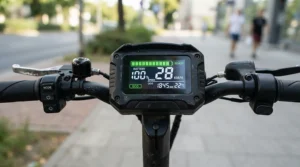
Here’s the thing about range: “30 miles” looks like a number on a box, but it’s really a promise about your day. Can you reach the farmers market, linger over coffee, and still get home without eyeing the battery gauge like it owes you money? That nagging worry has a name, range anxiety, and it’s the reason many riders shop for a long distance mobility scooter in the first place.
A standard mobility scooter is battery-powered and built around a seat, a tiller and three to five wheels. Most of them are designed for shorter hops. Name-brand models from Pride and Golden are typically rated in the 15-to-19-mile zone, while a newer wave of lithium-powered scooters claims 30 miles or more.
So I compared seven real models across that whole spectrum. I’m not going to pretend the budget claims are gospel or that the premium names are secretly long-range. Where a figure is a manufacturer claim, I’ll say so. Prices are ranges only, as of October 2026, so always check current price before you buy. 🛴
Quick Comparison: Seven Scooters at a Glance
| Product | Rated Range | Weight Capacity | Price Range | Best For |
|---|---|---|---|---|
| EWheels EW-36 | Up to 43 mi | 350 lb | High-$2,000s to low-$3,000s | Maximum distance cushion |
| VEVOR Heavy Duty 4-Wheel Mobility Scooter | 31 mi | 500 lb | Check current price | Heavy riders, rough ground |
| MOVEMAGIC 30 Miles Long Range 4-Wheel Mobility Scooter | 30 mi | 300 lb | Budget tier, check current price | Foldable travel on a budget |
| MIHAYO 4-Wheel Electric Mobility Scooter | 30 mi | Verify on listing | Budget tier, check current price | Comparison shoppers |
| WayCare Long Range Mobility Scooter | 15-25 mi | 300 lb+ | Budget tier, check current price | Shorter daily rides, quick top-ups |
| Pride Victory 10 (3-wheel) | 15.5 mi | 400 lb | Around $3,000 | Established brand, dealer support |
| Golden Buzzaround EX GB118D | 18 mi | 350 lb | $1,800-$2,000 range | Portability and car transport |
Looking at the comparison above, the EWheels EW-36 is the only model with real headroom over 30 miles, while the VEVOR Heavy Duty 4-Wheel Mobility Scooter, MOVEMAGIC and MIHAYO all aim squarely at the 30-mile mark. The premium-brand Pride Victory 10 and Golden Buzzaround EX fall short on rated range but offer other things, such as serviceability and portability. Budget buyers should note that the cheaper models’ numbers are manufacturer claims, so the real-world cushion matters more than the headline.
💬 Just one click — help others make better buying decisions too!😊
Top 7 Long-Range Mobility Scooter for 30 Mile Range Options: Expert Analysis
Each pick below gets a spec translation, an honest take, and a summary of what reviews and listings actually show. Where I couldn’t verify real owner feedback, I say so.
1. EWheels EW-36 — 43-mile rating, the biggest cushion here
The EW-36 is the only scooter in this lineup that clears 30 miles with room to spare. Based on the spec comparison, a manufacturer-listed range of about 43 miles (one buying guide says 45) leaves roughly a 13-mile buffer. That buffer is what you actually spend on hills, headwinds and heavier riders.
The 500W motor and 350 lb capacity put it in full-size territory. Its 219 lb total weight and non-disassembling frame tell you this scooter lives at home and rides, rather than riding in a sedan trunk. A 50-inch turning radius and 5 inches of ground clearance suit sidewalks, trails and long straight paths better than tight indoor aisles.
It’s for the rider whose real daily loop is 15 to 25 miles, or anyone who refuses to do range math at the park gate. Roundups lean heavily on its distance as the headline feature. I couldn’t verify a large pool of independent owner reviews, so treat the range as a manufacturer claim and ask about warranty terms before ordering.
Pros:
- ✅ Largest range cushion in this lineup
- ✅ Strong 500W motor with 350 lb capacity
- ✅ 5-inch ground clearance for uneven paths
Cons:
- ❌ At 219 lb, it can’t be loaded into a car
- ❌ Wide 50-inch turning radius in tight spaces
Price runs in the high-$2,000s to low-$3,000s range (check current price). Per rated mile, that’s the best value among the name-brand options, even if the sticker stings.

2. VEVOR Heavy Duty 4-Wheel Mobility Scooter — 60V 20Ah power for rough ground
Most scooters on this list sip power. This one carries a tank. Its 60V 20Ah battery works out to about 1,200Wh, rated for 31 miles, driven by an 800W motor on four wide tubeless tires.
Do the math and that’s roughly 39Wh per rated mile, noticeably more conservative than the ~24Wh per mile implied by 720Wh packs promising 30 miles. On paper, that suggests more slack inside the 31-mile figure. The 500 lb capacity is also the highest in the roundup.
There are three speed settings: 3.7, 7.5 and 15.5 mph. First gear suits crowded sidewalks. Third gear is far beyond typical pedestrian-speed mobility scooters, so check your local rules before using it. This is a pick for heavier riders, gravel driveways, grass and rural lanes, where small-wheel folders struggle.
I could only find retailer listing material for this model, not enough independent review sentiment to summarize, so I won’t invent any. Treat it as a spec-driven choice and read the return policy first.
Pros:
- ✅ Big 1,200Wh battery adds real range headroom
- ✅ 500 lb capacity, highest in this guide
- ✅ Wide tubeless tires for grass and gravel
Cons:
- ❌ 15.5 mph top gear raises legal and safety questions
- ❌ Folded size and weight unverified, so plan a ramp
Pricing wasn’t stable enough to quote, so check current price. Heavy-duty class machines generally cost more than budget folders, but the battery and capacity are what you’re paying for.
3. MOVEMAGIC 30 Miles Long Range 4-Wheel Mobility Scooter — foldable route to 30 miles
If the EWheels EW-36 is a grand tourer, the MOVEMAGIC is a carry-on for your driveway: foldable, loaded with extras, and aimed at buyers who want 30 miles without a premium-brand invoice.
The 350W copper motor and 720Wh lithium battery are rated for 30 miles at a 6.2 mph top speed. Do the math and you’d need nearly five hours at top speed to burn through that claim. The 300 lb capacity and four-wheel stance favor stability over agility, and the dual baskets, USB port, rearview mirror and phone holder cover everyday errands.
Retailer reviews are mixed but informative. Buyers praise value and say it climbed a hill with a rider over 200 lb. One owner compared it favorably to daily park scooter rentals. Others report they couldn’t confirm a full 30 miles, one unit arrived with a dead battery, and the phone holder sticks out and lengthens the scooter.
Pros:
- ✅ 720Wh lithium battery sized for the 30-mile claim
- ✅ Foldable design eases transport and storage
- ✅ Dual baskets, USB port and mirror included
Cons:
- ❌ Some buyers couldn’t verify the full 30 miles
- ❌ Reports of a dead-on-arrival battery
It sits in the budget tier (check current price). It’s good value if you test it on day one and keep your return window open.
4. MIHAYO 4-Wheel Electric Mobility Scooter — a 720Wh rival worth cross-shopping
The MIHAYO reads like a sibling to the MOVEMAGIC: a four-wheel frame, a 720Wh lithium-ion battery and a 30-mile rating. It’s a close rival, and that’s the useful part. When two scooters share nearly identical headline specs, the winner is decided by the details a spec sheet buries.
Independent information on this model was thin, so here’s what the spec sheet won’t tell you, and what to verify before buying:
- the battery’s actual watt-hours (not just amp-hours)
- weight capacity and folded weight
- return window and who pays shipping if it fails
- warranty length and whether the battery is covered
One honest note: listings for 30-mile scooters don’t always agree on battery numbers. Some cite 720Wh while others cite 24V 20Ah, which is only 480Wh. That gap is the difference between a believable 30 miles and an optimistic one.
I couldn’t verify a meaningful sample of owner reviews for this model, so I won’t summarize sentiment I can’t source.
Pros:
- ✅ 720Wh lithium pack matches the 30-mile claim
- ✅ Four-wheel layout favors stability
- ✅ Close rival gives you negotiating and comparison leverage
Cons:
- ❌ Little independent review data found
- ❌ Weight capacity and warranty need verifying
It sits in the budget tier (check current price). It’s best for cost-focused buyers who will do the homework above.
5. WayCare Long Range Mobility Scooter — puncture-proof tires, fast-charge claim
The WayCare is the pragmatist of the group. Listings vary from 15 to 25 miles depending on the version, with one 300Wh version rated at 15 miles. It’s a reminder that “long range” on a product title and 30 miles on the road are different things.
Capacity is listed at 300 lb or more, and the feature set includes puncture-proof tires, an LED headlight and a detachable basket. The 1.5-hour quick-charge claim is the interesting part. If it holds up, a lunch-break top-up could stretch a 15-mile scooter across a longer day. Puncture-proof tires also remove one of the most common ways a long ride ends early.
It’s for riders whose true daily distance is 10 to 15 miles and who value convenience over a big range number. If you routinely need 30 miles, pair the idea of quick charging with realistic range planning rather than expecting this scooter to be a marathoner.
I couldn’t verify enough independent reviews to summarize sentiment, so check recent buyer feedback on the listing yourself.
Pros:
- ✅ Puncture-proof tires cut flat-tire risk
- ✅ Quick-charge claim helps midday top-ups
- ✅ LED headlight and detachable basket included
Cons:
- ❌ Rated range often below 30 miles
- ❌ Versions and specs vary between listings
It’s in the budget tier (check current price). Good value for shorter daily rides, and not the scooter to buy for a true 30-mile day.
6. Pride Victory 10 (3-wheel) — brand-name comfort, short on range
The Pride Victory 10 is here on purpose. It’s the cautionary tale that shows why you can’t shop on brand reputation alone. This is a respected full-size scooter, but its rated 15.5 miles won’t meet a 30-mile goal without extra battery planning.
It tops out at 5.3 mph, handles up to 400 lb and turns in 42 inches. That tight turning circle for a full-size three-wheeler is the standout. It maneuvers through store aisles and driveways better than the 50-inch EWheels EW-36. The tradeoff is that three wheels are generally less stable than four on side slopes, so match the frame to your terrain.
If a dealer relationship, local service and a mainstream name matter to you, this is a strong candidate for shorter daily trips. For 30-mile days, ask the dealer whether a larger or spare battery option exists, because I couldn’t verify one. I also couldn’t verify a robust pool of owner reviews, so I’ll leave sentiment out.
Pros:
- ✅ 42-inch turning radius is impressive for full-size
- ✅ 400 lb capacity suits larger riders
- ✅ Established brand with dealer-based service
Cons:
- ❌ 15.5-mile rating falls well short of 30 miles
- ❌ Highest cost per rated mile here
Pricing lands around $3,000 (check current price). It’s a value verdict that only works if you ride short and prize service.
7. Golden Buzzaround EX GB118D — easiest to lift, easiest to travel with
The Golden Buzzaround EX GB118D is the odd one out, and I like it for that. It doesn’t chase range. It chases your car trunk. Rated at 18 miles, 5 mph and 350 lb, it weighs about 154 lb in total and breaks down into pieces.
Compared with the 219 lb EWheels EW-36, that’s a 65 lb difference, the gap between “I can load this” and “I need a lift.” The 40.5-inch turning radius is tight, and 4 inches of ground clearance suits pavement better than trails.
It’s the right call for someone whose range need is 10 to 15 miles but whose transport need is constant: weekly trips, family visits, or trunk-loaded outings. For genuine 30-mile days, you’d need a spare-battery strategy or a different scooter altogether.
I couldn’t verify a robust pool of independent owner reviews, so I’m not summarizing sentiment here.
Pros:
- ✅ Disassembles at about 154 lb total
- ✅ Tight 40.5-inch turning radius
- ✅ 350 lb capacity for its size
Cons:
- ❌ 18-mile rating won’t cover 30-mile days
- ❌ 4-inch clearance limits rough ground
Pricing sits in the $1,800-$2,000 range (check current price). Its value is portability, not distance.
Setting Up an Extended Battery Mobility Scooter for True 30-Mile Days
An extended battery mobility scooter, whether it ships with a large pack or accepts a spare, only delivers if you treat the battery like the engine it is. Here’s the practical playbook that listings rarely give you.
Day-one checklist:
- Inspect for shipping damage and confirm the battery powers on, since one buyer reported a dead unit.
- Charge fully with the supplied charger, and don’t improvise with a different one.
- Ride a measured loop and log distance versus battery gauge. That log becomes your personal range number.
Weekly habits:
- Check tire pressure on air-filled tires, because soft tires quietly shave miles.
- Keep battery contacts clean and dry.
- If storing for weeks, lithium makers commonly recommend a partial charge rather than leaving it empty or topped to the brim.
Spare pack vs. one big pack: A spare is insurance. A bigger pack is convenience. If your scooter supports a swappable battery, a spare doubles your day, but only if you can lift and swap it. Whichever you choose, know the watt-hours. That figure matters again when you travel: the FAA PackSafe guidance on wheelchairs and mobility devices says mobility batteries have specific rules, can require removal, and individual airlines may be stricter. A large 720Wh pack may not follow the same rules as a small one, so confirm with your airline early.

Real-World Case Studies: Which Scooter Fits Which Life
Specs are tidy. Lives aren’t. Here are three profiles, each matched to a pick with the reasoning shown.
The daily park-loop retiree. Picture a retired couple in a warm-weather community, riding 10 to 14 paved miles a day, five days a week, with a budget near $3,000. The EWheels EW-36 fits because 12 miles a day uses roughly a quarter to a third of its rated range, so the battery works far below its limit. That headroom also helps preserve long-term battery health, based on how lithium chemistry generally behaves.
The occasional traveler. Now consider someone who takes three or four trips a year to theme parks and family gatherings, with a tight budget and a small trunk. The MOVEMAGIC is the logical entry because it folds, has the 720Wh claim, and one reviewer noted it cost less than park rentals over a vacation. Test it fully before your first trip.
The rural heavy-rider. Finally, picture a 450 lb rider on a gravel lane who makes a 1-mile trip each way, six days a week. The VEVOR Heavy Duty 4-Wheel Mobility Scooter is the only option here with the capacity (500 lb) and wide tires for that surface. The huge battery means he’ll rarely think about range at all.
Range Anxiety: A Problem-to-Solution Guide
Range anxiety is the little voice that says “we’ll never make it back.” Here’s how to quiet it with specifics.
Problem 1: Hills eat battery. Choose a scooter with a 30–40% buffer over your longest planned trip. The EWheels EW-36 and VEVOR are the buffer picks. Use lower gears uphill and plan routes where the downhill comes on the way home.
Problem 2: Cold weather shrinks output. Lithium packs typically deliver less in the cold. Charge indoors at room temperature and ride soon after.
Problem 3: You don’t know how much is left. Use the half-gauge rule. On out-and-back routes, turn around when the gauge hits about half, sooner on hilly ones.
Problem 4: Stranded far from home. Carry the charger on longer outings, and map cafes, libraries or friends along your route who’d let you plug in.
Problem 5: The battery arrives weak. Test on day one. Keep every box and your return window handy.
How to Choose a Long-Range Mobility Scooter for 30 Mile Range
Here’s a simple, ordered way to narrow your options.
- Read the watt-hours, not the headline miles. Volts × amp-hours = Wh. A bigger number means more stored energy, and it’s the best predictor of real range.
- Add a buffer. Rated range assumes ideal conditions. Aim for a model rated 30–40% above your longest regular trip.
- Match weight capacity to rider and cargo. Leave margin for bags and baskets.
- Decide how you’ll transport it. If it must ride in a car, weigh the folded or disassembled weight honestly.
- Pick the wheel layout. Three wheels turn tighter. Four wheels feel steadier on slopes and uneven ground.
- Check battery replacement and warranty. Know whether the pack is swappable and what it costs to replace.
- Protect yourself with the return policy. For lesser-known brands, a generous return window is part of the product.
Battery Amp-Hour Rating Explained: Why Ah Alone Misleads
The battery amp-hour rating is the number sellers love, and it’s incomplete on its own. Amp-hours measure capacity at a given voltage, so a 24V 20Ah pack stores 480Wh while a 60V 20Ah pack stores 1,200Wh. Same “20Ah,” radically different energy.
That’s why the VEVOR Heavy Duty 4-Wheel Mobility Scooter, at about 1,200Wh for 31 miles, looks more conservative than a 720Wh pack promising 30 miles. As a rule of thumb, divide watt-hours by rated miles to get Wh per mile. Lower numbers mean either an efficient scooter or an optimistic claim. For comparison, the 300Wh WayCare version rated at 15 miles works out to about 20Wh per mile.
A practical test is to ask the seller for watt-hours and compare them to the range promised. If a listing gives only amp-hours and no voltage, assume the worst until proven otherwise. Then do your own range log in your first week of riding.
Lithium Battery Scooters vs. Traditional Lead-Acid Alternatives
Most of the 30-mile claims in this guide depend on lithium battery scooters. Here’s how the chemistry compares with traditional sealed lead-acid.
| Factor | Lithium | Sealed Lead-Acid |
|---|---|---|
| Weight for the same energy | Generally lighter | Generally heavier |
| Charge cycles over life | Typically more | Typically fewer |
| Charging speed | Typically faster | Typically slower |
| Voltage under load | Usually steadier | Usually sags more |
| Upfront cost | Typically higher | Typically lower |
| Best For | Long-range, portable scooters | Stationary, budget-first use |
The table points to the main reason long-range scooters have moved to lithium: you can carry more energy in less weight, which is exactly what makes a 30-mile pack practical. The WayCare quick-charge claim also depends on lithium behavior. The trade-off is upfront price, and the fact that lithium packs have air-travel rules that lead-acid packs often don’t. If long-term range is your goal, I’d choose lithium and accept the premium.

Long Distance Mobility Scooter: What to Expect in the Real World
A long distance mobility scooter turns a spec into a long afternoon, and that’s where numbers meet bodies. At roughly 5 mph, 30 miles is about six hours of seat time. That’s a lot of sitting, sun and vibration.
Seat comfort and suspension matter more than the motor at that point. Hydration, sun protection and bathroom stops need planning too. Headwinds and slopes can cut real range well below the rating, and rider weight, tire pressure and speed all pull it down further. Running in the lowest sensible gear typically stretches the battery. The honest takeaway is that a 30-mile rating is a ceiling, and most of us ride in the real world beneath it.
If you’re really planning marathon days, treat the EWheels EW-36 and VEVOR as the best fits, because their cushions absorb the real-world penalties. Shorter-range models like the Golden Buzzaround EX are better matched to shorter, frequent outings.
30 Mile Range Electric Scooter for Seniors: What Matters Beyond Miles
For a 30 mile range electric scooter for seniors, the number is just the start. Daily usability decides whether a scooter earns its keep.
Look at how easily the rider can transfer on and off, and how the tiller and controls feel. A swivel seat and a simple speed dial reduce friction. Four-wheel designs like the MOVEMAGIC and VEVOR tend to feel steadier on slopes, while the Pride Victory 10‘s tight turning suits crowded spaces. Visibility counts as well: lights, reflectors and a bright flag help drivers see you.
Charging should be easy too. If a family member does the lifting, check the battery weight and where the port sits. For seniors who live in an area with long distances between errands, a scooter that covers 30 miles can mean independence, not just convenience. Involve a family member in the buying decision, and review the return policy together.
Price & Value: Long-Term Cost of a Long-Range Scooter
Sticker price is just the first number. Replacement batteries, tires and charger wear all show up later, and lithium packs eventually age out.
| Product | Price Range | Rated Range | Rough Cost per Rated Mile | Best For |
|---|---|---|---|---|
| EWheels EW-36 | $2,900-$3,000 | 43 mi | About $65-$70 | Maximum distance |
| Golden Buzzaround EX | $1,800-$2,000 | 18 mi | About $100-$110 | Portability |
| Pride Victory 10 | $2,900-$3,100 | 15.5 mi | About $185-$200 | Dealer-backed service |
| Budget imports (MOVEMAGIC, MIHAYO, WayCare, VEVOR) | Check current price | 15-31 mi | Not verified | Cost-focused buyers |
Based on the table above, the EWheels EW-36 delivers by far the lowest cost per rated mile among the verified-price models, and the Pride Victory 10 the highest. The budget imports could beat everyone on paper, but their real cost depends on warranty, battery longevity and return experience. Verified price data wasn’t available for those, so factor in a battery replacement down the road before calling them cheap.
Prices are rounded ranges drawn from retail data compiled in mid-2026 and will vary.
✨ Ready to Ride Farther?
🔍 Take your range goals to the next level with these carefully selected scooters. Click on any highlighted product to check current pricing and availability. Match the battery to your real routes, and you’ll spend more time riding and less time watching the gauge! 🛴
Safety, Travel and Medicare Rules to Know Before You Buy
A few practical rules can save you headaches.
On the road: In many regions, mobility scooter users are treated like pedestrians, but rules vary by location. That makes speed a legal question, especially for a model with a fast top gear like the VEVOR. Check your state and local rules.
In the air: Battery rules can change what you can carry, and a large pack may need removal and carry-on handling. Always read the current FAA chart and confirm with your airline early.
With insurance: Medicare.gov’s wheelchairs and scooters page explains that Part B covers power-operated scooters only when medically necessary, with a face-to-face exam and a written prescription. Some devices may need prior authorization. Secondary sources note that outdoor-only or recreational scooters are generally not covered, so don’t count on coverage for a consumer-grade long-range model. Check with your provider.
With batteries: Use only the supplied charger, and avoid charging a damaged pack.

FAQ
❓ How many miles will a mobility scooter really go on a single charge?
❓ How long does a lithium mobility scooter battery last?
❓ Is a 3-wheel or 4-wheel scooter better for long-distance rides?
❓ How long does it take to charge a long-range scooter?
❓ Can I ride a mobility scooter on sidewalks and roads?
Conclusion
A long-range mobility scooter for 30 mile range isn’t one product. It’s a decision about how you want your day to feel. 🛴
If distance is your priority, the EWheels EW-36 gives the cushion that makes range anxiety fade, and the VEVOR Heavy Duty 4-Wheel Mobility Scooter adds big-battery muscle and the highest weight capacity. If budget and folding matter, the MOVEMAGIC and MIHAYO chase the same 30-mile claim, provided you test hard and keep the return window open. The WayCare suits shorter days with quick top-ups. And if you value brand support or portability over range, the Pride Victory 10 and Golden Buzzaround EX deserve a look.
Whatever you pick, read the watt-hours, add a real-world buffer, and track your own range for the first week. Check current price and availability before ordering, because everything here moves. A scooter that matches your life is worth more than one that merely matches a number.
Recommended for You
- Bariatric Mobility Scooter For Plus-Size Riders: 7 Best Picks 2026
- Heavy-Duty Mobility Scooter: 7 Best Picks For 2026, Compared
- Mobility Scooter vs Power Wheelchair: 7 Best Picks 2026
Disclaimer: This article contains affiliate links. As an Amazon Associate, I earn from qualifying purchases. If you purchase products through these links, we may earn a small commission at no additional cost to you.
✨ Found this helpful? Share it with your friends! 💬🤗
