
In This Article
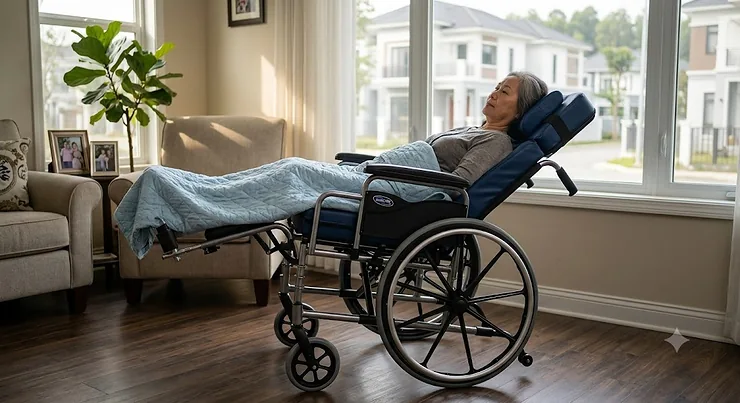
Here’s the thing nobody tells you when a doctor first mentions “pressure relief” and “wheelchair” in the same sentence: the chair itself becomes medical equipment, not furniture. A reclining wheelchair for pressure relief is a manual or power wheelchair with a backrest, and often a leg rest, that can be adjusted or fully laid back to shift body weight off the tailbone, hips, and heels — the exact spots where skin breakdown starts. It’s not a luxury feature. For someone who sits eight, ten, twelve hours a day, it’s closer to a seatbelt.
I’ve spent the last several weeks pulling apart specs, warranty language, and aggregated owner feedback on the reclining wheelchairs actually available on Amazon and through major mobility retailers right now, because the market is a mess of vague marketing copy. “Reclines for comfort” means almost nothing. What matters is degree of recline, whether the legs elevate independently, and whether the frame is rated for the kind of daily, sustained use that pressure-injury prevention actually requires.
Medicare and private insurers take this seriously too — coverage for power tilt and recline systems requires documented medical necessity, not just a preference for comfort, as Medicare’s own coverage guidance makes clear. That’s a useful signal: if insurers treat recline function as a clinical tool, you should shop for one the same way.
This guide walks through seven real models spanning budget manual chairs to full rehab-grade power systems, how to actually choose between them, and where the marketing overstates what a chair can do for your skin.
Quick Comparison Table
| Chair | Type | Recline Range | Leg Elevation | Best For |
|---|---|---|---|---|
| Vive Health Reclining Wheelchair | Manual | Up to 180° | Yes, dual calf pads | Home caregivers on a budget |
| McKesson Reclining Wheelchair | Manual | Up to 180° | Swing-away elevating | Facility/rental use |
| MAJESTIC IQ-9000 | Power | Remote-controlled recline | No independent leg rest | Solo users wanting simplicity |
| ComfyGO X-9 | Power | Auto recline, joystick | Independent power legs | Travelers needing foldability |
| Karman Healthcare XO-505 | Power (stand-capable) | Power tilt + recline | Power elevating legrest | Users who also need sit-to-stand |
| Invacare TDX SP2 | Power rehab | Up to 170° | Power elevating (multi-actuator) | Complex clinical positioning needs |
| Quantum Edge 3 Stretto | Power rehab | Up to 175° | Power articulating legrests | Narrow spaces + full rehab seating |
A quick read on this table: the two manual chairs top out around 180 degrees but require someone else to operate the recline lever, while every power option here lets the user adjust position independently — a meaningful difference for anyone repositioning multiple times a day. Notice, too, that only the rehab-tier chairs (the Invacare TDX SP2 and Quantum Edge 3 Stretto) combine true tilt-in-space with recline, which clinical guidelines increasingly point to as the more effective combination for offloading the ischial tuberosities. If your need is occasional comfort rather than active pressure-injury prevention, you likely don’t need to spend rehab-tier money.
💬 Already know your budget range? Jump straight to the product that fits — details below.
Top 7 Reclining Wheelchairs for Pressure Relief: Expert Analysis
1. Vive Health Reclining Wheelchair with Elevating Legs — best budget full-recline manual chair
The standout here is straightforward: a genuine 180-degree recline at a price point most families can absorb without financing. This is a manual chair, meaning a caregiver operates the recline lever rather than the user controlling it independently, but the mechanism locks at multiple angles rather than offering just “upright” or “flat.”
Built on a reinforced steel frame rated to 300 lbs, the chair pairs dual calf pads with removable, height-adjustable leg rests — removable matters here because it lets a caregiver disengage them entirely during transfers rather than fighting around a fixed footplate. Large rear wheels make it viable for both indoor use and short outdoor trips, and it folds flat for storage or car transport, which most true recliner-style manual chairs don’t manage.
Based on the spec comparison against similarly priced competitors, this model earns its price by not cutting corners on the one thing that matters most for pressure relief: recline depth. Reviewers consistently report that the locking mechanism holds securely even with an adult occupant shifting weight, though some note the standard upholstery runs warm over long sitting sessions — worth pairing with a breathable cushion cover if you’re using it for extended daily wear rather than occasional recline breaks.
Pros:
- ✅ Full 180° recline at an entry-level price point
- ✅ Removable calf pads simplify transfers
- ✅ Folds flat for storage or transport
Cons:
- ❌ Manual recline requires a caregiver, not self-operable
- ❌ Standard upholstery breathability is average
Expect this chair to land in the $300-$450 range at the time of research — check current price, since mobility equipment pricing shifts often. For anyone whose primary need is periodic recline breaks with caregiver assistance rather than independent all-day repositioning, it’s genuinely good value.
2. McKesson Reclining Wheelchair with Detachable Desk Arms — most adjustable manual recline angle
What most buyers overlook about this model is the “infinite adjustment” claim in its recline mechanism — unlike stepped-lock chairs that click into three or four fixed positions, this one holds at essentially any angle up to 180 degrees, which matters if a user’s tolerance for a given angle changes hour to hour.
The carbon steel frame with a silver-vein finish supports up to 350 lbs, and the detachable desk arms are a small but real convenience: they let a caregiver bring the chair up to a table or bed without lifting the user out first. Swing-away elevating footrests and a 20-inch seat width round out a spec sheet that reads like it was built for facility or rental use as much as home use.
On paper this means slightly heavier daily handling than the Vive option — the carbon steel construction adds durability but also weight — a fair trade if the chair will see frequent, sustained recline use rather than occasional adjustment. Aggregated feedback on similar McKesson reclining models points to the nylon upholstery holding up well under repeated cleaning, an underrated factor for anyone managing incontinence care alongside pressure-injury prevention.
Pros:
- ✅ Infinite recline adjustment, not just fixed stops
- ✅ Detachable arms ease table and bed transfers
- ✅ Breathable nylon upholstery, easy to clean
Cons:
- ❌ Heavier frame than comparable budget manual chairs
- ❌ No independent leg elevation control for the user
Price typically falls in the $350-$550 range at the time of research — always check current price before ordering. If your care setting rotates between bed, table, and chair throughout the day, the desk-arm design alone can justify the step up from the Vive model.
3. MAJESTIC IQ-9000 — best remote-controlled recline for solo users
The advantage that separates this from the manual chairs above is independence: a handheld remote lets the user recline the backrest without needing someone else in the room. Weighing 52 lbs without the battery, it supports up to 310 lbs and comes in two seat width options, 17.5 or 20 inches.
Here’s what the spec sheet won’t tell you outright — this is a single-function recline system, meaning the backrest angles back but the legrests don’t articulate independently. For someone who needs recline alone to manage pressure, that’s plenty. For someone whose care plan calls for legs-above-heart positioning specifically, it’s a real limitation, and it’s the most commonly cited drawback in aggregated owner discussion of this model.
Based on the spec comparison, the IQ-9000 slots in as a strong middle step between manual reclining chairs and full rehab power bases — remote-controlled comfort without the cost of a multi-actuator system. Reviewers consistently note the fold-and-travel design as a genuine strength, since the chair breaks down for car transport in a way most power chairs at this price point can’t match.
Pros:
- ✅ Remote-controlled recline, fully user-operable
- ✅ Two seat width options for better fit
- ✅ Foldable, travel-friendly design at a power-chair price
Cons:
- ❌ No independent leg rest adjustment
- ❌ Seat width options may not fit larger frames
Expect a price in the $1,500-$2,200 range at the time of research, prices may vary by seller and configuration. This is the chair to consider if independent recline control matters more than full leg articulation.
4. ComfyGO X-9 — best independent recline and leg lift control
The ComfyGO X-9 answers the IQ-9000’s biggest limitation directly: fully independent, simultaneous or separate control of both the reclining backrest and the elevating leg rests, run off a 360-degree intelligent joystick or an included remote. That combination — power wheelchair with leg elevation and recline working together rather than one or the other — is exactly what clinical guidance points to for meaningful pressure redistribution at the sitting bones.
Dual 250-watt motors handle mild inclines and mixed terrain reasonably well for a chair this light — 92 lbs with battery installed — and it folds to fit most vehicle trunks, a detail aimed squarely at frequent travelers. Two 24V 12Ah airline-approved lithium-ion batteries provide roughly 13 miles of range, with anti-tip rear wheels for added incline security.
What most buyers overlook about this model is how much day-to-day value the “control independently or together” language actually delivers: you can lift the legs alone for edema management, recline alone for a quick shoulder stretch, or combine both for genuine pressure offloading, all without leaving the chair or waiting on help. Reviewers consistently frame the joystick learning curve as minor, with most new users comfortable within the first week.
Pros:
- ✅ Independent power recline and leg elevation, joystick or remote
- ✅ Lightweight, foldable, airline-approved batteries
- ✅ Backed by a 3-year frame warranty
Cons:
- ❌ ~13-mile range is modest for heavy daily outdoor use
- ❌ Dual 250W motors struggle on steeper grades
Pricing generally sits in the $2,000-$2,900 range at the time of research — check current price for exact configuration costs. This is the pick if you want true full recline power wheelchair function without stepping up to rehab-tier pricing.
5. Karman Healthcare XO-505 — only chair on this list that also stands you up
This one earns its spot for a genuinely different reason: alongside power tilting and power reclining, the XO-505 includes a full sit-to-stand function via a powered hydraulic system rated to 250 lbs. That’s a different category of value entirely — it addresses pressure relief and the ability to stand for daily tasks, transfers, or simply changing perspective.
The frame is 6061 T-6 aircraft-grade aluminum on a mid-wheel drive base, giving roughly 25 miles of range per charge along with adjustable seat depth, width, armrest height, and footrest angle. A full LCD joystick display and H-style chest harness reflect that this is built for users who need both mobility support and genuine postural security while upright.
Here’s what the spec sheet won’t tell you: standing wheelchairs like this occupy a niche most buyers don’t know exists until a physical or occupational therapist recommends one specifically. One retailer testimonial described a spouse using it after a stroke, noting how much easier daily transfers became — a genuine aggregated sentiment point worth weighing, though independent, large-sample review data on standing wheelchairs remains thin industry-wide, so treat any single testimonial as anecdotal rather than definitive.
Pros:
- ✅ Combines power tilt, recline, and full sit-to-stand
- ✅ Aircraft-grade aluminum frame, ~25-mile range
- ✅ Fully adjustable seat depth, width, and armrests
Cons:
- ❌ Premium price puts it out of reach without insurance help
- ❌ 250 lb weight capacity is lower than most rehab chairs here
At the time of research, pricing runs roughly in the $15,000-$20,000 range before any insurance contribution — always confirm current pricing directly, since standing wheelchairs are typically special-order items. If a clinician has specifically recommended standing function, this is the chair to bring to that conversation.

6. Invacare TDX SP2 — deepest medical-grade tilt-and-recline combo
The Invacare TDX SP2 is built around Invacare’s Ultra Low Maxx positioning system, and the number that matters most here is the combination: up to 50 degrees of power tilt paired with up to 170 degrees of recline and roughly 12 inches of seat elevation, depending on the actuator configuration selected. That tilt-plus-recline pairing is precisely what clinical seating guidelines flag as more effective at reducing pressure at the ischial tuberosities than recline alone.
Available in single-actuator (basic tilt or recline), multiple-actuator (full tilt, recline, and leg elevation), and full rehab seating configurations, this is a chair built to be specified by a seating clinic rather than picked off a shelf — mid-wheel drive for tight-space maneuverability, SureStep suspension for uneven terrain, and LiNX electronics tying it all together.
Based on the spec comparison, this is the chair for someone with a documented, ongoing pressure-injury risk rather than someone shopping for general comfort. Verified public review volume is genuinely limited for chairs at this clinical tier, since most units are ordered directly through DME suppliers rather than reviewed on retail sites — worth stating plainly rather than inventing sentiment that doesn’t exist. What clinicians and seating specialists in industry literature consistently note is that the multi-actuator configuration is what justifies the jump in cost over single-actuator tilt-or-recline units.
Pros:
- ✅ Combines up to 50° tilt with up to 170° recline
- ✅ Multiple actuator configurations to match clinical need
- ✅ Mid-wheel drive with SureStep suspension for stability
Cons:
- ❌ Full rehab configuration pricing requires insurance navigation
- ❌ Limited independent consumer review data at this tier
New configurations commonly fall in the $12,000-$25,000+ range depending on seating package, though many users obtain one through Medicare or private insurance after medical-necessity documentation, often reducing out-of-pocket cost substantially. Check current pricing with your DME supplier, since rehab seating is priced per configuration rather than as a flat retail item.
7. Quantum Edge 3 Stretto — narrowest rehab chair with full positioning
The Quantum Edge 3 Stretto is marketed, accurately, as one of the narrowest power bases available in its class — a real advantage for anyone navigating tight home hallways or older houses that weren’t built with wheelchair clearance in mind. On the seating side, its TRU-Balance 4 system layers power anterior and posterior tilt, up to roughly 175 degrees of shear-reduced recline, and power articulating leg rests, so you can recline flat while the legs stay elevated in sync — a combination few power chairs at any price manage.
An optional iLevel feature adds up to 12 inches of powered seat elevation, usable even while driving at low speed, which is less about pressure relief directly and more about restoring eye-level social interaction and easier reach into cabinets and counters. Independent Smooth Ride Suspension keeps all wheels grounded over uneven terrain, a detail that matters when tilt-in-space and suspension have to work together to avoid transferring bumps straight into a reclined user’s spine.
What most buyers overlook about narrow-base rehab chairs like this is that “narrowest” and “most stable” don’t automatically conflict — the six-point suspension design is specifically engineered to compensate for the reduced footprint. Aggregated clinical and caregiver commentary in industry seating literature consistently cites the 50 degrees of posterior tilt as clinically meaningful for reducing sacral pressure, particularly when combined with the recline function rather than used alone.
Pros:
- ✅ Narrowest rehab power base for tight indoor spaces
- ✅ Tilt, recline, and independent leg articulation combined
- ✅ Optional iLevel seat elevation up to 12 inches
Cons:
- ❌ Full rehab configuration is a significant investment
- ❌ Optional iLevel adds meaningfully to total cost
Typical new pricing for a full-featured configuration lands around $12,000-$22,000+ at the time of research, with Medicare and private insurance frequently covering a substantial share when medical necessity is documented — confirm current pricing and coverage specifics with your equipment supplier.
Practical Usage Guide: Setting Up Your Reclining Wheelchair for Maximum Pressure Relief
Getting a reclining wheelchair delivered is the easy part. The first 30 days determine whether it actually does its job. Start by working with an occupational therapist or seating specialist to set a repositioning schedule — most pressure-injury guidance recommends small weight shifts roughly every 15 minutes and a fuller reposition or recline break every one to two hours for anyone at elevated risk.
A common early mistake is reclining to the same angle every time out of habit rather than varying it. Skin tolerates changing pressure far better than sustained pressure at any single angle, recline included — so if your chair supports multiple lock points or infinite adjustment, actually use the range rather than settling on one “comfortable” spot.
Maintenance-wise, check leg rest pivot points and recline actuators monthly for smooth operation, and inspect cushion covers weekly for moisture buildup, which accelerates skin breakdown independent of pressure. For power chairs, follow the manufacturer’s battery break-in schedule in the first two weeks — charging daily even on light-use days — since skipping this step is the single most common cause of early range loss that owners report.
Real-World Scenarios: Matching the Right Chair to Your Situation
If you’re a caregiver managing an aging parent at home with occasional mobility needs and a moderate budget, a manual reclining chair like the Vive Health Reclining Wheelchair or McKesson Reclining Wheelchair covers periodic recline breaks without a five-figure commitment, assuming you’re available to operate the recline yourself.
If you’re a working-age adult with a spinal cord injury who needs to reposition independently throughout a full day away from home, something like the ComfyGO X-9 or MAJESTIC IQ-9000 puts recline control in your own hands without requiring a rehab-clinic order process — though anyone at documented pressure-injury risk should still loop in a seating specialist before purchasing.
If you’re managing a complex neuromuscular condition — ALS, advanced MS, a high-level spinal cord injury — with a physician actively documenting pressure-injury risk, the Invacare TDX SP2 or Quantum Edge 3 Stretto is the realistic starting point, since insurance coverage for that tier depends on exactly this kind of clinical documentation.
Problem → Solution: Common Pressure Relief Challenges Solved
Problem: Recline alone isn’t relieving pressure at the tailbone. Recline shifts weight toward the back and shoulders but can still leave the ischial tuberosities loaded depending on the angle; pairing recline with even 15-20 degrees of tilt, as on the Invacare TDX SP2 or Quantum Edge 3 Stretto, redistributes weight more broadly across the back and thighs.
Problem: Skin redness at the heels despite a comfortable seat. This usually points to unsupported or improperly elevated leg rests rather than the seat itself — chairs with independent power leg elevation, like the ComfyGO X-9, let you lift heels fully clear of the footplate rather than resting them under partial pressure.
Problem: A caregiver can’t safely operate recline solo. Manual recline chairs generally require two-handed lever operation; if that’s not sustainable, a remote or joystick-controlled option like the MAJESTIC IQ-9000 removes the physical strain entirely.
Problem: The chair feels great in the store but causes overheating after hours of use. This is almost always the cushion and upholstery, not the frame — breathable, moisture-wicking covers matter as much as recline degree for anyone sitting most of the day.
How to Choose a Reclining Wheelchair for Pressure Relief
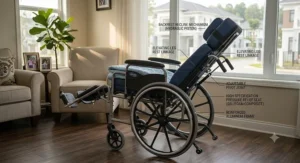
Choosing the right reclining wheelchair for pressure relief comes down to matching recline mechanism, control method, and frame capacity to your actual daily routine, not the longest spec sheet available.
- Get a seating evaluation first. A physical or occupational therapist can identify whether you need recline, tilt, or both — this single step prevents the most expensive buying mistakes.
- Decide manual versus power based on who operates it. If a caregiver is always present, manual chairs cut cost substantially; if independence matters, power recline is worth the premium.
- Check actual recline degrees, not marketing language. “Reclines for comfort” can mean 30 degrees or 180 — insist on the number.
- Confirm leg rest behavior. Independent elevation matters more than fixed footplates for anyone managing edema or heel pressure specifically.
- Match weight capacity with margin, not exactly. A chair rated right at a user’s weight leaves no room for clothing, cushions, or weight fluctuation.
- Ask about insurance pathways early. Rehab-tier chairs are frequently covered by Medicare or private insurance with proper documentation — don’t assume list price is the real cost.
- Weigh portability against positioning depth. The most feature-rich rehab chairs are rarely the most portable, and vice versa — decide which trade-off fits your life.
Power Wheelchair with Leg Elevation vs Manual Reclining Wheelchair
The core trade-off between a power wheelchair with leg elevation and a manual reclining wheelchair isn’t really about comfort ceiling — both can recline substantially — it’s about who controls repositioning and how often it realistically happens. A manual chair depends entirely on a caregiver’s availability; if that caregiver is stretched thin, repositioning gets skipped, and skipped repositioning is exactly what clinical guidelines flag as the biggest preventable risk factor.
A power wheelchair with leg elevation, like the ComfyGO X-9, puts that decision in the user’s hands, which tends to mean more frequent, smaller adjustments rather than infrequent, larger ones — and smaller, more frequent shifts are generally considered more protective than occasional full recline. The trade-off runs the other way on cost and complexity: power systems need charging discipline, occasional actuator maintenance, and a higher upfront investment.
For someone with reliable, consistent caregiver support and a tighter budget, a manual chair genuinely isn’t a compromise — it’s a reasonable match to circumstances. For someone living independently or with variable caregiver availability, the case for power control is considerably stronger.
Medical Grade Reclining: What Actually Qualifies
“Medical grade” gets used loosely in mobility marketing, so it’s worth being precise. In practice, medical grade reclining typically refers to chairs classified as FDA Class II medical devices, built to documented weight-capacity and durability standards, and — for the rehab tier specifically — configurable by a seating clinician to match a documented clinical need rather than sold as a fixed consumer product.
That distinction matters for insurance. Medicare and most private payers require this kind of medical-necessity documentation before covering power tilt, recline, or elevating leg rests, as outlined in federal durable medical equipment guidance. A consumer-grade recliner like the Vive Health or McKesson chair can still meaningfully help with comfort and periodic pressure relief, but it isn’t typically what insurers mean when they authorize coverage for “medical grade reclining” seating. The Permobil pressure management guide is a useful independent reference for understanding how clinicians actually apply that distinction when recommending a specific configuration.
If a physician has documented an active pressure-injury risk, medical grade reclining — meaning a rehab-tier chair specified through a seating evaluation — is the appropriate category to pursue, even though it costs more upfront, because it’s also the category most likely to be covered.
Comfort Positioning: Features That Actually Matter (And Those That Don’t)
Comfort positioning gets marketed around a long list of features, but only a handful actually change pressure outcomes. Recline angle and tilt angle matter enormously. Independent leg elevation matters for heel and calf pressure specifically. Cushion quality — genuinely — often matters more than the chair’s recline range, since a poor cushion undermines even a perfect recline angle.
What tends not to matter as much as marketing suggests: extra color options, cosmetic shroud designs, and marginal top-speed differences between power bases, none of which affect skin outcomes at all. Headrests and armrest adjustability matter for overall posture and fatigue but are secondary to the recline-and-cushion combination when pressure relief is the primary goal.
A useful filter: if a feature changes how weight is distributed across the body, it’s worth paying for. If it changes only appearance or convenience, it’s a nice-to-have rather than a clinical necessity.
Long-Term Cost & Maintenance of Reclining Power Wheelchairs
The sticker price is rarely the full cost picture. Power chairs need periodic battery replacement, generally every two to three years of regular use, and actuator or motor servicing occasionally falls outside standard warranty coverage once a chair ages past its first few years. Manual reclining chairs have far lower ongoing costs — mostly upholstery wear and occasional hardware tightening.
Total cost of ownership tends to favor manual chairs for lighter, caregiver-assisted use and favor power rehab chairs for heavy daily independent use, where the value of independent repositioning offsets the higher upfront and maintenance cost over years of use. Insurance coverage, where available, meaningfully changes this math for rehab-tier chairs, sometimes making a $15,000 chair a better long-term value than an uncovered $2,000 unit once out-of-pocket cost is factored in.
Safety, Regulations & Medicare Compliance Guide
Power and manual reclining wheelchairs sold as medical devices in the U.S. fall under FDA Class II regulation, and Medicare Part B coverage for power wheelchairs requires a face-to-face examination and physician-documented medical necessity, per current federal guidance. Clinical best-practice standards from bodies like the National Pressure Injury Advisory Panel further recommend that seated individuals at risk be positioned to reduce pressure, shear, and friction specifically — language that shows up directly in how DME suppliers justify tilt-and-recline configurations to insurers, as detailed in the current NPIAP seating guideline.
Practically, this means documentation from your physician and, ideally, a seating specialist evaluation strengthens both the safety case and the insurance case for any power positioning system. It’s not just paperwork — the same evaluation process that satisfies an insurer also tends to catch configuration mismatches before they become skin problems.
Pressure Sore Prevention: What to Expect from Real-World Use
Pressure sore prevention through a reclining wheelchair works best as one part of a broader routine, not a standalone fix. Research on wheelchair-seated pressure sore prevention, including foundational clinical work published via PubMed, points consistently to the same core idea: posture, cushioning, and repositioning frequency all matter alongside the chair’s mechanical features.
In everyday terms, expect a good reclining chair to meaningfully reduce sustained pressure at the tailbone and hips when used consistently — meaning actually reclined or tilted every one to two hours, not just available as an option. What it won’t do on its own is replace skin checks, proper cushion selection, or nutrition and hydration, all of which independently affect skin integrity regardless of how good the chair is.
Realistically, most users report noticing reduced redness and discomfort within the first few weeks of consistent use, provided the recline or tilt schedule is actually followed rather than skipped on busy days — which, anecdotally, is the most common reason results fall short of expectations.
FAQ
❓ What's the difference between tilt and recline on a wheelchair?
❓ Does Medicare cover a reclining power wheelchair?
❓ How often should someone reposition in a reclining wheelchair?
❓ Can a manual reclining wheelchair prevent pressure sores as well as a power one?
❓ Is a tilt-in-space chair better than a reclining chair for pressure relief?
Conclusion
A reclining wheelchair for pressure relief isn’t a single product category so much as a spectrum — from a simple manual chair a caregiver adjusts by hand, up through joystick-controlled independent recline, and finally to full rehab-grade tilt-and-recline systems specified by a seating clinician. The right pick depends far more on who’s operating it and how documented your pressure-injury risk actually is than on which chair has the flashiest spec sheet.
If you’re managing occasional comfort needs with steady caregiver support, the Vive Health or McKesson manual chairs are honest, capable choices. If independence matters and budget allows, the ComfyGO X-9 or MAJESTIC IQ-9000 bridge that gap well. And if a physician has flagged genuine pressure-injury risk, it’s worth having the seating conversation that leads toward chairs like the Invacare TDX SP2 or Quantum Edge 3 Stretto — not because they’re better products in the abstract, but because they’re built, and often insured, for exactly that job.
Whatever you choose, the chair is only half the equation. Consistent repositioning, the right cushion, and regular skin checks do as much work as the recline mechanism itself.
✨ Don’t Miss These Exclusive Deals!
🔍 Take your pressure relief routine to the next level with these carefully selected reclining wheelchairs. Click on any highlighted item to check current pricing and availability. These chairs will help you build the consistent, comfortable positioning routine your skin and your independence deserve!
Recommended for You
- Reclining Power Wheelchairs: 7 Top Picks for Real Comfort in 2026
- 7 Best Electric Standing Wheelchair Picks for 2026 (Honest Guide)
- Standing Power Wheelchair vs Regular: 7 Real Picks Ranked (2026)
Disclaimer: This article contains affiliate links. As an Amazon Associate, I earn from qualifying purchases. If you purchase products through these links, we may earn a small commission at no additional cost to you.
✨ Found this helpful? Share it with your friends! 💬🤗
