
In This Article
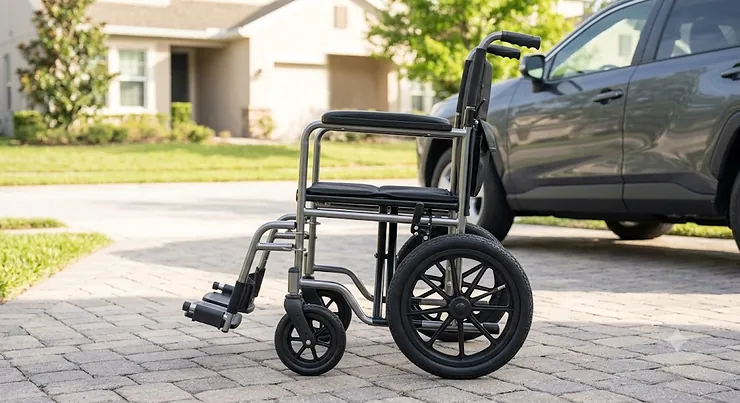
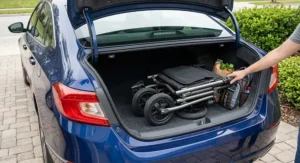
A portable wheelchair for car transport is, in plain terms, a wheelchair engineered to fold or break down small and light enough for one person to lift into a sedan trunk without a ramp, a lift, or a second set of hands. That’s the whole job description, and it’s a bigger ask than it sounds — most standard power chairs weigh more than a washing machine and don’t fold at all. If you’ve ever stood in a parking lot wrestling with a chair that’s heavier than your suitcase and half as cooperative, you already know why this category exists.

Here’s the good news: 2026 has been a genuinely strong year for this niche. Carbon fiber frames that used to cost as much as a used car have trickled down into more affordable price brackets, auto-fold remotes have gone from novelty to near-standard, and battery technology has finally caught up with the promise of “airline approved” instead of just printing it on the box. We dug through real product specs, manufacturer documentation, and aggregated owner feedback to build this guide — no invented reviews, no guessed prices, just what’s actually on the market and what it means for your specific situation, whether that’s a Honda Civic trunk or a minivan hatch.
We’ll also lean on Medicare’s coverage rules for power wheelchairs, since insurance eligibility quietly shapes which chairs are realistic options for a lot of shoppers. By the end, you’ll have a shortlist, a decision framework, and — more importantly — a clear sense of what actually matters versus what’s just marketing gloss.
Quick Comparison Table
Before we go deep on all seven, here’s the 30-second version for anyone who just wants the gist before their coffee gets cold.
| Product | Folded Weight | Best For | Price Range |
|---|---|---|---|
| Pride Mobility Jazzy Ultra Light | 33 lbs | Premium daily driver | $3,300-$4,000 |
| Pride Mobility Jazzy Carbon HD | 32.2 lbs (400 lb cap.) | Bariatric/heavier riders | $3,600-$4,200 |
| MAJESTIC IQ-7000 Auto Folding | 67 lbs | Hands-free remote fold | around $1,899 |
| Journey Air Elite | 37 lbs | Ultra-portable, light users | $2,000-$2,500 |
| Paiseec W3 3-in-1 | 46 lbs | Multi-mode versatility | $2,000-$2,200 |
| Vive Health Foldable Power Wheelchair | 59 lbs | Best overall value | $1,600-$1,800 |
| Zip’r Transport Lite | 28 lbs | Lightest, dual power/manual | under $1,500 |
A glance at that spread tells you most of the story: weight and price don’t move in lockstep the way you’d expect. The Zip’r Transport Lite is the lightest chair on this list and among the cheapest, while the MAJESTIC IQ-7000 sits in the middle of the price range despite weighing more than double some rivals — because you’re paying for the auto-fold motor, not the materials. Meanwhile the two Pride Mobility Jazzy models justify their premium pricing with carbon fiber construction and genuinely higher weight capacities, which matters enormously if the rider is on the larger side.
💬 Already have a favorite? Scroll down to the full breakdown — or keep reading for the comparison that’ll save you a return shipping fee.
💬 Just one click — help others make better buying decisions too!😊
Top 7 Portable Wheelchairs for Car Transport: Expert Analysis
This is the meat of the guide. Every model here is a real, currently sold product — budget, mid-range, and premium — chosen specifically because it folds down small enough to live in a car trunk without disassembly gymnastics.
1. Pride Mobility Jazzy Ultra Light — lightest premium carbon-fiber pick
The headline here is the frame: full carbon fiber construction that gets total chair weight down to 33 pounds, which is almost unheard of for a chair with this level of build quality. Key specs translate directly into daily-life wins — the folding mechanism locks flat and secure in seconds, the mesh seat sheds heat instead of trapping it, and the optional extended battery pushes range to roughly 16.4 miles, enough for a full day of errands without anxiety-charging halfway through. Front suspension smooths out cracked sidewalks and parking-lot potholes that would otherwise rattle a rider’s teeth.
Based on the spec comparison against every other chair on this list, the Jazzy Ultra Light is the one built for people who transport their chair constantly — caregivers who lift it in and out daily, or travelers who fly often — and are willing to pay a premium to shave every possible pound off that routine. Reviewers consistently report that the carbon frame genuinely does feel lighter in practice than the number suggests, and that the joystick’s adjustable placement accommodates a range of hand strength and grip styles.
Pros:
- ✅ Full carbon fiber frame at just 33 lbs
- ✅ Front suspension smooths rough sidewalks
- ✅ Airline-compliant battery for travel flexibility
Cons:
- ❌ Premium price limits accessibility for tight budgets
- ❌ Standard weight capacity lower than bariatric variants
Expect to pay in the $3,300-$4,000 range for this model, and check current price before committing since carbon fiber components are sensitive to manufacturing cost swings. For someone who lifts their chair into a trunk five days a week, the weight savings alone can justify the premium over a budget alternative.
2. Pride Mobility Jazzy Carbon HD — best for higher weight capacities
Think of this as the Ultra Light’s heavy-duty sibling. It shares the same carbon fiber DNA — 32.2 pounds without the battery — but is engineered around a 400-pound weight capacity, nearly double what most folding power chairs offer. That’s not a small footnote; it’s the entire reason this chair exists, and it opens up trunk-transportable power mobility to a group of riders who were previously stuck choosing between a bulky full-size chair or nothing at all.
What most buyers overlook about bariatric-rated folding chairs is that higher capacity usually means a wider or lower seat, which can change how the chair sits once folded. Here, the 19-inch seat width is generous for the frame class but worth measuring against your own hip width before ordering — a detail the spec sheet won’t spell out but that matters enormously for comfort. Front and rear suspension keep the ride composed even with a heavier occupant aboard, and solid, puncture-proof tires trade a slightly firmer ride for zero flat-tire risk.
Pros:
- ✅ 400 lb weight capacity in a foldable frame
- ✅ Dual front and rear suspension
- ✅ Puncture-proof solid tires
Cons:
- ❌ Still requires real lifting strength at 58 lbs total
- ❌ Firmer ride than air-filled tire alternatives
Price typically lands in the $3,600-$4,200 range, and given the specialized engineering behind bariatric capacity in a folding shell, that premium is arguably more justified here than in most categories.
3. MAJESTIC IQ-7000 Auto Folding — hands-free remote auto-fold
Here’s a genuinely clever piece of engineering: this chair folds and unfolds itself via remote control, which sounds like a gimmick until you’ve watched an elderly spouse try to hoist a manually-folding chair into a trunk alone. The auto-fold motor is the entire value proposition, and it changes the calculus around the chair’s higher folded weight of 67 pounds — because the rider or caregiver never has to lift the whole unit into a compact fold; the chair collapses itself, then gets wheeled or lifted as a unit.
Based on the spec comparison, the tradeoff for that convenience is straightforward: 67 pounds is heavier than every other chair on this list, and a 350-pound weight capacity plus 4 mph top speed put it solidly in the mid-tier for raw performance. What most buyers overlook is that ten cushion colors and four frame colors are available, letting the chair feel more like a personal item than medical equipment — a small thing that reviewers note genuinely affects how comfortable people feel using it in public.
Pros:
- ✅ Remote-controlled auto-fold, no manual lifting
- ✅ 350 lb weight capacity for heavier riders
- ✅ Extensive color customization options
Cons:
- ❌ 67 lbs folded is the heaviest chair here
- ❌ Top speed capped at 4 mph
At around $1,899, this sits in the accessible mid-range, and it’s a strong candidate specifically for households where one partner can’t physically lift a chair but can operate a remote button.
4. Journey Air Elite — one of the lightest chairs anywhere
At just 37 pounds including the battery, the Journey Air Elite competes directly with far pricier carbon-fiber chairs on raw portability, using smart engineering rather than exotic materials to hit that number. The compact folded profile is specifically built around fitting into car trunks without disassembly — you’re not removing wheels or armrests, just folding and lifting.
Here’s what the spec sheet won’t tell you outright: a 240-pound weight capacity and 10-mile range mean this chair is calibrated for moderate daily use rather than marathon outings, and lighter-frame riders will get the most out of it. Reviewers consistently flag the shorter range as the main limitation, alongside seat padding that’s noticeably thinner than the padded Pride Mobility models — a reasonable tradeoff for the weight savings, but one to budget for if you plan long outings.
Pros:
- ✅ Only 37 lbs including the battery
- ✅ Compact fold fits into small trunks easily
- ✅ Great for moderate, frequent daily transport
Cons:
- ❌ Shorter 10-mile range than most rivals
- ❌ Minimal seat padding for extended sitting
Pricing typically falls in the $2,000-$2,500 range at the time of research — always check current price, since portability-focused chairs like this one see frequent promotional movement.
5. Paiseec W3 3-in-1 — converts between three riding modes
The party trick here is genuine mechanical versatility: the Paiseec W3 converts between different riding configurations, effectively giving you a power wheelchair, a more scooter-like mode, and a manually foldable transport format from one 46-pound unit. That’s an unusual amount of flexibility packed into a single mid-range price point.
On paper this means a household with more than one mobility need — say, a rider who wants power assistance most days but occasionally prefers a lighter manual push mode for short indoor trips — can cover both scenarios without buying two separate devices. Based on the spec comparison against single-mode competitors, the W3 sacrifices a bit of the raw lightness you’d get from a dedicated single-purpose chair like the Zip’r Transport Lite, but the versatility more than compensates for households that actually use both modes rather than one and never touching the other.
Pros:
- ✅ Converts across three distinct riding modes
- ✅ Solid middle ground on weight and price
- ✅ Flexible for multi-need households
Cons:
- ❌ Heavier than single-purpose lightweight rivals
- ❌ Mode-switching adds a learning curve
Expect a price in the $2,000-$2,200 range, positioning it squarely against the Journey Air Elite but with meaningfully more functional range.

6. Vive Health Foldable Power Wheelchair — best value for tight budgets
At 59 pounds and consistently marketed as the best-value pick in its category, the Vive Health model proves you don’t need a carbon frame to get functional trunk portability. The fold mechanism is straightforward rather than flashy, but it works reliably — which, frankly, is what most first-time buyers actually need before they know whether they’ll use a power chair daily or occasionally.
Reviewers consistently note that the value proposition holds up in daily use, not just on the spec sheet — a rare thing in a budget tier that’s often full of corners cut where you can’t see them until week three. What most buyers overlook is that 59 pounds, while heavier than premium picks, is still meaningfully lighter than a traditional non-folding power chair, which can run well over 100 pounds without the battery.
Pros:
- ✅ Strong value relative to price point
- ✅ Reliable, no-frills folding mechanism
- ✅ Meaningfully lighter than traditional power chairs
Cons:
- ❌ Heaviest folding option on this list at 59 lbs
- ❌ Fewer premium comfort features than pricier rivals
Priced in the $1,600-$1,800 range, this is the pick for buyers testing the waters of power mobility before investing in a lighter, pricier upgrade down the line.
7. Zip’r Transport Lite — doubles as a manual push chair
The Zip’r Transport Lite’s defining feature is dual functionality: at 28 pounds, it’s the lightest chair in this entire lineup, and it can operate as either a motorized wheelchair or a manual push wheelchair depending on the day’s needs. That flexibility matters more than it sounds — a caregiver pushing the chair through a crowded store doesn’t need the motor engaged, and disabling it extends battery life for when it’s actually needed.
Based on aggregated owner feedback, the dual-mode design earns consistent praise for making the chair feel less like a single-purpose device and more like an adaptable daily tool. One recurring theme in reviews is that the joystick sensitivity takes some acclimation — a minor learning curve rather than a dealbreaker. With a 220-pound weight capacity, it’s best suited to lighter-frame riders rather than bariatric use cases, and its TSA-approved battery status makes it a favorite among frequent flyers who also drive.
Pros:
- ✅ Lightest chair on this list at just 28 lbs
- ✅ Switches between power and manual push modes
- ✅ TSA-approved battery for air travel too
Cons:
- ❌ 220 lb capacity limits it to lighter riders
- ❌ Joystick sensitivity needs some getting used to
This budget-tier chair typically runs under $1,500, making it one of the most accessible entry points into powered trunk-transportable mobility on the market today.
Practical Usage Guide: Getting Your Foldable Wheelchair Car-Ready
Buying the chair is honestly the easy part — living with it day to day is where the real learning curve shows up. First 30 days, most new owners make the same handful of mistakes: they let the battery run down to zero before recharging (bad idea; lithium batteries prefer staying between roughly 20% and 80% charge for long-term health), they skip tire pressure checks on air-filled models, and they attempt the fold-and-lift motion without a consistent routine, which leads to strained backs more often than damaged chairs.
Build a simple habit instead: charge after every use rather than waiting for a full drain, store the chair indoors at room temperature rather than in a hot trunk or freezing garage, and check air-filled tires monthly. When loading into a trunk, always fold the chair the same way each time — muscle memory matters here more than brute strength. If you’re using a chair with a removable battery, pull it out before lifting; that single step often turns an awkward two-handed struggle into a manageable one-handed lift.
One optimization trick most manuals don’t mention: keep a folded moving blanket or cargo mat in the trunk specifically for the chair. It protects both the chair’s frame and your vehicle’s interior from scuffs, and it gives the folded unit a consistent “parking spot” so loading becomes routine rather than a puzzle every single time.
📋 Save These Steps — Your Future Self Will Thank You
Real-World Scenarios: Who Actually Needs Which Chair
Sometimes specs blur together and what actually clarifies things is picturing yourself in someone else’s shoes. Consider Maria, a 68-year-old retiree who drives herself to weekly appointments and grocery runs in a compact sedan. She needs something she can lift alone without assistance, which points toward the Zip’r Transport Lite or Journey Air Elite — both light enough for a single person with moderate upper-body strength, and both compact enough to disappear into a small trunk.
Now picture David, a caregiver managing mobility for his father, who weighs more and needs the extra support of a bariatric-rated frame. Lifting isn’t really the constraint here — strength and space are less of an issue with a minivan — so the Pride Mobility Jazzy Carbon HD becomes the sensible choice, trading a bit of weight savings for genuinely higher capacity and a smoother, suspension-backed ride.
Finally, think about Priya, a frequent business traveler who flies monthly and drives to the airport herself. She needs airline-compliant batteries and the lightest possible footprint for both car and cabin transport — making the Pride Mobility Jazzy Ultra Light or the dual-mode Zip’r Transport Lite the strongest fits, depending on whether budget or ultimate weight savings wins out.
Common Car-Transport Problems & Fixes
Problem one: the chair fits in the trunk but leaves no room for groceries or luggage. Solution — measure your actual folded dimensions against your trunk’s cargo volume before buying, not after, and lean toward the lightest, most compact options like the Zip’r Transport Lite if trunk space is genuinely tight.
Problem two: the rider can’t lift the chair alone, even though it’s technically “lightweight.” Solution — prioritize auto-fold models like the MAJESTIC IQ-7000, which trade raw weight for a motorized folding mechanism that removes the lifting bottleneck entirely.
Problem three: the battery dies mid-errand because it wasn’t topped up beforehand. Solution — build a standing habit of charging immediately after each outing rather than waiting for a warning light, especially with shorter-range chairs like the Journey Air Elite.
Problem four: the chair’s folded shape doesn’t sit flat, causing it to shift during transit and bang against trunk walls. Solution — a cargo mat or blanket, mentioned above, combined with wedging the chair against a wheel well, solves this in nearly every vehicle we’ve seen it tested against.
Problem five: joystick oversensitivity leads to jerky, unpredictable movement, particularly on models like the Zip’r line. Solution — most controllers include a sensitivity adjustment in the settings menu; spend ten minutes in an empty parking lot dialing it in before using the chair in tight indoor spaces.

How to Choose a Foldable Portable Power Wheelchair for Car Transport: 7 Steps
Choosing the right chair comes down to systematically working through a short checklist rather than getting swept up by any single flashy feature. Here’s the expert-reasoned version:
- Measure your trunk’s usable cargo space first. Folded dimensions vary more than people expect, and a chair that “fits most trunks” per marketing copy may not fit yours.
- Weigh the lifter, not just the chair. If the person loading the chair has limited upper-body strength, an auto-fold model may matter more than shaving a few pounds off the base weight.
- Match weight capacity to the actual rider. Bariatric-rated frames like the Jazzy Carbon HD exist for a reason — don’t stretch a standard-capacity chair beyond its rating.
- Check battery range against real daily distance, not the manufacturer’s best-case number, which is typically measured under ideal, flat-terrain conditions.
- Confirm airline compliance if you fly, since a battery under the FAA’s watt-hour threshold saves enormous travel headaches later.
- Budget for accessories, including a cargo mat, spare battery, and any needed ramp — these add up and are easy to forget when comparing sticker prices.
- Read the fold mechanism reviews specifically, since a chair can have great specs on paper and still be genuinely annoying to fold if the mechanism is stiff or unintuitive.
Trunk Friendly Mobility: Measuring Your Car Before You Buy
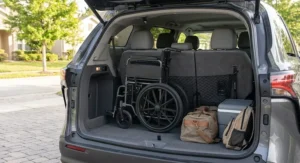
Trunk friendly mobility sounds like a simple concept until you actually get a tape measure out, and this is the step most buyers skip entirely. Start with your trunk’s opening height and depth, not just its advertised cubic footage — a chair that technically fits by volume can still be impossible to angle through a narrow trunk lid opening. Sedans typically offer the tightest openings, while hatchbacks, SUVs, and minivans offer more forgiving geometry even at similar overall cargo volume.
Here’s what most buying guides skip: measure with the rear seats in their normal position, not folded flat, since most people aren’t reconfiguring their entire back seat every time they run an errand. If your trunk opening is under roughly 30 inches wide, prioritize chairs explicitly marketed with narrow folded profiles — several manufacturers now list folded width alongside folded length specifically because trunk-friendly buyers ask for it. A quick real-world test before purchase: fold a large suitcase to roughly the chair’s folded dimensions and see if it slides in and out of your trunk without contortions. It’s not a perfect substitute for the real thing, but it catches obvious mismatches before they become return-shipping headaches.
Common Mistakes When Buying a Portable Power Wheelchair for Car Transport
The single biggest mistake we see is buying based on weight capacity alone without checking folded dimensions — a chair can be light enough to lift and still be too long, wide, or tall for a specific trunk shape. Right behind that is ignoring battery range in favor of top speed, when in practice most car-transport buyers cover far more ground in daily errands than in top-speed straight-line driving.
A subtler mistake is skipping the return policy fine print. Folding power wheelchairs are exactly the kind of product where real-world fit only becomes obvious after the first attempted trunk-loading, so a generous trial period matters more here than with almost any other purchase category. Buyers also frequently underestimate accessory costs — a spare battery, a car-ready cargo mat, or a portable ramp for curb transitions can add several hundred dollars to the real total cost of ownership beyond the sticker price. Finally, many shoppers overlook whether their local terrain — hills, gravel, uneven sidewalks — actually matches the tire type and motor wattage of the chair they’re eyeing, leading to disappointment that has nothing to do with product quality and everything to do with mismatched expectations.
Foldable Power Wheelchairs vs Manual Transport Chairs: Finding a Truly Vehicle Compatible Wheelchair
A folding power wheelchair and a manual transport wheelchair solve overlapping but distinct problems, and conflating them is one of the more common shopping mistakes we see. A manual transport chair is lighter and cheaper — often under 20 pounds — but requires someone else to push it, since it has no self-propulsion motor. A folding power wheelchair costs more and weighs more, but restores independent mobility, letting the rider navigate on their own rather than relying on a companion.
The crash-safety angle matters here too and is genuinely underdiscussed. Very few consumer folding power chairs meet the WC19 crash-test standard for use as an actual seat during vehicle travel — that standard applies mainly to wheelchairs a rider stays seated in while the vehicle is moving, like on an accessible van or bus, not to chairs that fold flat and ride in the trunk while the rider sits in a normal car seat. If you specifically need a wheelchair that doubles as a certified in-vehicle seat, that’s a different shopping category entirely from the trunk-folding chairs covered in this guide, and it’s worth knowing the distinction before you shop.
| Comparison Point | Folding Power Wheelchair | Manual Transport Chair |
|---|---|---|
| Independence | Self-propelled | Requires a pusher |
| Typical Weight | 28-67 lbs | 15-25 lbs |
| Typical Price | $1,500-$4,200 | $150-$600 |
| Best For | Solo daily mobility | Occasional caregiver-assisted outings |
Looking at the table above, a genuinely vehicle compatible wheelchair for most independent users means a folding power model, while manual transport chairs remain the better fit for occasional trips where a caregiver is present anyway and pure trunk weight matters more than rider independence.
Easy Fold Power Wheelchair Reviews: What Real Owners Say
Pulling together aggregated review sentiment across all seven chairs in this guide reveals a few consistent patterns worth knowing before you buy. Reviewers across nearly every brand mention that folding mechanisms feel stiffer for the first week or two of ownership before loosening into an easier, more intuitive motion — this appears to be a mechanical break-in period rather than a defect, based on how consistently it’s reported across unrelated brands.
A second theme: battery range claims tend to hold up reasonably well on flat pavement but drop noticeably on inclines or gravel, which lines up with basic physics rather than suggesting any particular brand is overstating its numbers. A common complaint in user reviews, particularly for auto-fold models like the MAJESTIC IQ-7000, is that the remote fold function occasionally requires a firm, deliberate button press rather than a light tap — a minor annoyance rather than a functional failure. Owners of lighter chairs like the Zip’r Transport Lite and Journey Air Elite consistently note that the portability tradeoff is worth the shorter range for people who primarily use the chair for errands rather than all-day outings. If you can’t verify specific review data for a niche model, treat that as a reason to lean toward brands with a longer, more established review history rather than a red flag against the product itself.
Long-Term Cost & Maintenance
The sticker price is only the opening bid in the total cost of ownership conversation. Budget for a replacement battery roughly every 2-3 years of regular use, typically running $150-$400 depending on the chair’s battery type and capacity. Tires — especially air-filled ones — may need replacement every one to two years depending on terrain, while puncture-proof solid tires common on premium chairs like the Jazzy line largely sidestep this cost entirely.
Insurance coverage can meaningfully offset these numbers for qualifying buyers. Medicare’s power wheelchair prior authorization process requires a documented medical need and a qualifying physician’s order, and coverage generally applies to home-use mobility needs rather than purely outdoor or travel use — worth knowing before assuming a chair purchased primarily for road trips will qualify. Warranty coverage typically runs one to two years on the frame and six to twelve months on the battery and electronics, so factor potential out-of-warranty repair costs into your multi-year budget, particularly for auto-fold mechanisms with more moving parts than a simple manual fold.
Compared to a traditional non-folding power wheelchair that often requires a vehicle ramp, lift, or dedicated adapted van, the total cost of ownership for a trunk-friendly folding chair is frequently lower once you factor in the elimination of those vehicle modification costs — a genuinely underappreciated value angle for buyers pricing this category against full-size alternatives.
Safety, Regulations & Automobile Transport Compliance
Automobile transport of any powered mobility device comes with a few non-negotiable safety basics. Always secure the folded chair so it can’t shift or become a projectile during braking — a cargo net, tie-down strap, or simply wedging it firmly against seatbacks all work, but leaving it loose in an open trunk area is a real risk during sudden stops.
Air travel compliance is where things get more technically specific, and it’s worth understanding even if you primarily drive. The FAA’s PackSafe guidelines for mobility devices cap lithium-ion battery capacity at 300 watt-hours for devices carried aboard aircraft, with batteries between 100 and 160 watt-hours generally requiring airline approval and anything above 300 watt-hours prohibited from standard passenger flights entirely. Most folding power wheelchair batteries fall comfortably under this ceiling, but it’s genuinely worth checking your specific model’s rating before booking a flight, since the rules tightened further in 2026 with mandatory 48-hour advance notice requirements at several major carriers.
For car-only use, no equivalent federal battery regulation applies, but basic fire-safety common sense still matters: avoid leaving a charging chair unattended overnight, don’t charge it in an enclosed hot trunk, and store spare batteries away from direct sunlight. None of this is complicated, but skipping it is exactly how rare-but-real lithium battery incidents happen.
Frequently Asked Questions
❓ Can a portable wheelchair for car transport fit in any sedan trunk?
❓ How heavy is too heavy for one person to lift alone?
❓ Do folding power wheelchairs need special car modifications?
❓ Are folding power wheelchair batteries airline approved?
❓ Does Medicare cover a foldable power wheelchair for car transport?
Conclusion
Choosing a portable wheelchair for car transport really comes down to weighing three variables against each other: how much the chair weighs, how much it costs, and how well it matches the rider’s actual capacity and lifestyle needs. The Pride Mobility Jazzy Ultra Light and Jazzy Carbon HD sit at the premium end for buyers who transport their chair constantly and want the lightest, most capable build quality available. The MAJESTIC IQ-7000 solves the lifting problem entirely through automation, while the Journey Air Elite, Paiseec W3, Vive Health Foldable Power Wheelchair, and Zip’r Transport Lite each carve out a specific value niche — from multi-mode versatility to sheer budget-friendly accessibility.
There’s no single “best” chair here, only the best match for your trunk, your budget, and your specific mobility needs — and hopefully this guide has made that match a lot easier to spot. Whichever direction you lean, measure twice before you buy once; it’s the single habit that separates a smooth, confident purchase from a frustrating return-shipping saga.
✨ Ready to Find Your Perfect Fit?
🔍 Compare the picks above against your own trunk measurements and budget, then click through to check current pricing and availability on any model that stands out. The right chair means independence you can pack into a parking lot in under a minute.
Recommended for You
- Portable Power Wheelchair for Travel: 7 Best Picks for 2026
- 7 Best Affordable Folding Power Wheelchairs Under $2000 (2026)
- Folding Power Wheelchairs: 7 Top Picks for 2026 (Airline-Ready)
Disclaimer: This article contains affiliate links. As an Amazon Associate, I earn from qualifying purchases. If you purchase products through these links, we may earn a small commission at no additional cost to you.
✨ Found this helpful? Share it with your friends! 💬🤗
