
In This Article
Shopping for reclining power wheelchairs feels a little like shopping for a mattress blindfolded — everyone swears their model is “the comfortable one,” the spec sheets read like alphabet soup, and the price tags swing wildly with almost no explanation. You’re not just buying a set of wheels. You’re buying the piece of furniture you’ll spend more waking hours in than your couch, your car seat, and possibly your bed combined.
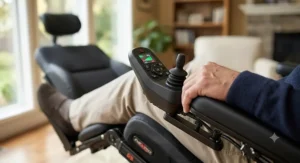
So what is a reclining power wheelchair, exactly? It’s a battery-powered mobility chair with a backrest — and often a footrest — that adjusts backward through a range of angles, letting the user shift from upright driving posture to a partially or fully reclined resting position without transferring out of the chair. That single mechanical feature changes everything about how the chair fits into a daily routine.
Reclining power wheelchairs matter for a reason that goes beyond convenience: sustained sitting pressure is a genuine medical concern. Clinicians routinely prescribe wheelchairs with tilt and recline functions specifically to redistribute weight away from pressure points and reduce the risk of pressure ulcers, and research published through the National Center for Biotechnology Information backs this up with hard interface-pressure data. In this guide, we’re comparing seven real, currently available reclining power wheelchairs across budget, mid-range, and premium tiers, breaking down comfort features, recline technology, adjustable positioning, and — because nobody wants a surprise bill — how the numbers actually shake out over time.
Whether you’re researching for yourself or for a parent who’s tired of transferring in and out of a rigid seat six times a day, this piece is built to get you from “overwhelmed” to “decided.”
Quick Comparison Table
Before diving into the deep-dive reviews, here’s the fast version for anyone in a hurry.
| Chair | Recline Range | Weight Capacity | Best For |
|---|---|---|---|
| Karman XO-202 | Standing + seated recline | ~300 lbs | Users wanting standing therapy benefits |
| Drive Medical Cirrus Plus EC | Adjustable-tension back | 300–400 lbs | Everyday indoor/outdoor clinical use |
| Vive Health Model V | Reclining swivel captain’s seat | 300 lbs | Comfort-focused daily drivers |
| Rubicon DX11 | Multi-angle recline | ~300 lbs | Long-range travel and errands |
| ActiWe WX9000 | Manual recline backrest | 285 lbs | All-terrain outdoor mobility |
| WheelWavi Foldable Reclining | 90°–160° power recline | ~265 lbs | Compact apartment living |
| COYE Reclining Wheelchair | 90°–165° recline | 220 lbs | Budget-conscious lighter users |
Looking at the spread, the split isn’t really “cheap versus expensive” — it’s “how much recline technology and adjustable positioning do you actually need.” The Karman XO-202 and Vive Health Model V lean into comfort and physiological benefit, the Rubicon DX11 and ActiWe WX9000 prioritize range and terrain, and the WheelWavi and COYE models trade some robustness for a lower price of entry. The Drive Medical Cirrus Plus EC sits in the middle as the most clinically established, ANSI RESNA-tested option of the seven.
💬 Already leaning toward one? Jump to its full review below — or keep comparing, because the right pick usually isn’t the flashiest spec sheet, it’s the one that matches your actual day.
Top 7 Reclining Power Wheelchairs: Expert Analysis
We researched real listings, manufacturer spec sheets, and aggregated customer feedback to put together this lineup. Every product below includes a bold product name for easy scanning — click through to check current pricing, since exact prices shift often and are never something we’ll quote here.
1. Karman XO-202 — standing power chair with seated recline
The Karman XO-202 stands out — literally — as the only chair on this list that transitions the user from seated to a supported standing position at the push of a button, while also offering a comfortable seated recline for rest periods. It runs on a 24V motor system with a stated range up to 25 miles per charge, tops out around 5 mph, and weighs roughly 110 lbs without the battery pack, which is notably light for a standing-capable frame.
What most buyers overlook about this model is how deep the adjustability goes: seat width (14″–18″), seat depth (18″–20″), four backrest heights, and five armrest heights mean it’s closer to a semi-custom build than an off-the-shelf chair. Based on the spec comparison, this makes the Karman XO-202 a strong fit for users managing circulation issues, muscle tone concerns, or long-term seated pressure risk who could benefit from periodic standing.
Reviewers consistently report high satisfaction with the memory foam seat and back padding, and the chair carries a 4.6-star aggregate rating on the Wheelchair Institute review platform — a genuinely strong showing for this product category.
Pros:
- ✅ True stand-to-seated transition, not just recline
- ✅ Extensive seat width, depth, and armrest customization
- ✅ Strong aggregated review rating from a dedicated review platform
Cons:
- ❌ Not a lightweight travel chair despite its 110 lb frame
- ❌ Highest price point of the seven featured here
At roughly $4,000–$5,500 depending on configuration, the Karman XO-202 is a premium investment, but for someone whose care team has recommended standing therapy, the value case is about health outcomes, not just mobility.

2. Drive Medical Cirrus Plus EC — clinically tested folding frame
The Drive Medical Cirrus Plus EC earns its spot as the most established name here — Drive Medical has been a fixture in durable medical equipment for years, and this chair has been tested against ANSI RESNA standards, the industry benchmark for wheelchair safety and durability. It’s available in 16″, 18″, and 20″ seat widths, with a wider 22″ double-cross-brace frame variant rated for higher weight capacity.
Top speed sits around 5 mph with a 15-mile range, a turning radius near 35 inches, and a modest 6-degree climbing angle — respectable for sidewalks and ramps, less suited to steep driveways. What buyers should weigh here: this model’s “reclining” comfort comes primarily from an adjustable-tension backrest and swing-away footrests rather than a motorized full recline, so if all-the-way-back rest positioning is the priority, it’s worth comparing directly against the Vive Health Model V below.
Aggregated reviewer sentiment consistently praises the padded cushion, storage pouch, and overall build quality, with occasional notes about the learning curve on the programmable PG joystick controller.
Pros:
- ✅ ANSI RESNA tested for safety and durability standards
- ✅ Four seat-width options for a closer fit
- ✅ Adjustable-tension back plus swing-away footrests
Cons:
- ❌ Recline is tension-adjustable, not a true powered full recline
- ❌ Climbing angle is modest for hilly terrain
Priced in the $1,400–$1,900 range, this chair delivers a lot of clinical-grade reliability for the money, even if full recline isn’t its headline feature.
3. Vive Health Model V — reclining swivel captain’s seat
The Vive Health Model V is built around comfort first. Its 18″ x 20″ captain’s seat reclines, swivels for easier transfers, and adjusts in height — a combination that genuinely reduces the physical strain of getting in and out, which matters more than most spec sheets let on.
The dual-motor setup delivers a 4 mph top speed and a 15-mile range, with a tight 25-inch turning radius that makes indoor maneuvering noticeably easier than in bulkier chairs. What the spec sheet won’t tell you, but reviewers note, is that the swivel function is one of the most-praised features in aggregated feedback — caregivers in particular mention it simplifies transfers for users with limited upper-body strength.
Based on the spec comparison, this chair is best suited to primarily indoor and smooth-surface outdoor use (it explicitly isn’t rated for gravel or rough terrain), so buyers picturing park trails should look toward the ActiWe WX9000 or Rubicon DX11 instead.
Pros:
- ✅ Reclining, height-adjustable, swivel captain’s seat
- ✅ Five-year frame warranty, generous for the category
- ✅ Tight 25-inch turning radius for indoor use
Cons:
- ❌ Not rated for gravel or rough outdoor terrain
- ❌ 15-mile range is modest next to travel-focused rivals
In the $1,800–$2,300 range, the Vive Health Model V is a strong middle-tier pick when comfort features matter more than covering long distances.
4. Rubicon DX11 — long-range dual-motor traveler
The Rubicon DX11 is the range champion of this roundup, advertising up to 25 miles on a single charge thanks to dual 12Ah lithium batteries paired with a 600W motor — noticeably more powerful than the 500W or dual-250W setups common in this price bracket.
That extra power translates into real-world benefit for anyone regularly covering long distances, running errands across a shopping center, or navigating a sprawling campus. The multi-angle reclining backrest lets users drop into a rest position mid-outing without needing to head home first, which is exactly the kind of transformation content Amazon listings tend to skip over: it’s not just a spec, it’s a change in how far someone is willing to go from home.
Reviewers frequently flag the fold-down design and airline-approved battery configuration as major selling points for anyone who travels, while a smaller number mention the learning curve of managing dual battery packs.
Pros:
- ✅ Class-leading 25-mile advertised range
- ✅ 600W motor outperforms typical dual-250W rivals
- ✅ Airline-approved dual lithium battery configuration
Cons:
- ❌ Dual battery system adds a modest learning curve
- ❌ Heavier folded weight than compact budget models
Expect a price in the $1,600–$2,200 range — solid mid-tier value for the power and range on offer.
5. ActiWe WX9000 — all-terrain dual-motor workhorse
The ActiWe WX9000 leans hard into outdoor capability. Twin 250W motors (500W combined) and four spring-suspension shocks mean this chair handles curb cuts, uneven sidewalks, and light gravel with noticeably less jolt than single-motor budget alternatives.
A 20Ah lithium-ion battery supports roughly 20 miles of range, and the 285 lb weight capacity gives it a bit more headroom than several budget competitors. On paper, this means a user who splits time between a paved driveway and a bumpier rural or suburban neighborhood gets meaningfully more stability without stepping up to premium pricing. The reclining backrest is manually adjustable rather than motorized, which keeps the mechanism simpler and, per aggregated reviews, less prone to the electrical faults that occasionally show up in cheaper powered-recline units.
Pros:
- ✅ Four-point spring suspension smooths rough terrain
- ✅ Dual 250W motors provide reliable outdoor torque
- ✅ 285 lb capacity, above average for this price tier
Cons:
- ❌ Manual recline mechanism, not motorized
- ❌ Suspension adds bulk versus ultra-compact folders
Priced around $900–$1,300, the ActiWe WX9000 is a genuinely strong budget-to-mid pick for anyone prioritizing terrain handling over recline sophistication.

6. WheelWavi Foldable Reclining Electric Wheelchair — compact power recliner
The WheelWavi Foldable Reclining Electric Wheelchair targets a very specific buyer: someone in a smaller home or apartment who still wants genuine powered recline. Its backrest adjusts through a 90°–160° range, and the whole unit folds down to a size that fits realistically into a closet or a compact car trunk.
Powered by a 500W motor with roughly 20 miles of range, it won’t outrun the Rubicon DX11 on distance, but that’s not really the point — this chair is optimized for maneuverability in tight indoor spaces where a bulkier frame becomes a daily obstacle course. What most buyers overlook is that compact folding chairs like this one often sacrifice suspension quality to hit their lighter weight, so expect a firmer ride on rougher pavement.
Aggregated review sentiment highlights the ease of folding and airline-approval status as strong points, with a smaller cluster of comments about the joystick sensitivity taking a session or two to get used to.
Pros:
- ✅ Genuine powered 90°–160° backrest recline
- ✅ Compact folded footprint for small living spaces
- ✅ Airline-approved for travel use
Cons:
- ❌ Firmer ride quality on rough outdoor surfaces
- ❌ Joystick sensitivity has a short adjustment period
At around $800–$1,100, this is one of the more affordable ways to get true powered recline rather than a manual-tension backrest.
7. COYE Reclining Wheelchair — entry-level recline on a budget
The COYE Reclining Wheelchair rounds out the list as the most accessible entry point for lighter users. Its aluminum alloy frame keeps costs down while still supporting a 220 lb weight capacity, and the backrest reclines through an unusually generous 90°–165° range for a chair at this price.
The 18″ x 17″ breathable mesh seat is a small but meaningful detail — reviewers consistently note it stays cooler during extended sitting than the vinyl seating found on some competitors, which matters more than it sounds like it should when you’re seated for hours. Adjustable leg rests and armrests round out the positioning options, though the 7″ front wheels and 20″ rear wheels are sized for standard indoor and light outdoor use rather than aggressive terrain.
Honestly, this is the chair to consider when the priority is simply “I need real recline without a premium price tag,” not maximum range or off-road capability.
Pros:
- ✅ Wide 90°–165° recline range for its price class
- ✅ Breathable mesh seat reduces heat buildup
- ✅ Adjustable leg rests and armrests included
Cons:
- ❌ Lower 220 lb weight capacity limits the buyer pool
- ❌ Wheel sizing favors indoor over rugged outdoor use
At roughly $700–$1,000, the COYE Reclining Wheelchair is the value pick for buyers whose top priority is recline range on a tight budget.
Top 7 Products at a Glance
| Chair | Motor / Power | Range | Price Range |
|---|---|---|---|
| Karman XO-202 | 24V, standing capable | Up to 25 mi | $4,000–$5,500 |
| Drive Medical Cirrus Plus EC | PG programmable controller | Up to 15 mi | $1,400–$1,900 |
| Vive Health Model V | Dual motor, 4 mph | Up to 15 mi | $1,800–$2,300 |
| Rubicon DX11 | 600W, dual battery | Up to 25 mi | $1,600–$2,200 |
| ActiWe WX9000 | Dual 250W (500W) | Up to 20 mi | $900–$1,300 |
| WheelWavi Foldable Reclining | 500W | Up to 20 mi | $800–$1,100 |
| COYE Reclining Wheelchair | Standard motor | N/A (indoor-focused) | $700–$1,000 |
Cost-per-mile isn’t a perfect metric for wheelchairs the way it is for cars, but it does reveal something: the Rubicon DX11 and ActiWe WX9000 deliver the most range per dollar, while the Karman XO-202 justifies its premium through standing therapy rather than distance. If daily errand-running is the main use case, the range-focused chairs win on value; if pressure management and positioning are the priority, the extra spend on the Karman XO-202 or Vive Health Model V tends to pay off in comfort rather than mileage.
Recline Technology Explained
Not all “recline” is created equal, and this is where a lot of buyers get tripped up. There are three mechanisms sold under the same word: manually adjustable backrest tension (like the base Drive Medical Cirrus Plus EC), powered backrest-only recline (the WheelWavi and COYE models), and full tilt-in-space systems that pivot the entire seat-to-back unit together, which none of our seven chairs offer but which show up in higher-end clinical prescriptions.
The distinction isn’t academic. A study on tilt-in-space and recline functions found that backrest-only recline can actually increase pressure at the coccyx even as it reduces pressure at the ischial tuberosities — meaning recline alone doesn’t automatically equal better pressure distribution, and combining recline with even modest tilt tends to perform better for pressure relief than recline by itself. What this means in practice: if pressure ulcer prevention is a primary concern, ask your care team specifically whether backrest recline is sufficient or whether a tilt-capable chair is medically indicated.
For general comfort and rest positioning rather than clinical pressure management, backrest recline like the kind found on the WheelWavi, COYE, and Rubicon DX11 is genuinely useful and dramatically better than a fixed-angle seat.
Adjustable Positioning: Why It Matters
Adjustable positioning is the unglamorous feature that ends up mattering most six months in. Seat width, seat depth, armrest height, footrest angle, and headrest placement all interact — change one, and the “correct” setting for the others often shifts too.
Here’s what most buyers overlook: a chair that fits perfectly in the showroom or the product photos can feel wrong within weeks if the user’s needs change, loses or gains weight, or simply discovers a more comfortable footrest angle through trial and error. Chairs like the Karman XO-202, with its multiple width, depth, and height options, and the Vive Health Model V, with its adjustable footplate and armrest geometry, build in room to adapt. Budget chairs like the COYE Reclining Wheelchair still offer leg rest and armrest adjustment, just across a narrower range.
Practical tip: if you or the intended user has a progressive condition, prioritize a chair with a wider adjustment range now rather than assuming you’ll simply replace the chair later — reconfiguring an existing chair is almost always cheaper and faster than a full replacement.
Comfort Features That Make a Real Difference
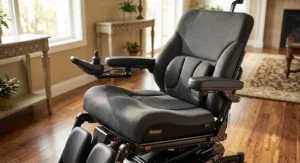
Comfort features are where marketing language gets slippery — “plush,” “premium,” “ergonomic” — so let’s get specific about what actually changes the experience of sitting for hours.
Breathable seat material matters more than most buyers expect; the mesh seating on the COYE Reclining Wheelchair genuinely reduces heat buildup compared to vinyl alternatives, according to consistent aggregated review feedback. Padding depth matters too — the Karman XO-202‘s 2–3 inch memory foam is a noticeably different experience than a thin foam pad, particularly for users spending 8+ hours a day in the chair. Swivel seating, found on the Vive Health Model V, isn’t strictly a comfort feature but it reduces the physical strain of transfers, which indirectly affects overall comfort and reduces caregiver injury risk.
Suspension is the other overlooked comfort variable. The four-point spring suspension on the ActiWe WX9000 absorbs terrain jolts that would otherwise transfer directly into the user’s spine, which matters especially for anyone with existing back pain or spinal hardware.
✨ Not sure which comfort combination fits your situation? Keep reading — the buyer’s decision framework below breaks it down by scenario.
Reclining Power Chair Buying Guide: How to Choose
What is the best way to choose a reclining power wheelchair? Start by identifying your primary use case — indoor comfort, outdoor range, or clinical pressure management — since that single decision eliminates roughly half the market immediately. From there, work through these steps:
- Define primary use case. Indoor-focused users should prioritize turning radius and swivel seating; outdoor users should prioritize motor wattage, suspension, and range.
- Confirm weight capacity with a margin. Choose a chair rated at least 15–20% above the user’s current weight to accommodate fluctuation and equipment additions like bags or oxygen tanks.
- Check recline type against medical need. Backrest-only recline suits general comfort; ask a clinician about tilt-in-space if pressure ulcer prevention is a documented concern.
- Measure doorways and turning spaces. A chair’s turning radius (often 25″–35″ among these seven) needs to match your home’s tightest hallway or bathroom entrance.
- Verify range against a real daily route. Add 30–40% buffer to your longest typical trip, since cold weather and rough terrain both reduce advertised battery range.
- Compare warranty coverage. Frame warranties range from one to five years across this list — longer coverage often signals manufacturer confidence in durability.
- Ask about Medicare or insurance eligibility before buying. Some models may qualify for partial reimbursement, which can meaningfully change the effective price.
Following this order — use case, then capacity, then recline type, then physical constraints — keeps buyers from falling in love with a feature (like top speed) that turns out to be irrelevant to their actual daily life.
Practical Usage Guide: Setup, First 30 Days, and Maintenance
Getting a new reclining power wheelchair set up right in the first month prevents most of the frustration people report later. Start with battery care: fully charge new lithium battery packs before first use, and avoid letting charge drop below 20% repeatedly, since deep discharges shorten battery lifespan across every brand in this roundup.
During week one, practice the recline mechanism at home on flat, open ground before using it in tighter spaces — motorized recline shifts the chair’s center of gravity, and users report feeling most confident after a few dry-run sessions. Adjust armrest and footrest height incrementally rather than all at once; small changes are easier to evaluate than a complete reconfiguration.
A common first-30-days mistake is ignoring tire pressure or wheel debris until it affects handling — a quick weekly visual check catches most issues early. For ongoing maintenance, wipe down joystick controllers and seams monthly (moisture is the enemy of electronics), and schedule a professional check of brakes and battery terminals every six months, more often for chairs used outdoors regularly. Foldable models like the Rubicon DX11 and WheelWavi benefit from an occasional hinge-lubrication check, since folding mechanisms see more mechanical stress over time than fixed frames.
Real-World Scenarios: Who Should Buy Which Chair
If you’re a retired teacher managing early-stage MS symptoms living in a one-bedroom apartment, the WheelWavi Foldable Reclining Electric Wheelchair or COYE Reclining Wheelchair likely fits best — compact turning radius, real recline for fatigue management, and a price point that doesn’t strain a fixed income.
If you’re a caregiver managing a parent with limited upper-body strength who needs frequent transfers, the Vive Health Model V‘s swivel captain’s seat directly addresses the physical strain of daily transfers, reducing injury risk for both parties.
If you’re an active retiree who still wants to run errands across town and enjoys neighborhood walks with family, the Rubicon DX11 or ActiWe WX9000 offers the range and terrain handling to keep up, with recline available for rest breaks mid-outing.
If you’re managing a spinal cord injury with a documented pressure ulcer risk and a physical therapist’s recommendation for standing therapy, the Karman XO-202 offers both the seated recline and the standing function your care plan may specifically call for — this is a case where the premium price reflects a medical rationale, not just extra comfort.
Power Reclining Wheelchair Reviews: What to Expect in Real-World Performance
Spec sheets describe potential; aggregated reviewer sentiment describes what actually happens once a chair leaves the box. Across the seven models here, a few patterns hold up consistently. Battery life claims tend to run optimistic by roughly 10–20% in real-world mixed terrain, which is worth factoring into any range-dependent buying decision.
Recline mechanisms — whether manual-tension or motorized — generally hold up well mechanically, with most reported issues centering on user learning curve rather than hardware failure. Joystick sensitivity is the single most commonly mentioned adjustment period across every price tier, including premium models like the Karman XO-202. Reviewers of budget models like the COYE Reclining Wheelchair and WheelWavi consistently note that these chairs perform admirably for their price but show their limits on rough terrain faster than the ActiWe WX9000 or Rubicon DX11.
If verified individual reviews can’t be confirmed for a specific configuration or color variant you’re considering, treat that as a prompt to check the listing directly rather than assuming performance mirrors the base model exactly — small hardware revisions between variants aren’t always reflected in older review data.
📋 Ready to compare full specs side-by-side before deciding? Scroll back up to the comparison table, or keep reading for the mistakes worth avoiding first.
Common Mistakes When Buying a Reclining Power Wheelchair
The single most common mistake is buying based on top speed or maximum range alone, without checking turning radius against the actual home environment — a chair that can’t clear a bathroom doorway is useless no matter how far it can travel outdoors.
A second frequent misstep is underestimating weight capacity margins. Buyers often size a chair to current weight exactly, then run into problems if weight fluctuates or if bags, oxygen equipment, or other accessories add load. A third mistake is confusing “reclining” with “tilt-in-space” — as covered above, these solve different problems, and a chair marketed simply as “reclining” may not meet a clinical pressure-management prescription.
Finally, buyers frequently skip verifying Medicare or insurance documentation requirements before purchasing, then discover after the fact that a different chair configuration was needed for reimbursement eligibility — a costly oversight that’s entirely avoidable with one phone call beforehand.
Reclining Power Wheelchair vs Tilt-in-Space Wheelchair
A reclining power wheelchair changes the angle between the seat and the backrest, while a tilt-in-space wheelchair pivots the entire seat-and-back unit together, keeping the hip angle constant. This distinction matters clinically: recline alone can increase shear force on skin as the body slides slightly during the angle change, whereas tilt reduces shear because the body’s position relative to the seat doesn’t shift.
| Feature | Reclining Power Wheelchair | Tilt-in-Space Wheelchair |
|---|---|---|
| Mechanism | Backrest angle changes | Whole seat unit pivots |
| Shear risk | Slightly higher | Lower |
| Cost | Generally lower | Generally higher |
| Best For | General comfort, rest breaks | Documented pressure ulcer risk |
None of the seven chairs featured in this guide are true tilt-in-space systems — they’re all recline-based, which is the more common and more affordable category, and entirely appropriate for the majority of users whose primary goal is comfort rather than a specific medical pressure-management protocol. If a clinician has specifically prescribed tilt for pressure management, that’s a distinct product category worth researching separately from this list.
Long-Term Cost & Maintenance
The sticker price is only part of the real cost. Battery replacement is the most predictable recurring expense — lithium battery packs across this category typically need replacement every 2–4 years depending on charge cycles and care, and that cost should be budgeted for regardless of which chair is chosen.
Warranty coverage varies meaningfully across this list, from the Vive Health Model V‘s five-year frame warranty down to shorter coverage on some budget models, and that gap directly affects total cost of ownership if a frame issue arises in year three. Tire replacement, joystick servicing, and occasional professional brake checks add modest but predictable costs over a chair’s lifespan, typically totaling less than a single battery replacement annually if maintained on schedule.
For buyers using Medicare or private insurance, Medicare.gov’s official coverage guidance explains that Part B may cover power wheelchairs when they’re deemed medically necessary and prescribed following a face-to-face exam — a process that can meaningfully offset the total cost of a premium chair like the Karman XO-202 for eligible users.
Safety, Regulations & Insurance Coverage
Safety compliance is a legitimate differentiator in this category, not just a checkbox. The Drive Medical Cirrus Plus EC, for example, has been tested against ANSI RESNA standards — the recognized safety benchmark for wheelchair durability, braking, and structural integrity in the U.S. — which is a meaningful signal for buyers comparing lesser-known brands against established medical equipment manufacturers.
Insurance and reimbursement rules add another layer buyers shouldn’t skip. Coverage generally requires a documented medical need, a written order from a treating physician, and confirmation that the user cannot safely use a manual wheelchair or cane — requirements that apply whether the purchase route is Medicare, Medicaid, or private insurance. Getting this documentation in place before purchase, rather than after, avoids the common and frustrating scenario of buying a chair independently and later learning it doesn’t match the configuration required for reimbursement.
Battery safety is worth a final mention: lithium battery packs, like those in the Rubicon DX11 and WheelWavi, are airline-approved specifically because they meet transportation safety standards — a detail worth confirming directly with the manufacturer if air travel is part of the plan.
FAQ
❓ How much do reclining power wheelchairs cost?
❓ Do reclining power wheelchairs qualify for Medicare coverage?
❓ What's the difference between recline and tilt-in-space?
❓ How long do power wheelchair batteries typically last?
❓ Can a reclining power wheelchair be used outdoors?
Conclusion
Choosing among reclining power wheelchairs really comes down to matching three things honestly: the environment the chair will actually live in, the recline technology that fits the user’s medical or comfort needs, and a budget that accounts for the full ownership picture, not just the sticker price. The Karman XO-202 and Vive Health Model V lead on comfort and positioning sophistication, the Rubicon DX11 and ActiWe WX9000 lead on range and terrain, and the WheelWavi and COYE Reclining Wheelchair prove that genuine recline doesn’t have to come with a premium price tag, while the Drive Medical Cirrus Plus EC remains the steady, clinically tested middle-ground pick.
None of these chairs is universally “best” — the right one is the one that matches how, where, and how long the user actually sits in it every day. Whichever direction you lean, verify current pricing, confirm insurance documentation early if that route applies, and don’t be afraid to reach out to the manufacturer directly with fit questions before committing.
✨ Don’t Miss These Exclusive Deals!
🔍 Take your search for the right reclining power wheelchair to the next level with these carefully compared models. Click through on any highlighted chair above to check current pricing and availability, and give yourself — or someone you love — the comfort and independence this kind of chair is built for!
Recommended for You
- 7 Best Electric Standing Wheelchair Picks for 2026 (Honest Guide)
- Standing Power Wheelchair vs Regular: 7 Real Picks Ranked (2026)
- Standing Power Wheelchairs: 7 Best Vertical Mobility Picks (2026)
Disclaimer: This article contains affiliate links. As an Amazon Associate, I earn from qualifying purchases. If you purchase products through these links, we may earn a small commission at no additional cost to you.
✨ Found this helpful? Share it with your friends! 💬🤗
