

In This Article
Airports are exhausting even when your legs cooperate. Add a long concourse, a tight connection, and knees that just aren’t up for it anymore, and a folding travel mobility scooter for airline travel stops being a nice-to-have and starts being the thing that decides whether you actually go on the trip. A folding travel mobility scooter for airline travel is a compact, battery-powered scooter engineered to collapse quickly, meet FAA lithium-battery limits, and survive gate-check handling — built specifically so travelers can fly, cruise, and road-trip without leaving independence at home.
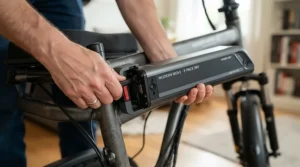
Here’s the thing nobody tells you at the medical supply store: not every “portable” scooter is actually airline-friendly. Weight, battery watt-hours, and fold mechanism all matter more than the flashy spec sheet suggests. Before you buy anything, it’s worth understanding the actual rules — the FAA’s PackSafe guidance on portable battery-powered devices lays out exactly where the watt-hour cutoffs sit, and it’s the closest thing to ground truth in an industry full of marketing claims. We dug through real product specs, aggregated review sentiment, and current 2026 regulations to build this guide, and we’ll walk you through seven genuinely good options, what the battery rules actually mean for your itinerary, and how to avoid the mistakes that leave people stranded at the gate.
Quick Comparison Table: Folding Travel Mobility Scooters at a Glance
Before we go deep on all seven, here’s the short version. If you’re standing in an airport lounge right now trying to make a decision in five minutes, this table is your friend.
| Scooter | Folded Weight | Battery | Best For |
|---|---|---|---|
| Moving Life ATTO | ~66 lbs (splits to 35.7 lbs max piece) | 250Wh, flight-certified | Frequent international flyers |
| EV Rider Transport AF4W | ~51-52 lbs | 24V 11.5Ah lithium | Remote-control auto-folding |
| Golden Technologies Buzzaround CarryOn HD | 52.5 lbs heaviest piece | Dual lithium, 22-mi combined | Heavier riders needing range |
| Glion SNAPnGO Deluxe | 31 lbs base + 3-4 lbs battery | 237Wh Panasonic lithium | Lightest lift-and-go option |
| EV Rider Gypsy | 37 lbs total | Lithium, 10-mi range | Ultra-light suitcase-style fold |
| SCOOTNGO Voyager | 33 lbs total | Removable lithium | Tech-forward frequent flyers |
| SuperHandy Foldable 3-Wheel | 35 lbs total | Dual 44.4V 2Ah lithium | Budget-conscious first-time buyers |
What jumps out here is that “lightweight” and “long-range” pull in opposite directions — the 31-pound Glion SNAPnGO trades some range for that featherweight lift, while the Golden Technologies Buzzaround CarryOn HD accepts more heft in exchange for a 400-pound weight capacity and 22 miles of combined battery life. If your trip involves one flight and a hotel, weight probably wins; if you’re touring a city for a week, range starts to matter more than a few extra pounds.
Just one click — help others make better buying decisions too!😊
Top 7 Folding Travel Mobility Scooters for Airline Travel: Expert Analysis
We picked these seven real, currently available models to cover budget, mid-range, and premium tiers, plus a couple of lesser-known options that reviewers rate surprisingly well. Every scooter below uses a lithium-ion battery under the FAA’s commonly cited limits for mobility devices, but always confirm the exact watt-hour rating on the unit you buy, since manufacturers occasionally update battery packs between model years.
1. Moving Life ATTO — splits into two pieces for effortless lifting
The standout feature here is right in the name game changer: the Moving Life ATTO doesn’t just fold, it disassembles into a front and rear half, so instead of hauling one 66-pound unit, you’re lifting two pieces topping out around 35.7 lbs each.
Specs-wise, the ATTO runs a 48V lithium-ion pack rated at 250Wh — comfortably under the FAA’s higher threshold — delivering around 12.5 miles per charge and a roughly four-hour recharge time. That 250Wh figure isn’t an accident; it’s a deliberate design choice that keeps the battery in the “no special approval needed” zone for most domestic carriers, per FAA guidance.
Who should care: this is the pick for people who fly several times a year and dread the moment a gate agent eyeballs a bulky scooter with suspicion. Based on the spec comparison, the trolley mode (you can wheel it like carry-on luggage right up to the jet bridge) is the single biggest quality-of-life feature in this entire roundup. Reviewers consistently report that the two-piece disassembly is the deciding factor for buyers who’ve struggled lifting single-unit scooters into car trunks or overhead bins.
Pros:
- ✅ Splits into two lightweight, liftable sections
- ✅ 250Wh battery stays under stricter airline scrutiny thresholds
- ✅ Trolley mode doubles as a suitcase substitute in the terminal
Cons:
- ❌ Premium price tag compared to single-fold competitors
- ❌ Assembly/disassembly adds a learning curve for new owners
Price and value: expect the ATTO to land in the $3,000-$4,300 range depending on trim and battery package, which puts it firmly in premium territory — but for someone who travels internationally multiple times a year, the reduced physical strain may be worth the premium.

2. EV Rider Transport AF4W — auto-folds with a remote key fob
Push a button on the included remote, and the EV Rider Transport AF4W collapses itself in seconds — no bending, no wrestling with a manual latch, which is the standout feature that makes it a favorite among caregivers assisting a traveling parent.
Under the hood it packs a 24V 11.5Ah lithium battery (roughly 276Wh), a 4-wheel base for extra stability on uneven jet bridges, and a total travel weight around 51-52 lbs including the battery. That 4-wheel layout is a meaningful upgrade over 3-wheel folding scooters in this price bracket — what most buyers overlook about the difference is that the wider stance dramatically cuts tip risk when maneuvering over threshold gaps and ramp edges at the gate.
Who it’s for: travelers who want power-assisted folding without paying ATTO-level premium prices, and anyone who struggles with hand strength needed for manual fold levers. Aggregated buyer feedback frequently praises the tight turning radius for tricky airport bathrooms and narrow jet bridges, though some owners note the remote fob’s battery needs occasional replacement.
Pros:
- ✅ One-button automatic fold via remote key fob
- ✅ Four-wheel design adds stability over uneven surfaces
- ✅ Dual LED headlights aid visibility in dim terminals
Cons:
- ❌ Heavier than fully manual 3-wheel folding alternatives
- ❌ Remote fob is one more accessory that can fail or go missing
Price and value: current listings typically fall in the $2,200-$2,400 range, positioning the EV Rider Transport AF4W as a strong mid-to-upper-tier pick for buyers who prioritize convenience over the absolute lightest lift.
3. Golden Technologies Buzzaround CarryOn HD — highest weight capacity in this roundup
Where most travel scooters top out around 250-300 lbs, the Golden Technologies Buzzaround CarryOn HD is built for a 400-pound weight capacity, which is the standout feature that solves a real gap in the lightweight-scooter market.
The dual-battery system — a 12.5Ah lithium pack plus a free 6.5Ah spare — combines for up to 22 miles of range, more than double what most folding competitors offer, and the heaviest piece still comes in around 52.5 lbs without the seat and battery. Here’s what the spec sheet won’t tell you outright: the brushless motor and reinforced frame that make the higher weight capacity possible also mean this scooter tends to feel more planted at speed than lighter 3-wheel units, a detail that matters on long, sloped jet bridges.
Who should care: heavier riders who’ve been quietly priced out of “ultra-lightweight” scooter marketing built around 250-pound capacities, plus long-haul travelers who don’t want to babysit a single battery’s charge level. Reviewers consistently note the fold-flat-to-12-inch design as genuinely useful for tight cruise cabins and rental-car trunks, not just marketing copy.
Pros:
- ✅ 400 lb weight capacity, well above most travel scooters
- ✅ Dual-battery system delivers up to 22 miles combined
- ✅ Folds flat to under 14 inches for tight storage spaces
Cons:
- ❌ Heaviest single piece among the lighter models here
- ❌ Two batteries mean two things to keep charged before a trip
Price and value: expect a range around $2,000-$2,400 for the HD trim, which is reasonable given the extended weight capacity and doubled battery range most competitors can’t match.
4. Glion SNAPnGO Deluxe — lightest frame in its class
At just 31 lbs for the aircraft-grade aluminum base, the Glion SNAPnGO Deluxe is the standout lift-and-go option in this lineup — the whole unit with battery and seat still lands around 46-51 lbs, but that 31-pound base weight is what people actually feel when hoisting it into a trunk.
The removable Panasonic lithium-ion battery is rated at 237Wh, comfortably inside FAA limits, and the scooter is UL 2272 certified for personal e-mobility device safety — a standard worth knowing since it signals independent third-party testing rather than just a manufacturer’s own claim. Based on the spec comparison, the honeycomb never-flat tires are a genuinely practical touch: no air pressure to check before a trip, no risk of a flat ruining day one of vacation.
Who it’s for: solo travelers and anyone with limited upper-body strength who needs to lift the scooter unassisted. Aggregated review sentiment repeatedly highlights how quickly it folds — often under 10 seconds — though a handful of reviewers mention the seat width runs narrower than some competitors, worth checking against your own comfort needs.
Pros:
- ✅ 31 lb aircraft-aluminum base is easiest lift in this roundup
- ✅ UL 2272 certified for independent safety validation
- ✅ Honeycomb tires eliminate flat-tire risk entirely
Cons:
- ❌ Narrower seat than some 4-wheel competitors
- ❌ Lower weight capacity ceiling (around 300 lbs) than the Buzzaround HD
Price and value: at the time of research, this class of ultra-portable scooter commonly lists lower than the auto-folding premium models above — always check current pricing, but expect it to undercut the EV Rider Transport AF4W by a meaningful margin.
5. EV Rider Gypsy — folds to suitcase size at 37 pounds total
The EV Rider Gypsy is marketed as one of the lightest folding mobility scooters available today, and at 37 lbs total including the battery, that claim mostly holds up — it’s the standout feature that gets it onto packing lists for cruise-and-fly combo trips.
It carries a 250-lb weight capacity, a 4 mph top speed, and roughly a 10-mile range per charge, which is on the shorter side compared to dual-battery options like the Golden Technologies Buzzaround CarryOn HD, but reasonable for museum visits, shopping trips, and single-terminal airport walks rather than all-day touring. What most buyers overlook about ultra-light scooters like this one is the tradeoff: less weight generally means a smaller battery, so mapping your actual daily mileage needs against the range matters more here than on heavier models.
Who should care: travelers prioritizing minimum lift weight above all else — the exact suitcase-size fold makes it genuinely practical for compact rental cars and small cruise cabins. Reviewers frequently mention it fits into spaces other folding scooters simply don’t.
Pros:
- ✅ 37 lbs total is among the lightest full scooters available
- ✅ Folds to compact suitcase-like dimensions
- ✅ Fits small trunks, closets, and cruise cabins easily
Cons:
- ❌ 10-mile range is shorter than dual-battery competitors
- ❌ Lower 250 lb weight capacity limits some riders
Price and value: current listings put the EV Rider Gypsy around $1,900-$2,000, making it a reasonably priced entry into ultra-lightweight territory without ATTO-level cost.

6. SCOOTNGO Voyager — carbon fiber wheels and NFC unlock
A lesser-known name to most shoppers, the SCOOTNGO Voyager distinguishes itself with tech features rarely seen on travel scooters: NFC unlock, cruise control, and carbon fiber wheels, all packed into a 33-lb frame — the standout feature that makes it feel more like a gadget than a medical device.
The removable lithium battery is airline-approved per the manufacturer, and the “smart slowdown” system automatically reduces speed through turns, a detail that matters more than it sounds on the tight, crowded corners of a jetway or a cruise ship corridor. Here’s what the spec sheet won’t tell you, but reviewers note: the carbon fiber wheels genuinely shave noticeable weight versus standard alloy wheels used on most competitors in this price class, which is part of how the whole unit gets down to 33 lbs without shrinking the frame.
Who it’s for: tech-comfortable travelers who want smart safety features baked in rather than added as an afterthought, and anyone who’s tired of fumbling with keys at security checkpoints. As a newer entrant compared to legacy brands like Golden Technologies or EV Rider, the aggregated review pool is smaller, so it’s worth reading recent buyer feedback carefully before committing.
Pros:
- ✅ 33 lbs with genuinely useful smart safety features
- ✅ Carbon fiber wheels shave weight without shrinking the frame
- ✅ NFC unlock adds a modern, keyless convenience
Cons:
- ❌ Smaller, newer brand means a thinner review track record
- ❌ Replacement parts may be less widely stocked than legacy brands
Price and value: pricing tends to sit in the same general bracket as other tech-forward folding scooters — typically upper four figures to just over $2,000 — so compare current listings directly against the Glion SNAPnGO Deluxe before deciding.
7. SuperHandy Foldable 3-Wheel Travel Mobility Scooter — most affordable pick in this roundup
At 35 lbs fully assembled, the SuperHandy Foldable 3-Wheel Travel Mobility Scooter proves you don’t need a four-figure premium price to get a genuinely portable, airline-friendly scooter — the standout feature is simply that it does the fundamentals well at a budget-conscious price point.
It runs on dual 44.4V 2Ah Li-Ion batteries offering up to 13 miles combined range, recharges in about 1.5 hours, and folds down to a compact 24″ x 22.4″ x 16.5″ footprint. Based on the spec comparison, the dual-battery setup at this price point is unusual — most budget scooters ship with a single pack, so getting swappable batteries without paying premium-tier prices is a genuine value point worth flagging for first-time buyers.
Who should care: first-time buyers testing whether a mobility scooter fits their lifestyle before committing to a pricier long-term model, and budget-conscious travelers who fly occasionally rather than constantly. Aggregated reviewer sentiment is generally positive on comfort and ease of folding, with the padded faux-leather seat mentioned repeatedly as a pleasant surprise at this price tier.
Pros:
- ✅ Dual removable batteries at a genuinely budget price
- ✅ 35 lbs fully assembled, easy for most adults to lift
- ✅ Padded seat comfort exceeds typical expectations at this tier
Cons:
- ❌ Lower top-tier build quality compared to legacy medical-device brands
- ❌ Shorter overall track record than Golden Technologies or EV Rider
Price and value: this is typically the most affordable scooter in this entire roundup, often priced under $1,200, making it a sensible entry point for someone who isn’t ready to commit to premium pricing yet.
Practical Usage Guide: Prepping Your Airline-Approved Folding Mobility Scooter for Flight
Owning an airline-approved folding mobility scooter is only half the equation — knowing how to actually get it through an airport smoothly is the other half. Start the night before: fully charge the battery, screenshot the manufacturer’s watt-hour spec sheet, and print (don’t just save to your phone) a copy of the battery documentation, since gate agents sometimes need a physical copy when a phone screen is hard to read in bright terminal lighting.
At check-in, tell the agent you’re traveling with a folding mobility device and ask specifically how they handle gate-check for your model. Common first-30-day mistakes include forgetting to remove and individually pouch a spare battery (most airlines require this even when it’s allowed onboard), not testing the fold mechanism enough times at home to do it quickly under pressure, and assuming every airline follows identical rules — they don’t, so confirming per-carrier policy before booking saves real stress. For maintenance, wipe down folding hinges monthly, keep the battery between 20-80% charge for storage between trips, and avoid letting it sit fully depleted for weeks at a time, which shortens lithium battery lifespan noticeably faster than regular partial-charge cycles.

Real-World Scenarios: Matching a Travel Mobility Aid to Your Trip
Consider Linda, 71, flying twice a year to visit grandkids on the opposite coast — one direct flight, moderate walking once she lands. A lighter, shorter-range travel mobility aid like the EV Rider Gypsy suits her perfectly; she doesn’t need 22 miles of range for a trip that mostly involves the terminal and a few days of light errands.
Now consider Marcus, 58, a retired teacher who takes month-long international trips involving multiple connections, cobblestone old-town streets, and full days of museum-hopping. He needs range and durability more than absolute minimum weight, making the Golden Technologies Buzzaround CarryOn HD or the Moving Life ATTO better fits despite the higher price and slightly heavier lift. Finally, picture a college-aged traveler with a temporary mobility limitation from surgery, budget-constrained and flying only once for a family event — the SuperHandy Foldable 3-Wheel Travel Mobility Scooter covers that single trip without the investment a frequent flyer would justify.
Problem → Solution: Fixing Common Airport Mobility Scooter Headaches
Problem one: gate agents unfamiliar with your specific model. Solution: bring the printed spec sheet and a laminated one-page “quick reference” card showing how to power down and fold the unit — most delays happen because staff don’t know the mechanism, not because of any rule violation.
Problem two: spare battery confusion at TSA. Solution: keep spares in a labeled, individual protective pouch, terminals covered, and mention them proactively rather than waiting to be asked. Problem three: scooter damaged or delayed in cargo hold. Solution: photograph the unit from all angles before handing it off, and know that new 2024 federal rules make mishandling wheelchairs and scooters an automatic violation the airline can be held accountable for — a real, enforceable protection rather than just a customer-service promise. Problem four: battery dies mid-trip with no charger access. Solution: pack a compact portable charger or spare battery pack rated for airline travel, and always confirm charging voltage compatibility before an international trip.
How to Choose a Lightweight Scooter for Flying
Picking the right lightweight scooter for flying comes down to seven practical criteria, each worth weighing before you swipe your card:
- Total folded weight — can you personally lift it into a trunk or overhead bin without help?
- Battery watt-hours — confirm it’s within your airline’s accepted range before booking.
- Fold mechanism type — automatic remote folds cost more but save physical strain.
- Weight capacity — match it honestly to the rider’s actual weight, with margin.
- Range per charge — map it against your typical daily walking distance while traveling.
- Disassembly options — split-piece designs like the ATTO reduce single-lift strain.
- Warranty and parts availability — legacy brands typically offer easier repairs abroad.
Working through these in order, rather than starting with price, tends to produce a shortlist that actually fits your trip instead of just fitting your budget.
FAA Battery Regulations and TSA Compliant Mobility Scooter Battery Rules Explained
FAA battery regulations for mobility devices are more nuanced than most product pages let on. Under current guidance, a lithium-ion battery that stays installed and adequately protected on the device generally has no strict watt-hour ceiling, while a battery that must be removed is typically capped around 300Wh, with spare batteries limited to 300Wh (one) or 160Wh each (two), carried in the cabin only. The TSA’s own guidance on battery-powered wheelchairs and mobility devices confirms that removable lithium-ion batteries must travel in carry-on baggage with terminals protected, and that the airline must be told where the battery is stored in the cabin.
A TSA compliant mobility scooter battery, in practice, means one with clear watt-hour labeling, terminal protection when removed, and documentation you can show quickly if asked. Airlines including Delta, United, American, and Southwest generally align with these federal guidelines, but “generally” is doing real work in that sentence — always call ahead, because gate-level enforcement varies by staff training and airport, not just by airline policy.
Carry-On Scooter Size Limits: What Fits Where
Carry-on scooter size limits trip up more travelers than battery rules do, mostly because “carry-on approved” gets used loosely in marketing copy. In practice, almost no folding mobility scooter fits in a standard overhead bin — most travel in the cargo hold via gate-check, ridden right up to the jet bridge and returned the same way on arrival. A handful of ultra-compact, trolley-mode designs like the Moving Life ATTO can occasionally slot into oversized overhead compartments on some aircraft, but that’s a bonus, never a guarantee, and depends entirely on aircraft configuration and crew discretion.
What actually matters for carry-on scooter size limits is the folded footprint versus your specific aircraft’s cargo door dimensions on regional versus mainline jets — regional jets have notably smaller cargo holds, and a scooter that gate-checks fine on a mainline flight can occasionally get bumped to checked cargo screening on a smaller connecting aircraft. Confirming your full itinerary’s aircraft types in advance avoids that surprise.

Folding Mobility Scooters vs Traditional Power Wheelchairs for Air Travel
| Factor | Folding Travel Scooter | Traditional Power Wheelchair |
|---|---|---|
| Typical weight | 31-66 lbs | 100-300+ lbs |
| Airline handling | Gate-checked, often self-foldable | Requires specialized cargo loading |
| Battery type | Removable lithium, FAA-friendly | Often larger sealed batteries, more paperwork |
| Best For | Travelers who can transfer independently | Users needing full seating support |
The gap here isn’t subtle: a Golden Technologies Buzzaround CarryOn HD at 52.5 lbs heaviest piece is something most adults can manage with the included carrying handles, while a traditional power wheelchair often requires specialized ramp loading and additional airline paperwork regardless of battery type. That said, power wheelchairs typically offer better seating support and stability for users with more significant mobility needs — the tradeoff genuinely runs both directions, and a folding scooter is not a universal upgrade, just a different tool for a different level of need.
Common Mistakes When Buying an Airline-Approved Folding Mobility Scooter
The single most common mistake: buying based on weight capacity alone and ignoring battery watt-hours entirely, then discovering at the gate that the battery needs special approval or can’t fly at all. A close second is assuming “portable” and “airline-approved” mean the same thing — plenty of lightweight scooters are genuinely portable but were never designed around FAA battery limits.
Another frequent misstep is skipping a test-fold at home before the trip. What most buyers overlook is that folding a scooter for the first time in a crowded terminal, under time pressure, with a flight boarding, is a recipe for frustration — practice the fold and unfold sequence at least five times before you ever leave the house. Finally, many buyers forget to check whether their connecting flights use smaller regional aircraft with tighter cargo hold dimensions, which can complicate an otherwise airline-approved folding mobility scooter’s handling on one leg of an itinerary.
Features That Actually Matter (And Those That Don’t)
Features that matter: verified watt-hour rating, independent fold-testing (can you actually do it solo, tired, at 6 a.m.?), weight capacity with honest margin, and manufacturer parts availability. Features that generate hype but matter less for most riders: top speed above 4-5 mph (rarely usable indoors anyway), flashy color options, and Bluetooth connectivity gimmicks that add cost without adding travel functionality.
What most buyers overlook is that ground clearance — often buried at the bottom of spec sheets — matters more day-to-day than headline top speed, since airport thresholds, curb cuts, and cobblestone streets abroad all test clearance far more often than they test raw velocity.
Long-Term Cost & Maintenance of a Travel Mobility Scooter
| Cost Factor | Budget Scooter | Premium Scooter |
|---|---|---|
| Upfront price | Under $1,200 | $2,400-$4,300 range |
| Replacement battery | Often under $200 | $300-$500+ range |
| Expected lifespan | 2-4 years typical use | 5-8 years typical use |
| Best For | Occasional flyers | Frequent, long-term travelers |
Looking at the table above, a budget pick like the SuperHandy Foldable 3-Wheel Travel Mobility Scooter wins on upfront cost, but a frequent flyer putting real mileage on a scooter across dozens of trips a year may find the Moving Life ATTO or Golden Technologies Buzzaround CarryOn HD‘s longer expected lifespan evens out the total cost of ownership over five-plus years. Battery replacement costs also scale with pack size — the dual-battery systems on the Golden Technologies Buzzaround CarryOn HD mean two eventual replacements rather than one, a detail worth budgeting for a few years down the line rather than treating the upfront price as the whole story.

Frequently Asked Questions
❓ Can I bring a folding mobility scooter as a carry-on on a plane?
❓ What size lithium battery is allowed on a mobility scooter for flying?
❓ Do airlines charge extra for a folding travel mobility scooter?
❓ How much does an airline-approved folding mobility scooter weigh?
❓ What happens if an airline damages my mobility scooter?
Conclusion
Choosing a folding travel mobility scooter for airline travel really comes down to matching three things honestly: how much weight you can personally lift, how many miles you’ll actually cover per travel day, and how many watt-hours your preferred airline will accept without extra paperwork. The Moving Life ATTO rewards frequent flyers willing to pay a premium for split-piece portability, the Golden Technologies Buzzaround CarryOn HD solves the weight-capacity gap that leaves heavier riders underserved, and the SuperHandy Foldable 3-Wheel Travel Mobility Scooter proves a genuinely usable option exists well under four figures.
None of these seven picks is objectively “the best” in a vacuum — they’re built for different bodies, different budgets, and different itineraries. What matters is applying the criteria in this guide to your actual next trip rather than the trip you might someday take. Confirm battery specs directly with your airline before booking, do a full test-fold at home, and you’ll walk into that terminal with one less thing to worry about.
Recommended for You
- 7 Best Indoor 3-Wheel Mobility Scooters For Tight Spaces (2026)
- 7 Power Wheelchair Brands Worth Trusting in 2026
- Medicare Approved Power Wheelchairs: 7 Top Picks for 2026
Disclaimer: This article contains affiliate links. As an Amazon Associate, I earn from qualifying purchases. If you purchase products through these links, we may earn a small commission at no additional cost to you.
✨ Found this helpful? Share it with your friends! 💬🤗
