
In This Article
Walking pace is a fine speed for a grocery aisle. For a two-mile run to the pharmacy, a long loop around the park, or a commute that has to fit inside a lunch break, it’s agony. That gap is why the high-speed mobility scooter over 10 mph category exists, and why shoppers keep typing it into search bars.

Here’s what most listings won’t tell you up front: it’s a narrow category. One 2026 dealer guide calls 15 mph the realistic top of the mainstream mobility scooter market, and says faster machines tend to be regulated like electric vehicles. Standard scooters cruise at 4 to 5 mph. Heavy-duty models reach 9 to 14. So a search for a high-speed mobility scooter over 10 mph covers a small, specific shelf. The specs on that shelf often disagree from one retailer to the next.
That’s why I compared seven real models, from a folding commuter to an all-wheel-drive trike, using manufacturer and dealer listings checked at the time of research. Where listings conflict, I say so. Where independent review data was thin, I say that too, instead of dressing guesswork up as consensus.
You’ll get a quick comparison table, honest analysis of each model, a plain-English breakdown of motor wattage, the real story on road-legal speed limits, and practical guidance on choosing a fast mobility scooter for commuting. Prices appear as ranges only and shift constantly, so check current price before you buy.
Faster isn’t automatically better. For the right rider, though, it’s the difference between going out and staying in.
Quick Comparison: 7 High-Speed Mobility Scooter Over 10 mph Models
| Model | Listed Top Speed | Motor | Listed Range | Capacity | Price Range* | Best For |
|---|---|---|---|---|---|---|
| Bespoke Platinum | 15 mph | 600W | up to 35 mi | 500 lb | mid-$3,000s | All-round 4-wheel value |
| EWheels EW-72 | 15 mph | 700W | up to 43 mi | 500 lb | varies; check current price | Long-distance cruising |
| Pride Baja Raptor 2 4-Wheel | 13 mph | 24V DC | 15–21 mi | 400 lb | $3,500–$4,800 range | Dealer-supported comfort |
| Green Transporter Cheeta Ninja | 14 mph | 1,100W | up to 25 mi | 500 lb | $4,500–$5,000 range | Grass, gravel, golf courses |
| Afiscooter S4 | 9.3 mph (11 mph with upgrade) | 1,400W | 28–38 mi | 500 lb | $5,500–$6,500 range | Hills and heavier riders |
| RMB Kodiak | up to 24 mph (listed; some say 16) | 2 × 800W | up to 31 mi | 350 lb | $5,000–$6,500 range | Maximum speed, AWD trike |
| Triaxe Sport | 12 mph | 350–500W (listings vary) | up to 35 mi | 350 lb | low-to-mid $2,000s | Folding, travel, transit |
Looking at the table, the Bespoke Platinum and EWheels EW-72 share the 15 mph ceiling among four-wheelers. The EWheels EW-72 lists the longer range, while the Bespoke Platinum is the easier one to find in stock. If torque on hills matters more than speed, the Afiscooter S4‘s 1,400W motor justifies its higher price, though you’ll pay extra to cross the 10 mph line. The RMB Kodiak‘s 24 mph headline deserves skepticism, since some dealers list it at 16.
💬 Just one click — help others make better buying decisions too!😊
What Is a High-Speed Mobility Scooter Over 10 mph?
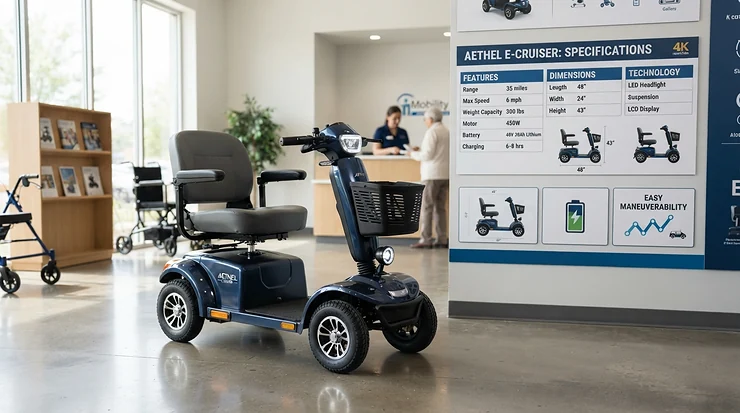
A high-speed mobility scooter over 10 mph is a battery-powered, tiller-steered personal mobility scooter with a manufacturer-rated top speed above 10 mph, typically 12 to 15 mph, with a few trike models claiming more. Most pair 600-watt-or-larger motors with four wheels and real suspension for sidewalks, paved paths, and light off-road use.
Why does the speed bracket matter? Because the rules around these machines are looser than people expect. Under the ADA’s guidance on wheelchairs, mobility aids, and other power-driven mobility devices, businesses and public facilities generally must let people with disabilities who use electric scooters into all areas open to the public. Operating rules, such as walking-pace requirements indoors, are fair game. A scooter that can do 15 mph is welcome in the grocery store, and it is expected to behave like a 3 mph shopper while it’s there.
Think of the top speed as a ceiling, not a cruising speed. The best models in this class let you dial it down with a speed switch or knob. That control is worth more than the headline number.
Top 7 High-Speed Mobility Scooter Over 10 mph Picks: Expert Analysis
Every spec below comes from manufacturer and dealer listings. Independent, verifiable customer-review data was sparse for most of these models. Where that’s the case, I say so rather than inventing a consensus.
1. Bespoke Platinum — best all-round 15 mph four-wheeler
The Bespoke Platinum earns its spot by doing the unglamorous things well at the top of the mainstream speed range. Listings put it at up to 15 mph from a 600-watt brushless motor with differential, running on a 48V deep-cycle battery. A three-position speed switch (4, 8 and 15 mph) lets you drop to a store-entrance crawl, then open it up on a clear paved path. That switch matters more than the headline number.
Suspension springs sit at every wheel, tires are tubeless, and rated range is up to 35 miles (a few dealers list 43). Dealer pages disagree on capacity (400 versus 500 lb) and wattage (600 versus 700W), so confirm against the owner’s manual. Based on the spec comparison, it’s the first model I’d shortlist for anyone who wants a high speed 4-wheel scooter without exotic hardware. I couldn’t verify a sizable independent review base, so treat its reputation as unproven by crowd data.
Pros:
- ✅ Three-position speed switch suits mixed environments
- ✅ Suspension on every wheel smooths broken pavement
- ✅ Frame carries a lifetime limited warranty per one dealer
Cons:
- ❌ Heavy at roughly 264 lb, not trunk-friendly
- ❌ Dealer listings conflict on capacity and wattage
Price: mid-$3,000s at the time of research. Strong value for the 15 mph class.

2. EWheels EW-72 — longest listed range at 15 mph
The EWheels EW-72 is the road-trip option, with a listed range of up to 43 miles at speeds up to 15 mph. It runs a 700-watt hub motor on a 48V 20Ah battery bank (four sealed lead-acid units), with full suspension, drum brakes plus electric brake assist, and tubeless tires of 14 inches up front and 16 at the rear.
What does that mean in practice? Big wheels shrug off the cracks that rattle small-wheeled scooters, and the extra battery capacity buys real headroom for a round trip across town. The twist throttle gives fine speed control, but riders with sore wrists or grip issues should try it before committing. The 92-inch turning radius also means wide arcs in tight spaces. Add a key-fob alarm, LED lights, and turn signals, and the feature list is generous.
One caution: at least one retailer lists the model as discontinued while others show it in stock, so verify availability. Verified review sentiment wasn’t available in the sources I checked.
Pros:
- ✅ Longest listed range in the roundup at 43 miles
- ✅ Large tubeless tires handle rough pavement
- ✅ Key-fob alarm and turn signals come standard
Cons:
- ❌ Availability is inconsistent across dealers
- ❌ Wide 92-inch turning radius
Price: varies by retailer, so check current price. Value depends on finding a verified, supported unit.
3. Pride Baja Raptor 2 4-Wheel — big-brand support, 13 mph
The Pride Baja Raptor 2 4-Wheel trades a little speed for polish. Most listings say up to 13 mph (a few say 14), with a 24V DC rear-wheel-drive motor, full front and rear suspension, and a 20-by-18-inch memory foam captain’s seat. The LED package includes turn signals, and you get mirrors and lockable under-seat storage.
The range figures tell the real story. Pride’s own numbers drop from up to 21.2 miles at a 200 lb rider to 15.1 miles at 400 lb, so rider weight directly shapes your daily mileage. That makes it the shortest-legged model here, and the best fit for short, frequent trips. Widely sold through mobility dealers, it’s the pick for riders who value local service over spec-sheet bragging rights. Independent review data wasn’t verifiable in my sources.
Pros:
- ✅ Memory foam seat and full suspension for long sits
- ✅ Full LED package with turn signals and mirrors
- ✅ Sold through established mobility dealer channels
Cons:
- ❌ Shortest range in this roundup
- ❌ Heavy at about 342 lb with batteries
Price: $3,500–$4,800 range at the time of research. Fair value if comfort and service matter most.
4. Green Transporter Cheeta Ninja — 1,100W all-terrain grunt
The Green Transporter Cheeta Ninja is the one built for grass. A 48V 1,100-watt brushless motor pushes it to a listed 14 mph, and a swappable lithium battery is rated at about 25 miles. ATV-style independent shocks and wide turf tires (about six inches across) spread weight so the scooter doesn’t gouge fairways.
Dealers list a 35-degree maximum incline. That’s roughly a 70 percent grade, far steeper than anyone should attempt, so read it as a lab number, not a hill-climbing promise. Weight listings range from about 200 to 294 lb and battery size from 18Ah to 30Ah, which is a good reason to ask for exact configuration before ordering. The street kit (headlight, rear light, blinkers, mirrors) makes it neighborhood-ready. I found no verifiable aggregated review data.
Pros:
- ✅ Removable lithium battery simplifies charging
- ✅ Wide turf tires protect grass and soft ground
- ✅ Street kit includes blinkers and mirrors
Cons:
- ❌ Listings conflict on weight and battery capacity
- ❌ Wide tires add rolling resistance on pavement
Price: $4,500–$5,000 range at the time of research. Good value for off-pavement riders.
5. Afiscooter S4 — 1,400W torque, 11 mph with the upgrade
The Afiscooter S4 is the honest outlier. Standard speed tops out at 9.3 mph, and dealers offer a high-speed motor option (about 11 mph) for an added fee. So it only qualifies for this list if you buy the upgrade.
Why include it? The 24V 1,400-watt motor is built for torque: a 15-degree climbing rating, five inches of ground clearance, and a 500 lb standard capacity (a 600 lb heavy-duty version exists). Range is listed at 28 to 38 miles depending on battery choice. In practice, it’s the scooter for heavier riders and hillier routes, not the one for bragging about speed. At roughly 342 lb loaded, it’s a garage resident. Retail pages showed only a handful of reviews, too few for a verdict.
Pros:
- ✅ Torque-focused 1,400W motor for slopes
- ✅ Heavy-duty option reaches 600 lb capacity
- ✅ Five inches of ground clearance
Cons:
- ❌ Base speed sits below 10 mph
- ❌ Very heavy, with no practical transport option
Price: $5,500–$6,500 range, plus the speed upgrade. Premium priced; worthwhile only if torque matters.

6. RMB Kodiak — claimed 24 mph all-wheel-drive trike
The RMB Kodiak is the speed outlier, and the one needing the most caution. Listings show dual 48V brushless motors (800W each, 1,600W total) with selectable front-, rear-, or all-wheel drive, a listed range of up to 31 miles, and a lithium battery. Several dealers list 24 mph, and others list 16 mph for the Kodiak line. Get that in writing before you buy.
It folds and weighs far less than four-wheelers (listings say roughly 151 to 175 lb), which helps with transport. It’s also a three-wheeler. At 24 mph, stopping distance and stability become real concerns, and a trike isn’t a low-speed vehicle under federal rules (more on that below). Front drum and rear disc brakes help, but one listing shows only a six-month warranty. Verified review data wasn’t available.
Pros:
- ✅ Selectable FWD, RWD, and AWD drive modes
- ✅ Folds and weighs less than four-wheel rivals
- ✅ Removable lithium battery pack
Cons:
- ❌ Dealer listings conflict on top speed (16 versus 24 mph)
- ❌ Short listed warranty of six months
Price: $5,000–$6,500 range at the time of research. Only good value if the speed claim is confirmed.
7. Triaxe Sport — folds up, still hits 12 mph
The Triaxe Sport proves you don’t need 200 lb of scooter to pass 10 mph. Listings show a 12 mph top speed across three settings (about 4, 8, and 12 mph), a 35-mile range on the standard lithium battery, and a 350 lb capacity. The scooter weighs about 44 lb without its 8 lb battery, so it lifts into a car trunk, and an optional travel battery is described as airline-friendly.
Small wheels (8-inch solid front, 9.5-inch rear) mean it feels every crack, and the front-wheel-drive layout can slip on loose ground. But the 33-inch turning radius is a dream in tight spaces. Dealers list motor power as either 350W or 500W, so confirm before ordering. I couldn’t verify independent review data.
Pros:
- ✅ Folds and lifts into most car trunks
- ✅ Tight 33-inch turning radius
- ✅ Optional travel battery suits air travel
Cons:
- ❌ Small solid front tire transmits bumps
- ❌ Lower 350 lb capacity than four-wheelers
Price: low-to-mid $2,000s at the time of research, though some dealers showed it out of stock. Best value here for travelers.
Practical Setup and First-30-Days Guide for a High-Speed Mobility Scooter Over 10 mph
The first month decides whether a fast scooter feels freeing or frightening. Here’s a sensible sequence, always subordinate to your owner’s manual.
Week one: slow on purpose. Set the speed switch or dial to the lowest setting and ride an empty parking lot. Practice stopping hard from a walking pace, then from a jog. Learn where the brake lever engages before you need it.
Charging habits. For sealed lead-acid models, such as the EWheels EW-72 and Bespoke Platinum, recharge after each ride rather than running the pack to empty. Lithium models, including the Green Transporter Cheeta Ninja and Triaxe Sport, have different charging guidance, so check the manual.
Weekly checks. Pneumatic tires need regular pressure checks, since low pressure cuts range and hurts handling. Test lights, horn, and brakes. Wipe down the tiller and make sure the seat locks.
The common first-month mistakes. Riders usually run batteries flat, ignore tire pressure, or ride at full speed on shared paths. Add a safety flag and mirrors, and plan routes with a real range buffer. Speed is a tool. Use it where the path is clear.

Real-World Scenarios: Matching Riders to the Right Scooter
Here are three hypothetical riders, not testimonials, to show how the specs play out.
The retired teacher. She rides six miles round trip to a community center, mostly on paved paths, a few times a week, with a mid-range budget. The Bespoke Platinum‘s speed switch lets her ride 4 mph through crowded lobbies and 15 mph on open trail, with plenty of range to spare.
The heavier rider on hilly streets. At 380 lb, with a neighborhood full of slopes, he needs torque and capacity more than velocity. The Afiscooter S4‘s 1,400W motor and 500 lb rating fit, and the 11 mph upgrade covers occasional speed needs.
The transit commuter. An apartment dweller takes a train two days a week. The Triaxe Sport folds, weighs about 44 lb without its battery, and still does 12 mph on the open stretches. A Pride Baja Raptor 2 4-Wheel would be comfortable but impractical to carry.
The pattern is clear: match the scooter to the route, not the other way around.
✨ Don’t Miss These Exclusive Deals!
🔍 Take your daily travel to the next level with these carefully selected scooters. Click on any highlighted item to check current pricing and availability. These models can help you create the independence and freedom you’ve been missing!
How to Choose a High-Speed Mobility Scooter Over 10 mph
To choose a high-speed mobility scooter over 10 mph, match rated speed, range, weight capacity, and portability to your actual route, then confirm the listed specs against the owner’s manual. Work through these steps in order:
- Define the route. Measure your longest typical round trip, then plan to use no more than about 60 to 70 percent of rated range, since rider weight and hills reduce it.
- Check capacity honestly. Include your weight plus cargo, and leave headroom.
- Pick a wheel count. Four wheels buy stability, while three-wheel and folding designs buy maneuverability and portability.
- Check the speed controls. A selectable speed switch or dial beats a single flat-out setting.
- Verify the specs. Because dealer pages often disagree, check the manufacturer’s manual for motor wattage, battery type, and warranty.
- Plan for service. Ask who repairs it locally and what the warranty covers, especially batteries.
- Consider where you’ll ride. Pavement, grass, or gravel changes the right tire and suspension choice.
Mobility Scooter Top Speed Comparison: Listed Numbers vs Real-World Use
A mobility scooter top speed comparison only means something if you read the speed controls next to the headline number.
| Model | Listed Top Speed | Speed Control | Drive | Best For |
|---|---|---|---|---|
| Bespoke Platinum | 15 mph | 3-position switch (4/8/15) | Rear-wheel | Mixed pavement and trails |
| EWheels EW-72 | 15 mph | Twist throttle | Rear-wheel | Long paved routes |
| Green Transporter Cheeta Ninja | 14 mph | Soft-start controller | Rear-wheel | Grass and golf courses |
| Pride Baja Raptor 2 4-Wheel | 13 mph | 2-speed modes | Rear-wheel | Short, comfortable trips |
| Triaxe Sport | 12 mph | 3 settings (4/8/12) | Front-wheel | Folding and transit |
| Afiscooter S4 (with upgrade) | 11 mph | 6.2/7.5/9.3 mph presets | Rear-wheel | Hills and heavy riders |
| RMB Kodiak | up to 24 mph (listed) | Low/high plus drive modes | FWD/RWD/AWD | Experienced, careful riders |
The gap between 12 and 15 mph is smaller than the numbers suggest, but it matters on a long route. At 8 miles each way, 12 mph takes about 40 minutes and 4 mph takes two hours. For most riders, the Bespoke Platinum and Triaxe Sport‘s presets are more valuable than extra top-end, because real routes include crowds. Treat the RMB Kodiak‘s listed 24 mph as the exception, not the benchmark.
Motor Wattage: What the Number Really Tells You
Motor wattage measures power, not speed. A bigger motor pulls harder on hills and carries heavier riders, but top speed is mostly set by the controller and gearing.
The Afiscooter S4 proves it: a 1,400W motor with a standard top speed of 9.3 mph, because it’s tuned for torque. Compare that to the Bespoke Platinum‘s 600W at 15 mph, or the Green Transporter Cheeta Ninja‘s 1,100W at 14 mph.
Voltage matters too. Higher voltage (48V versus 24V) generally means less current for the same power, which is easier on wiring and controllers. Most of these scooters run 48V, while the Afiscooter S4 and Pride Baja Raptor 2 4-Wheel use 24V motors. Dual-motor setups like the RMB Kodiak‘s 2 × 800W add traction as well as power.
Practical takeaway: under 700W is fine for flat, paved routes. Above 1,000W is worth paying for if you ride hills, grass, or carry heavy loads. Motor wattage figures also vary by dealer (the Triaxe Sport is listed at both 350W and 500W), so verify in the manual.
High Speed 4-Wheel Scooter vs 3-Wheel Trike vs Low-Speed Vehicle
A high speed 4-wheel scooter offers stability, three-wheel and folding designs offer maneuverability, and low-speed vehicles belong to a different legal category.
| Type | Typical Speed | Stability | Where It’s Used | Best For |
|---|---|---|---|---|
| Standard mobility scooter | 4–5 mph | High | Indoors, sidewalks | Short, slow errands |
| High speed 4-wheel scooter (Bespoke Platinum, EWheels EW-72) | 13–15 mph | High | Sidewalks, paved paths | Longer daily trips |
| 3-wheel or folding (Triaxe Sport, RMB Kodiak) | 12–24 mph (listed) | Moderate | Tight spaces, transit | Portability, tight turns |
| Low-speed vehicle | 20–25 mph | High | Streets (35 mph or lower) | Neighborhood driving |
The table shows why wheel count isn’t just trivia. The Bespoke Platinum and EWheels EW-72 give you a planted four-wheel ride, while the Triaxe Sport gives up some stability for a 33-inch turning radius and a folding frame. Low-speed vehicles are a separate regulatory world.
Under federal definitions, a low-speed vehicle is a four-wheeled motor vehicle capable of 20 to 25 mph that must meet safety standards and be registered. Mobility scooters aren’t that. Even at 15 mph, they carry no VIN and can’t be registered as motor vehicles.
Road-Legal Speed Limits: What Riders Need to Know
The short version of road-legal speed limits in the US: there’s no uniform national limit for mobility scooters, and a fast one isn’t automatically street-legal. A dealer education guide says speed capability doesn’t make a mobility scooter legal on roads, since they’re not motor vehicles regardless of top speed.
Here’s how the pieces fit:
- Indoors and in shops: the ADA lets facilities require walking-pace operation as a legitimate safety rule.
- Sidewalks and paths: rules vary by state and city, and some sources cite limits around 4 to 6 mph on sidewalks. Check local codes.
- Roads: generally avoid them, especially above 25 mph speed limits.
- Low-speed vehicles: these are four-wheeled and must meet NHTSA’s federal standards, which cap capability at 25 mph and require equipment like lights, mirrors, and seat belts.
For perspective, the UK structure is stricter: Class 3 scooters may do 8 mph on roads but must drop to 4 mph on pavements, and they’re registered with the DVLA. The US has no direct equivalent. When in doubt, call your local DMV or city transportation office before riding any scooter on public roads.
Fast Mobility Scooter for Commuting: Range, Safety, and Commuting Mobility Aids
A fast mobility scooter for commuting needs three things: honest range, predictable braking, and a way to get on transit or into an office.
Range math. Take an 8-mile commute each way. That’s 16 miles a day, so a listed 35-mile range gives you roughly a 2x buffer. Pride’s own figures show range falling from 21.2 to 15.1 miles as rider weight climbs from 200 to 400 lb, a good reminder that listed numbers are best-case.
Charging at work. Removable lithium packs, like the Green Transporter Cheeta Ninja‘s and Triaxe Sport‘s, are easier to charge at a desk than a 257 lb lead-acid unit like the EWheels EW-72.
Transit. The Triaxe Sport‘s folding frame is one of the most practical commuting mobility aids on this list, though transit agencies set their own size and securement rules.
Visibility. Add a flag, check your lights, and slow down at crosswalks. Pair your scooter with a good helmet-free-but-visible setup (bright clothing, mirrors, horn). Commuting mobility aids work best when they’re boring and reliable.
Long-Term Cost and Maintenance
The sticker price is only the first bill. Ongoing costs include replacement batteries, tires, and service. Sealed lead-acid packs on models like the Bespoke Platinum and EWheels EW-72 are cheaper up front but heavier, and they typically wear out sooner than lithium. Exact life varies by use, so ask about replacement battery cost before buying.
Warranty terms differ more than most buyers expect. One dealer lists the Bespoke Platinum with a lifetime limited warranty on the frame but only six months on batteries. The RMB Kodiak shows a six-month term on one listing. The Afiscooter S4 is often sold with in-home service. Free in-home service can be worth hundreds over time.
Then there’s insurance. Medicare’s guidance on wheelchairs and scooters centers on medical necessity for use in your home, with a face-to-face exam and written prescription. A speed-focused outdoor scooter is unlikely to fit that mold, so plan on paying out of pocket and ask your supplier directly.
Cost per year of ownership favors simple, well-supported models. A cheaper scooter with expensive batteries and no local service can cost more over five years than a pricier one with a good warranty.
Frequently Asked Questions
❓ How much does a high-speed mobility scooter over 10 mph cost?
❓ Is a 15 mph mobility scooter safe for seniors?
❓ Can I take a fast mobility scooter on a plane?
❓ How far can a high speed 4-wheel scooter go on one charge?
❓ Does Medicare pay for a high-speed mobility scooter?
Conclusion
The right high-speed mobility scooter over 10 mph isn’t the fastest one. It’s the one that matches your route, your body, and your budget.
If you want one four-wheeled all-rounder, start with the Bespoke Platinum. For maximum range, look at the EWheels EW-72, after confirming availability. The Pride Baja Raptor 2 4-Wheel suits riders who value dealer support and comfort. The Green Transporter Cheeta Ninja is built for grass, the Afiscooter S4 for hills and heavier riders, the Triaxe Sport for folding and travel, and the RMB Kodiak for experienced riders who’ve verified its speed claim.
Whatever you choose, verify specs against the manual, understand your local road-legal speed limits, and treat the top speed as a ceiling you use sparingly. Plan for batteries, service, and real-world range, not just the sticker. A fast scooter that fits your life will get used. One that doesn’t will gather dust in the garage.
Recommended for You
- Long-Range Mobility Scooter For 30 Mile Range: 7 Best Picks 2026
- Bariatric Mobility Scooter For Plus-Size Riders: 7 Best Picks 2026
- Heavy-Duty Mobility Scooter: 7 Best Picks For 2026, Compared
Disclaimer: This article contains affiliate links. As an Amazon Associate, I earn from qualifying purchases. If you purchase products through these links, we may earn a small commission at no additional cost to you.
✨ Found this helpful? Share it with your friends! 💬🤗
