

In This Article
Choosing a pediatric wheelchair for school use is nothing like picking a chair for weekend errands. A school day is a gauntlet. There are packed hallways at passing time, a desk built for a kid with working knees, a bus ramp, a cafeteria, and a fire drill. A good pediatric wheelchair for school use has to be narrow enough for the doorway, light enough for an aide to lift, low enough for the desk, and sturdy enough to survive a seventh hour of fidgeting.

Here’s the twist most parents miss. Under federal special education law, a wheelchair counts as an assistive technology device, meaning any item, off the shelf or customized, that maintains or improves a child’s functional capabilities. That definition quietly decides who pays, who decides, and what the school owes your child.
This guide covers seven real chairs I researched through manufacturer specs and retailer listings. It also covers the practical side: an affordable lightweight wheelchair for elementary school kids, how a kids folding wheelchair behaves in real life, and the best first wheelchair for a child on a budget. You’ll also find insurance and Medicaid coverage for pediatric wheelchairs, seat width measurement for children, and school IEP mobility accommodations.
One honesty note up front. I haven’t test-driven these chairs. Everything below is spec analysis plus review data I could verify, and where review pools were thin I say so. Prices are ranges only, so check current price before buying.
Quick Comparison: 7 Pediatric Wheelchairs for School Use at a Glance
| Chair | Seat Widths | Listed Weight | Listed Capacity | Standout | Best For |
|---|---|---|---|---|---|
| Ziggo | 12″, 14″, 16″, 18″ | 28–39 lb | 150–250 lb | Four color-coded sizes | Budget buyers who want size options |
| Wallaby | 12″, 14″ | 33 lb without footrests | 150 lb | Transit tie-downs included | Bus riders |
| Medline Kidz | 12″, 14″ | Roughly 25–38 lb (varies by listing) | 150–250 lb (varies) | Telescoping handles | Aide-pushed students |
| Vive Pediatric Wheelchair | 12″, 14″ | 43 lb | 150 lb | Simple everyday build | Shared or occasional use |
| PEPE Mobility Kids Wheelchair | 14″ | 32–41 lb (varies) | 250 lb | Large rear wheels | Kids learning to self-propel |
| CUIOT Pediatric Wheelchair | 14″ | About 27 lb (listing) | Claims vary | Aluminum frame | Tight budgets, with caution |
| Vive Reclining Pediatric Wheelchair | 14″ | 43 lb | 150 lb | 90°–180° recline | Long days, fatigue, positioning |
Looking at the comparison above, the Ziggo and Wallaby are the two most school-ready on paper. The Ziggo offers the widest size range, and the Wallaby is the one with bus-transit hardware in the box. The PEPE Mobility Kids Wheelchair suits a child building independence, while the Vive Reclining Pediatric Wheelchair solves a different problem entirely: endurance. Note that the weights above come from listings that sometimes disagree with each other, so verify the exact variant you’re ordering.
💬 Just one click — help others make better buying decisions too!😊
Top 7 Pediatric Wheelchairs for School Use: Expert Analysis
Each pick below pairs specs with what they mean in a classroom, plus the review evidence I could verify.
1. Ziggo — four color-coded sizes, 12″ to 18″
The headline is range. The Circle Specialty Ziggo comes in four seat widths, so one product family can follow a child from kindergarten into middle school.
Per reseller spec sheets, the 12″ model weighs about 28 lb and the 14″ about 36.5 lb without leg riggings, both rated to 150 lb. The 16″ and 18″ step up to 250 lb. Standard equipment includes a pelvic belt, push-to-lock brakes, quick-release rear wheels, and flip-back desk-length arms. That last feature matters in school, because a child can roll under a desk without the armrest holding them out in the aisle. The 14″ is roughly 21 inches wide when open, which is workable for standard interior doorways.
Based on the spec comparison, this belongs at the center of a budget shortlist. The trade-off is that it has no built-in growth adjustment, so you’re buying a size, not a promise. One third-party review site also flagged limited adjustability.
Review pools are small. One retailer shows 3.8 stars from five reviews and another 4.2 from five. Where reviewers got specific, one praised how easily it passes through standard doors, and another reported footplates that didn’t sit right.
Pros:
- ✅ Four sizes cover ages roughly 3 to teen
- ✅ Flip-back desk arms suit classroom tables
- ✅ Quick-release wheels help trunk loading
Cons:
- ❌ No built-in growth adjustment
- ❌ Limited fine-tuning for posture needs
Price tier: budget to mid, and it varies by size and seller, so check current price. Value verdict: strong for a stock chair.

2. Wallaby — transit tie-downs included
The Wallaby (sold as “Inspired by Drive”) is the only chair here that arrives with bus hardware in the box. Standard transit tie-down brackets are included. Per the manufacturer’s materials, it is WC19-compliant for riders between 50 and 80 lb when paired with the headrest extension.
The specs are 12″ or 14″ seat widths, 22″ rear wheels, 6″ front casters, a 19″ seat-to-floor height, and height-adjustable push handles. It weighs about 33 lb without footrests and 37–39 lb with them, and it folds to 12 inches wide. Flip-back padded desk arms, swing-away footrests with calf straps, and a pelvic belt come standard. The 150 lb capacity is the one constraint, and it will matter for a growing teen.
Here’s what to weigh. If your child rides a school bus, transit-rated hardware shrinks the paperwork and negotiation with the transportation department. The weight range for that rating is narrow, though, so a child outside 50–80 lb needs a different plan. One retailer also lists a billing code (E1236) for it, which can help a DME supplier route a claim.
I couldn’t verify a meaningful review pool for the Amazon listing, so I won’t characterize owner sentiment.
Pros:
- ✅ Transit tie-downs included in the box
- ✅ Height-adjustable push handles help caregivers
- ✅ Tool-free footrest height adjustment
Cons:
- ❌ 150 lb capacity limits teen use
- ❌ Transit rating only covers 50–80 lb riders
Price tier: mid, roughly the mid-$300s to mid-$500s across the retailers I checked. Value verdict: worth it for bus riders.
3. Medline Kidz — telescoping handles, hospital-grade build
The standout is caregiver ergonomics. The Medline Kidz has telescoping push handles, so a tall aide and a short parent can both push without hunching.
Specs vary by listing. Seats are 14″ wide and 12″ or 14″ deep, with swing-back desk-length arms, swing-away footrests with calf straps, and a seat belt. Medline’s product pages also describe anti-tippers, flat-free treaded tires, and a dual-axle design that lowers the seat toward hemi height. That last one is useful for children who propel with their feet. Capacity shows as 150 lb on some listings and 250 lb on others, and weight ranges from about 25 to 38 lb, so confirm the exact variant. Folded, it measures about 25 x 11 x 36.5 inches.
On paper, this suits students pushed by aides, since hospital-style durability and handle height count more than self-propulsion finesse. Steel and vinyl also wipe down easily after lunch.
I couldn’t verify a robust review pool, so treat durability claims as manufacturer-stated.
Pros:
- ✅ Telescoping handles fit different caregivers
- ✅ Easy-clean vinyl or nylon upholstery
- ✅ Hemi-height adjustment on dual-axle versions
Cons:
- ❌ Listings disagree on weight and capacity
- ❌ Heavier than the aluminum alternatives
Price tier: mid, and it varies by configuration, so check current price. Value verdict: dependable for aide-driven days.
4. Vive Pediatric Wheelchair (14″) — straightforward everyday chair
This is the no-drama option. The Vive Pediatric Wheelchair pairs a 14″ seat with a 14″ depth, a roughly 14.8″ back height, adjustable swing-away footrests, and a 150 lb capacity.
The catch is weight. Vive lists it at 43 lb, which is heavier than several competitors despite “lightweight” marketing. That matters daily, because an aide lifting a 43 lb chair into a van before first bell will feel the difference versus a 28 lb frame.
Here’s the practical take. Choose this chair when the child is mostly pushed, the chair rarely leaves one vehicle, and you value a brand with an established guarantee. Vive backs its products with a one-year guarantee. If your child self-propels all day or you’re lifting it twice daily, the Ziggo or PEPE Mobility Kids Wheelchair deserves a longer look.
Reviews specific to this pediatric model weren’t available in enough volume for me to verify a pattern, so I won’t invent one.
Pros:
- ✅ Established brand with a one-year guarantee
- ✅ Adjustable swing-away footrests
- ✅ Compact 14″ seat for smaller frames
Cons:
- ❌ 43 lb is heavy for daily lifting
- ❌ Only 12″ and 14″ widths to choose from
Price tier: budget to mid, so check current price. Value verdict: fine for light, shared use.
5. PEPE Mobility Kids Wheelchair — big rear wheels for self-propelling
The PEPE Mobility Kids Wheelchair is built around independence. Large rear wheels with push rims let a child propel themselves, and a step-lift lever helps over thresholds.
Listed specs are a 14″ seat, about a 15.5″ depth, an 18.5″ seat height, and 250 lb capacity. The chair weighs roughly 32–35 lb in retailer descriptions, though Amazon item weights run higher, around 40 lb, so verify. It folds to about 29.5 x 34.6 x 10.2 inches. Flip-up armrests, removable height-adjustable footrests, push-to-lock brakes, a seat belt, and a rear pocket come standard.
Here’s why that matters. A child who can reach the rims and move through the building independently gains social ground that no aide-pushed chair can give. The flip-up armrests help, but they aren’t desk-length, so check desk clearance before assuming this fits your classroom furniture.
I found no verifiable review data worth summarizing, so judge this one on specs and return policy.
Pros:
- ✅ Large rear wheels support self-propulsion
- ✅ Compact fold for small trunks
- ✅ Rear pocket holds small classroom items
Cons:
- ❌ Listed weights conflict across sellers
- ❌ Armrests aren’t desk-length
Price tier: budget, so check current price. Value verdict: good for a kid building independence.

6. CUIOT Pediatric Wheelchair (14″) — aluminum frame at a budget tier
The appeal is straightforward. The CUIOT Pediatric Wheelchair advertises an aluminum frame at about 27 lb, with a 14″ seat, swing-away footrests, flip-back armrests, a pelvic belt, and treaded PU tires.
Treat the capacity claims carefully. Listings variously say 220 lb and 300 lb for what is a children’s frame, and that inconsistency is a yellow flag about spec quality control. Unclear provenance also means parts and warranty support deserve questions before purchase.
Based on the spec comparison, this is a candidate only if the budget is genuinely tight and the child is small and light. Ask the seller about returns, replacement parts, and the actual rated capacity in writing.
The one retailer listing I found showed a tiny review pool with a low average, far too few reviews to conclude anything. Don’t read it as a verdict, but don’t ignore the thin evidence either.
Pros:
- ✅ Aluminum frame keeps listed weight low
- ✅ Budget-friendly entry point
- ✅ Flip-back armrests ease transfers
Cons:
- ❌ Inconsistent capacity claims across listings
- ❌ Thin review evidence and support questions
Price tier: budget, so check current price. Value verdict: acceptable only with a solid return policy.
7. Vive Reclining Pediatric Wheelchair — 90°–180° recline for long school days
Some kids don’t need a faster chair. They need a chair that lets them rest. The Vive Reclining Pediatric Wheelchair reclines from 90° to 180° and adds a headrest, elevating leg rests, flip-up armrests, and anti-tip protection.
It has a 14″ seat, a 14″ depth, and 20″ rear wheels, and it weighs 43 lb with a 150 lb capacity. Folded, it measures about 39 x 14 x 41 inches. Seat-to-floor height is 19″, and the width between armrests is about 14.5″.
The analysis is simple. Recline helps with fatigue, pressure relief, and positioning, but it’s a clinical feature, so involve the child’s therapist before buying. A taller, reclining back also changes desk access and how the chair fits on a bus.
I couldn’t verify review volume for this model, so I’m not making claims about owner satisfaction.
Pros:
- ✅ Full recline supports rest and pressure relief
- ✅ Elevating leg rests included
- ✅ Anti-tip protection built in
Cons:
- ❌ Heavy at 43 lb
- ❌ Taller back complicates desk access
Price tier: mid, so check current price. Value verdict: justified when therapy supports recline.
| Chair | Price Tier | Review Evidence I Could Verify | School-Specific Feature | Best For |
|---|---|---|---|---|
| Ziggo | Budget to mid | Small pools (about 5 reviews on two retailers) | Flip-back desk arms | Growing kids on a budget |
| Wallaby | Mid (mid-$300s to mid-$500s) | None verified | Transit tie-downs | School bus riders |
| Medline Kidz | Mid | None verified | Telescoping handles | Aide-pushed students |
| Vive Pediatric Wheelchair | Budget to mid | None verified | One-year guarantee | Light shared use |
| PEPE Mobility Kids Wheelchair | Budget | None verified | Self-propel wheels | Independence builders |
| CUIOT Pediatric Wheelchair | Budget | Too few to judge | Aluminum frame | Tight budgets |
| Vive Reclining Pediatric Wheelchair | Mid | None verified | Recline and headrest | Fatigue and positioning needs |
The pattern in the table is honest and a little uncomfortable: review data for pediatric chairs is thin everywhere. That makes specs, return policies, and your child’s therapist more reliable guides than star ratings. The Wallaby and Ziggo carry the clearest school-ready features, and the CUIOT Pediatric Wheelchair carries the most uncertainty.
What Is a Pediatric Wheelchair for School Use?
A pediatric wheelchair for school use is a child-sized manual or power wheelchair, typically with a 12- to 16-inch seat, desk-length flip-back armrests, and a frame narrow enough for classroom doors and school buses. It is chosen to support learning, safe transport, and independent movement through the school day.
How does that differ from an adult transport chair shrunk down? In three ways. Pediatric frames use proportional seat depth and back height, so a six-year-old isn’t swimming in a chair built for a 150 lb adult. They typically include a pelvic belt and sometimes adjustable positioning parts. And school-oriented models favor features like flip-back desk arms and narrow open widths, roughly 20–22 inches for 12″ and 14″ seats.
The “for school use” part matters because the setting adds constraints home use doesn’t. Desks, buses, lockers, and shared hallways all push you toward narrower, lower, and more adjustable chairs than a living-room chair needs to be.

How to Choose a Pediatric Wheelchair for School Use
Follow these seven steps in order, because each one narrows the field for the next.
- Measure before you browse. Hip width and thigh length decide the size, and everything else is secondary.
- Decide who propels. An aide-pushed chair prioritizes handles and weight; a self-propelled one prioritizes wheel reach and armrest clearance.
- Check the commute. If your child rides a bus, ask whether the chair has transit-rated hardware, as the Wallaby does for 50–80 lb riders.
- Test desk and door clearance. Look for flip-back desk-length arms and an open width that clears standard doors.
- Weigh the lift. A 43 lb frame, like the Vive Pediatric Wheelchair, is a daily workout for whoever loads it.
- Plan for growth. Size families like the Ziggo help, but stock chairs rarely “grow,” so budget for replacement.
- Confirm who pays. Insurance, Medicaid, and the school each have different rules, covered below.
Seat Width Measurement for Children: A Five-Minute Fitting Guide
Seat width measurement for children is the single most important step, and it takes five minutes with a soft tape. Seat the child upright on a firm, flat surface with hips and knees at about 90 degrees, in the clothing they’ll actually wear. Measure straight across the widest point of the hips or thighs.
Now add margin. Guidance varies, and the difference matters. The Hesperian Health Guides fitting guide suggests adding about half an inch to each side, noting that a tighter fit gives a child better arm position for pushing the wheels, while allowing a little extra for growth. Adult-focused clinical guides suggest adding 1¼ to 2 inches total for clothing and skin protection. For a self-propelling child, lean toward the tighter end. For a child in winter layers, lean wider.
Then measure depth. Measure from the back of the pelvis to the back of the knee, then subtract about 1 to 2 inches so the seat edge doesn’t press into the knee crease.
Example: a hip width of 11 inches points to a 12″ or 13″ target, which means a 12″ seat. A 12.5″ hip width points to a 14″ seat. Retailer size charts commonly pair 12″ seats with roughly ages 2–6 and 14″ seats with ages 6–10, but treat that as a loose guide, since bodies don’t follow age charts. When in doubt, ask the child’s PT or OT.
Affordable Lightweight Wheelchair for Elementary School Kids: What “Lightweight” Really Means
Searching for an affordable lightweight wheelchair for elementary school kids turns up a confusing mix. Pediatric folding chairs in this guide weigh roughly 25–44 lb, which is “lightweight” only compared with older hospital models. True ultralight transport chairs, the 14–20 lb kind, exist on Amazon, but the ones I checked have 16-inch or wider seats, which are too wide for most elementary-age kids.
That’s the trap. A wide chair is easier to lift but harder for a child to sit in correctly, and poor fit undermines posture and propulsion. For an affordable lightweight wheelchair for elementary school kids, the better strategy is to accept 28–38 lb in a correctly sized frame and reduce the lifting burden another way. Quick-release rear wheels, as on the Ziggo, cut the awkward weight of loading. A trunk harness or lifting plan helps too.
If a lighter weight is your priority, shortlist the CUIOT Pediatric Wheelchair at about 27 lb, but verify capacity claims and the return policy first. Otherwise, the 12″ Ziggo at about 28 lb is the lightest verified option in this guide.
Kids Folding Wheelchair: What Folding Buys You (and What It Costs)
A kids folding wheelchair earns its keep in three places: the car trunk, the school closet, and the bus aisle. The Wallaby folds to about 12 inches wide, the Ziggo folds compactly, and the PEPE Mobility Kids Wheelchair folds to roughly 29.5 x 34.6 x 10.2 inches.
The cost is rigidity. Folding frames flex a little more than rigid frames, and folding mechanisms need occasional checking.
| Option | Strengths | Weaknesses | Best For |
|---|---|---|---|
| Kids folding wheelchair (pediatric sizing) | Right-sized seat, desk arms, compact fold | Slightly more flex than a rigid frame | Most school students |
| Adult transport chair | Often lightest and cheapest | Seat too wide for small children | Teens near adult size |
| Stroller-style or tilt-in-space chair | Strong positioning support | Bulkier, often costlier | Children needing full postural support |
The table shows why a pediatric-sized folding chair is the default school choice. An adult transport chair wins on weight but loses on fit, which, as covered above, quietly costs posture and independence. If your child’s therapist recommends tilt or recline, the Vive Reclining Pediatric Wheelchair is the one folding option here that addresses it. Whichever you choose, practice the fold once at home before the first bus morning.
Best First Wheelchair for a Child on a Budget: A Decision Framework
Finding the best first wheelchair for a child on a budget means separating “cheap” from “right.” Use this if-then framework:
- If your child is small and growing fast, choose a size-family chair like the Ziggo, because you can step up a size rather than switch brands.
- If the child rides a school bus, choose the Wallaby, because the transit hardware is already in the box.
- If the child will self-propel, choose the PEPE Mobility Kids Wheelchair for its large rear wheels, then confirm desk clearance.
- If your budget is the tightest, consider the CUIOT Pediatric Wheelchair, but demand written capacity specs and an easy return.
- If your child tires by midday, talk to the therapist about the Vive Reclining Pediatric Wheelchair.
Budget-wise, the best first wheelchair for a child on a budget is rarely the cheapest one. It’s the one you won’t have to replace in six months because the seat was wrong. Spend your effort on the measurement, then shop. Also ask whether insurance or the school might cover the cost, which brings us to the money.
Insurance and Medicaid Coverage for Pediatric Wheelchairs
Insurance and Medicaid coverage for pediatric wheelchairs works differently from adult coverage, and the difference favors kids. Medicaid’s EPSDT benefit entitles enrolled children under 21 to medically necessary services, including durable medical equipment. The federal EPSDT coverage guide explains that states must cover medically necessary items for eligible children even when those items aren’t listed in the state plan for adults.
What does that mean in practice? Typically you need a prescription or letter of medical necessity from a clinician, and a Medicaid provider such as a doctor or therapist can recommend the equipment. Many states require prior authorization for anything outside normal scope. Medicaid keeps the final say on medical necessity, so documentation is everything.
For private insurance, coverage varies widely by plan, and many require a DME supplier and prior authorization. Chairs bought directly on Amazon are generally paid out of pocket, and some listings are marked FSA/HSA eligible, so check your plan. Ask your supplier, plan, and child’s clinician what they require before you click “buy.”
The practical move: get the clinical recommendation first, then compare supplier quotes against the retail prices in this guide. Sometimes the covered route beats a budget retail chair, and sometimes the retail chair is faster. A faster chair that fits is worth something too. 🧾
School IEP Mobility Accommodations Worth Requesting
School IEP mobility accommodations turn a good chair into a usable school day. If a child qualifies for special education, the IEP team must consider whether the child needs assistive technology, and a wheelchair can be provided as a related service or a supplementary aid. Ask for these items in writing:
- Classroom layout changes: clear aisles, adjustable-height desks or tables, and a seat position that avoids the back row.
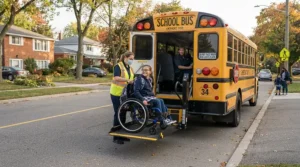
- Transportation: a bus with a wheelchair lift and tie-downs, plus trained staff. Chairs like the Wallaby with transit brackets simplify this.
- Staff support: an aide or trained adult for transfers, plus a plan for lifting a Medline Kidz or Vive Pediatric Wheelchair onto transport.
- Extra time: passing-period flexibility and early dismissal for crowded hallways or fire drills.
- Therapy services: PT or OT support to adjust the chair as the child grows.
- Maintenance and repair: a named person responsible for checking brakes and tires.
Also ask about evacuation planning, because a fire drill is exactly when a wheelchair plan gets tested. If your child’s IEP team believes a device will take time to order or customize, ask for interim supports in the meantime. The point of school IEP mobility accommodations is simple: the chair shouldn’t be the only thing that adapts.
Setup and the First 30 Days: A Practical Usage Guide
Amazon listings rarely tell you what to do after the box arrives, so here’s a practical first-month plan.
Day 1 — check and fit. Tighten every bolt, check the brakes, and confirm the footrest height so the child’s thighs rest level and the feet are supported. Install the seat belt or pelvic belt snugly. Many chairs ship with assembly required, as the PEPE Mobility Kids Wheelchair does, so allow an hour.
Week 1 — practice the real route. Roll the chair along the actual path: door, hallway, desk, bus loading. Watch for armrest collisions and tight turns.
Week 2 — fold and load. Practice the fold, wheel removal, and trunk loading with whoever will do it daily. Quick-release wheels, like those on the Ziggo, make this easy.
Week 3 — talk to the school. Share dimensions and weight with the teacher and bus staff, and confirm where the chair stays during the day.
Day 30 — recheck. Look at tire wear, brake bite, upholstery tension, and posture. Kids grow, and a chair that fit in September may pinch by spring.
Common first-month mistakes include ignoring brake adjustment, skipping a trial route, and leaving a loose belt. Each takes minutes to fix and prevents a bad week. 🔧
Real-World Scenarios: Three Students, Three Chairs
Maya, age 6, bus rider, aide at school. Maya weighs about 45 lb, rides the school bus daily, and needs an aide for transfers. The Wallaby fits her weight inside the 50–80 lb transit range once she’s a little heavier, and its flip-back arms help at her desk. Budget: mid. The aide appreciates the adjustable push handles.
Jordan, age 9, self-propeller, tight budget. Jordan wants to move on his own and the family is paying out of pocket. The PEPE Mobility Kids Wheelchair gives him large rear wheels. The family checks desk clearance first, since the armrests aren’t desk-length, and confirms the return policy. Backup: the Ziggo if the desk is a problem.
Priya, age 7, fatigues by afternoon. Priya’s therapist recommends rest breaks and positioning support. The Vive Reclining Pediatric Wheelchair gives her a recline option, and the school nurse helps schedule rest breaks in the IEP. The family accepts the 43 lb weight in exchange for the recline.
Notice the pattern. Each pick starts from the child’s day, not from the product page. Use the same method for your own child: list the route, the lifter, the desk, the bus, and the budget, then match a chair to that list.
✨ Don’t Miss These Exclusive Deals!
🔍 Take your pediatric wheelchair for school use search to the next level with these carefully selected chairs. Click on any highlighted item to check current pricing and availability. These picks will help you build a school day your child can navigate with confidence!
Common Mistakes When Buying a Pediatric Wheelchair for School Use
- Buying “to grow into.” An oversized seat hurts posture and propulsion. Fit to the child now, and plan to move up a size later.
- Trusting listing specs blindly. As noted above, the Medline Kidz and PEPE Mobility Kids Wheelchair show conflicting weights across listings. Confirm with the seller.
- Ignoring desk and door clearance. A chair that fits at home can fail at school.
- Skipping the clinician. Recline, tilt, and posture needs are therapy decisions, not shopping decisions.
- Assuming a chair settles the school’s obligations. Federal guidance on assistive technology under IDEA addresses this directly. Providing a device doesn’t by itself satisfy the requirement, because IEP teams must also consider whether a child needs the technology and related services. Don’t let “we bought a chair” end the conversation.
- Forgetting bus logistics. If the chair isn’t transit-rated, the district may require different arrangements.
Long-Term Cost and Maintenance
Sticker price is only the start. A pediatric chair is typically replaced as the child grows, sometimes every couple of years, so the real question is cost per year of good fit.
| Tier | Example | What You’re Paying For | Long-Term Consideration |
|---|---|---|---|
| Budget | CUIOT Pediatric Wheelchair, PEPE Mobility Kids Wheelchair | Basic folding frame | Verify warranty and parts |
| Mid | Ziggo, Medline Kidz, Vive Pediatric Wheelchair | Established brands, size options | Plan a size step-up |
| Mid to upper-mid | Wallaby, Vive Reclining Pediatric Wheelchair | Transit hardware or recline | Check therapy fit first |
The table shows that spending a little more can reduce cost per year only if the chair actually fits and lasts. Clinically prescribed custom chairs sit above this range and are usually obtained through a DME supplier, often with insurance involvement.
Maintenance is modest but real. Check tire wear, brakes, folding hardware, and upholstery monthly. Replace worn belts promptly, and keep the footrest hardware tight. A Medline Kidz with flat-free treaded tires needs less tire attention than a chair with air tires, while any folding chair needs a periodic hardware check.
FAQ
❓ How wide should a wheelchair seat be for a six-year-old?
❓ Does Medicaid cover a pediatric wheelchair for a child under 21?
❓ Can a Wallaby be used on a school bus?
❓ Can I use HSA or FSA funds for a kids wheelchair?
❓ How often will my child need a new wheelchair?
Conclusion
A pediatric wheelchair for school use succeeds or fails on fit, logistics, and paperwork, rarely on a spec sheet alone. Start with the measurement, since seat width measurement for children drives everything else. Match the chair to the school day: the Ziggo for size range and budget, the Wallaby for bus riders, the PEPE Mobility Kids Wheelchair for independence, the Vive Reclining Pediatric Wheelchair for rest and positioning, and the Medline Kidz or Vive Pediatric Wheelchair for aide-pushed days. Treat the CUIOT Pediatric Wheelchair as a budget option that needs extra verification.
Then tackle the money and the school. Insurance and Medicaid coverage for pediatric wheelchairs may offset the cost, and school IEP mobility accommodations make the chair usable from the first bell to the last. Finding the best first wheelchair for a child on a budget is mostly about avoiding a wrong-size purchase, and a kids folding wheelchair or an affordable lightweight wheelchair for elementary school kids only helps if it fits.
Prices change, so check current price and availability before you buy. Bring your child’s therapist into the decision, and keep notes for the IEP meeting. 🌟
✨ Ready to find the right fit?
🔍 Click on any highlighted chair above to check current pricing and availability, and give your child a school day built around what they can do.
Recommended for You
- High-Speed Mobility Scooter Over 10 mph: 7 Best Picks 2026
- Long-Range Mobility Scooter For 30 Mile Range: 7 Best Picks 2026
- Bariatric Mobility Scooter For Plus-Size Riders: 7 Best Picks 2026
Disclaimer: This article contains affiliate links. As an Amazon Associate, I earn from qualifying purchases. If you purchase products through these links, we may earn a small commission at no additional cost to you.
✨ Found this helpful? Share it with your friends! 💬🤗
