
In This Article
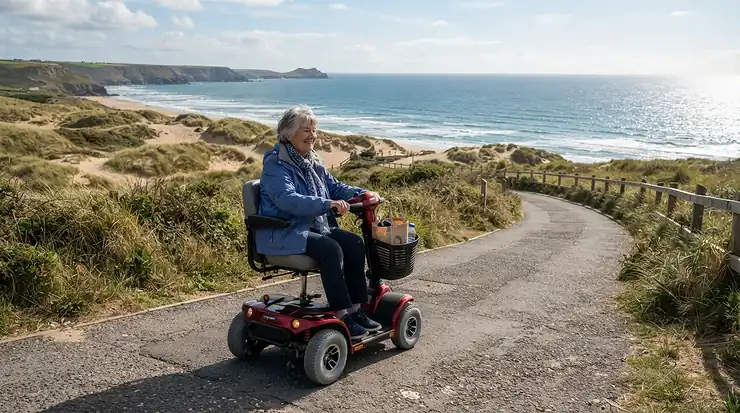
Here’s the thing nobody tells you when you start shopping for a scooter: the model that glides beautifully across a tile floor at the pharmacy can turn into a bucking bronco the second it hits a gravel driveway. An all-terrain 4-wheel mobility scooter is built to close that gap — it’s a four-wheeled powered scooter engineered with pneumatic or deep-tread tires, raised ground clearance, and a suspension system so the ride stays composed on grass, gravel, dirt, and broken pavement instead of just smooth sidewalks. That’s the whole idea in one sentence, and it’s also exactly what separates a “mobility scooter” from an “outdoor mobility scooter” in any honest buying guide.
If you’re picturing weekend farmers’ markets, a grandkid’s soccer game on a bumpy field, or just getting the mail without the driveway rattling your fillings loose, you’re the person this guide was written for. We dug into manufacturer specs, dealer listings, and aggregated owner feedback for seven real, currently available all-terrain 4-wheel mobility scooters — from a budget-friendly folding model under $1,700 to a heavy-duty long-range machine that costs as much as a used car. Older adults who rely on mobility devices face measurably higher fall risk than those who don’t, which is exactly why falls and injuries increase steadily with age, and people who use mobility assistive devices are far more likely to report a recent fall and to limit walking outside out of fear of falling — a stability gap that a well-built four-wheel platform with real suspension is specifically designed to close. We’ll walk through all seven scooters, show you how they stack up side by side, and give you the practical, no-fluff advice to pick the right one for your terrain.
Quick Comparison Table
| Scooter | Ground Clearance | Suspension | Weight Capacity | Best For |
|---|---|---|---|---|
| Pride Baja Raptor 2 4-Wheel | 3.5″ | Full front & rear | 400 lbs | Sporty daily hills |
| Afikim Afiscooter S4 | 5″ | Full round suspension | 500-550 lbs | Highest incline capability |
| Merits Silverado Extreme | 5.1″ | Full suspension | 450 lbs | Longest range |
| Drive Medical Cobra GT4 | 7″ | Full front & rear | 450 lbs | Adjustable seating comfort |
| Shoprider Enduro XL4 | 4″ | Full suspension | 500 lbs | Best value all-terrain |
| Golden Buzzaround XLS-HD | 4″ | Comfort Spring suspension | 325 lbs | Portable, disassembles |
| EWheels EW-72 4-Wheel | Not specified | Frame/tire only | 500 lbs | Fastest top speed |
Looking at the table, ground clearance is where the real separation happens: the Afikim Afiscooter S4 and Drive Medical Cobra GT4 both clear obstacles that would scrape the underside of a standard scooter, while the Golden Buzzaround XLS-HD trades some of that clearance for a frame that breaks down for the trunk of a sedan. Weight capacity swings from 325 to 550 pounds across this lineup, so match that number to the heaviest rider before anything else. The EWheels EW-72 is the outlier here — it wins on raw speed, but it’s leaning on tire compliance rather than a dedicated suspension system, which matters if washboard gravel is part of your daily route.
“Just one click — help others make better buying decisions too!” 😊
Top 7 All-Terrain 4-Wheel Mobility Scooters: Expert Analysis
1. Pride Mobility Baja Raptor 2 4-Wheel — full LED lighting for evening rides
The Baja Raptor 2 looks like it wants to go somewhere, and the spec sheet backs that up. It’s built around 16-inch tubeless pneumatic tires front and rear with front and rear suspension, and ground clearance runs 6.1 inches at the side deck and 3.5 inches at the center of the frame — enough to shrug off a curb lip or a rutted trail without the frame scraping. What most buyers overlook about this model is that its range figures shift dramatically with rider weight: Pride rates it for up to 21.2 miles with a 200-pound rider, dropping to about 15.1 miles at the full 400-pound capacity. That’s worth internalizing before you assume the marketing number is your number.
Reviewers consistently point to the full LED lighting package — headlights, directional signals, and brake lights — as a standout for anyone riding at dusk or in a neighborhood with real traffic. Based on the spec comparison, this scooter is best suited to someone who wants a genuinely sporty ride quality and doesn’t mind a mid-pack weight capacity in exchange for style and lighting. Aggregated owner sentiment on dealer sites is largely enthusiastic about the ride comfort, though a few notes mention the turning radius feels wide for tight suburban sidewalks — Pride lists it at 69 inches, which is more maneuverable than several 4-wheel rivals but still a real-world consideration in narrow store aisles.
Pros:
- ✅ Full LED headlight, signal, and brake light package
- ✅ Front and rear suspension smooths gravel and grass
- ✅ Sporty handling with a lower, planted stance
Cons:
- ❌ Range drops noticeably at full 400-lb capacity
- ❌ Turning radius wider than some rivals in tight spaces
Expect to find the Baja Raptor 2 typically in the $3,700-$4,800 range depending on retailer and battery configuration — check current pricing before buying, since promotions shift often. For the lighting package and suspension quality alone, it’s a strong value if hill climbing and dusk visibility both matter to you.
2. Afikim Afiscooter S4 — best ground clearance and incline rating in this lineup
If your route includes anything resembling a real hill, the Afiscooter S4 deserves a hard look. Ground clearance sits at a full 5 inches, with an incline rating of 11.3 degrees — noticeably higher than most of the competition here, and it shows in how confidently this scooter handles rutted trails and steep driveway aprons. The suspension isn’t an afterthought either: a full round suspension system with advanced shock absorbers and a reinforced steel chassis keeps the ride settled even when the terrain isn’t.
What the spec sheet won’t tell you outright is how much the range varies by configuration — the standard motor delivers up to 38 miles per charge with a 500-pound weight capacity, and upgraded battery packages push that even further. Reviewers and dealers repeatedly cite the Afiscooter line’s engineering pedigree; it’s a Red Dot Design Award winner built to higher European safety standards, which tracks with the premium price tag. This is the pick for outdoor enthusiasts, rural property owners, and anyone who’s been turned away by a scooter that couldn’t handle a real incline before.
Pros:
- ✅ Highest ground clearance and incline rating here
- ✅ Full round suspension with reinforced steel frame
- ✅ Red Dot Design Award-winning engineering
Cons:
- ❌ Among the priciest options in this roundup
- ❌ Larger footprint can feel bulky indoors
The Afiscooter S4 typically lands in the $6,500-$8,300 range before any battery or seat upgrades — a serious investment, but one that’s hard to beat if terrain capability is non-negotiable for you.
2. Merits Health Silverado Extreme (S941L) — longest driving range of the group
Wait — before we go further, let’s talk about why range matters more than most buyers initially think. If you’re the type who wants to disappear into a state park for the day, the Silverado Extreme solves that problem outright. Its 12V/100AH battery pair delivers an operating range up to 55 miles per charge, which more than doubles several competitors in this list. Ground clearance sits at 5.1 inches with full suspension, and the 16-inch rear pneumatic tires do real work absorbing chatter from washboard gravel.
Here’s what most buyers overlook: this scooter’s 120-amp controller and automatic safety turning half-speed control mean it slows itself down mid-turn without you having to think about it — a genuinely useful safety layer on uneven ground where a sharp turn at speed could tip a lesser scooter. Aggregated review sentiment across mobility retailers consistently praises the digital LCD dashboard and the smooth suspension feel; a common complaint is simply the price, which reflects the extended-range battery pack. This is the scooter for the person who measures a good day by miles covered, not minutes in the seat.
Pros:
- ✅ Best-in-class 55-mile driving range
- ✅ Automatic half-speed control when turning
- ✅ Full suspension with 5.1″ ground clearance
Cons:
- ❌ Highest sticker price in this comparison
- ❌ Nearly 360 lbs assembled, so transport needs planning
Typical pricing runs $5,300-$8,700 depending on retailer and promotional discounts — steep, but justified if your outdoor days are genuinely long ones.
4. Drive Medical Cobra GT4 — most adjustable captain’s seat for long days outdoors
The Cobra GT4 is the scooter for people who plan to sit in it for hours, not minutes. Ground clearance comes in at 7 inches — the highest of any model in this lineup — paired with full front and rear suspension and air-filled, low-profile tires that soak up impact before it ever reaches the seat. That clearance number alone should tell you this scooter was designed with rutted trails and rough sidewalk transitions in mind, not just gravel driveways.
Based on the spec comparison, the real differentiator is comfort engineering: the sport-style Captain’s Seat is available in 20-inch or 22-inch widths, is height-adjustable, swivels, and features a fold-down reclining backrest with auto-style slides for forward and backward adjustment. Reviewers consistently note that the one-touch, infinite tiller adjustment makes it easier to dial in an ideal driving position than fixed-angle competitors. The trade-off is speed — top speed tops out at 10 mph, slower than several rivals here, which reflects Drive’s choice to prioritize stability and ground clearance over outright pace.
Pros:
- ✅ Highest ground clearance in this roundup at 7″
- ✅ Fully adjustable, reclining Captain’s Seat
- ✅ Infinite tiller angle adjustment for driving comfort
Cons:
- ❌ Top speed capped at 10 mph
- ❌ Not a folding or disassembling travel scooter
Prices for the Cobra GT4 vary widely by seat width and retailer, generally in the $3,500-$7,500 range — shop around, since this model sees frequent promotional pricing.
5. Shoprider Enduro XL4 — best value full-suspension all-terrain scooter
Not every rugged tire mobility scooter needs a luxury price tag, and the Enduro XL4 proves it. It carries a 500-pound weight capacity with 14-inch pneumatic tires front and rear, 4 inches of ground clearance, and a full suspension system rated for an 8-degree safe climbing angle. That’s a genuinely competitive spec sheet at a price point well below the premium names in this list — proof that “budget” and “capable on uneven ground” aren’t mutually exclusive if you know where to look.
What the marketing copy underplays is battery flexibility: Shoprider offers this scooter with 50Ah, 60Ah, or 75Ah battery options, stretching range from 24 up to 37 miles depending on which pack you choose at checkout. Reviewers appreciate the dual-purpose “wig wag” drive lever, which lets riders with limited hand dexterity push forward or pull back to accelerate — a small design choice that meaningfully widens who can operate this scooter comfortably. If you want a true 4-wheel scooter for uneven ground without financing a small car, this is the one to shortlist.
Pros:
- ✅ Full suspension and pneumatic tires at a mid-range price
- ✅ Flexible battery options stretch range to 37 miles
- ✅ Dual-purpose drive lever for varied hand strength
Cons:
- ❌ Top speed maxes out around 7.5 mph
- ❌ Standard seat width may feel snug for larger riders
Expect pricing typically in the $2,200-$2,900 range depending on battery size selected — always confirm the current price at checkout, since battery upgrades shift the total.
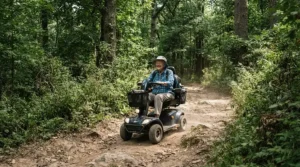
6. Golden Technologies Buzzaround XLS-HD 4-Wheel — most portable disassembling all-terrain scooter
Here’s a scenario worth picturing: you want outdoor capability, but you also need the whole scooter to fit in a sedan trunk after Sunday brunch. The Buzzaround XLS-HD threads that needle. It carries a 325-pound weight capacity, a 4 mph top speed, and a 9-mile range, with Comfort Spring Suspension and 4 inches of ground clearance — modest numbers next to the heavy-duty scooters above, but genuinely useful ones for someone whose “outdoor” means a park path or a grassy backyard rather than a mountain trail.
Reviewers consistently highlight how quickly this scooter comes apart for transport; it disassembles quickly and easily and includes an ultra-bright LED angle-adjustable headlight and an LED battery gauge as standard equipment. What most buyers overlook is that the “HD” designation genuinely means something here — the frame and suspension were upgraded specifically to handle rougher ground than the base Buzzaround XL, which tops out with no suspension at all. This is the pick for anyone prioritizing portability and a lighter overall package over raw power.
Pros:
- ✅ Comfort Spring Suspension smooths grass and gravel
- ✅ Disassembles into lightweight pieces for car transport
- ✅ Budget-friendly price versus full-size all-terrain models
Cons:
- ❌ Lower 325-lb weight capacity than most rivals here
- ❌ Top speed limited to 4 mph
Typical pricing runs $1,600-$1,700, making the Buzzaround XLS-HD the most accessible entry point in this whole comparison by a wide margin.
7. EWheels EW-72 4-Wheel — fastest top speed for the money
Sometimes the honest answer is “you’re paying for speed, not terrain engineering,” and that’s exactly the trade-off with the EW-72. It’s powered by a brushless 700-watt transaxle motor drawing from a 48-volt, 20AH battery, reaching speeds up to 15 mph and supporting up to 500 pounds — numbers that outrun every other scooter in this lineup on raw pace and rival them on capacity. A variable speed dial lets riders dial speed down to as low as 1 mph, which is a smart inclusion for anyone nervous about jumping straight to 15 mph in a crowded space.
Here’s the honest trade-off, though: unlike the other six scooters here, EWheels doesn’t advertise a dedicated front-and-rear suspension system or a specific ground clearance figure for this model — it’s leaning on tire compliance and frame flex rather than engineered shock absorption. Reviewers who’ve ridden it on smooth outdoor paths and packed gravel report a comfortable ride, but washboard or deeply rutted terrain will transmit more feedback to the rider than it would on the Cobra GT4 or Afiscooter S4. If speed and weight capacity matter more to you than deep suspension travel, this is a genuinely strong value.
Pros:
- ✅ Fastest top speed in this comparison at 15 mph
- ✅ 500-lb weight capacity rivals premium models
- ✅ Variable speed dial from 1 to 15 mph
Cons:
- ❌ No dedicated suspension system specified
- ❌ Ground clearance not published by the manufacturer
Pricing typically falls in the $2,800-$3,700 range — a reasonable ask for the speed and capacity, provided your terrain is mostly packed paths rather than rocky trails.
How to Choose an All-Terrain 4-Wheel Mobility Scooter
How do you choose the right all-terrain 4-wheel mobility scooter? Match ground clearance and suspension to your roughest regular terrain, confirm weight capacity with margin to spare, and prioritize range over top speed unless you’re covering long outdoor distances daily.
- Start with your worst terrain, not your best. If your route includes even occasional grass, gravel, or a cracked sidewalk, size the scooter for that surface — 10- to 16-inch pneumatic tires absorb shocks and provide strong grip, maintaining stability even on uneven surfaces, which solid tires simply can’t match.
- Set a minimum ground clearance of around 4-5 inches. Buying guides built around scooter stability testing guidance and outdoor ramp and curb-ramp guidance consistently land on this as the practical floor for avoiding scrapes on rocks and ruts.
- Add 15-20% margin to weight capacity. A scooter rated right at your weight will feel strained; buying a notch above extends both battery life and component lifespan.
- Weigh suspension type against your terrain. Full front-and-rear suspension outperforms tire-only compliance once you’re regularly on washboard gravel or root-crossed paths.
- Check the incline rating, not just the motor wattage. A stronger motor doesn’t guarantee hill confidence without the gearing and ground clearance to match.
- Confirm real-world range against your actual routes, not the marketing maximum — range figures assume light riders and flat terrain.
- Test the turning radius somewhere realistic, like a store aisle or narrow hallway, before committing to a wide-turning model.
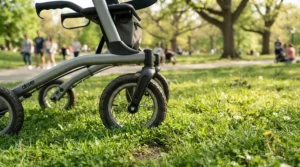
Rugged Tires vs. Ground Clearance vs. Suspension: What Actually Matters
Every one of these three specs sounds like marketing until you understand what each one is actually solving. Pneumatic, rugged tire mobility scooter tires flex around small rocks and roots the way solid tires can’t — pneumatic or off-road tread patterns enhance grip and stability, giving riders confidence even on slippery or loose surfaces, while solid tires simply transmit that same impact straight into the frame and the rider’s spine.
Ground clearance solves a completely different problem: it’s the difference between rolling over an obstacle and getting hung up on it. Deep-tread pneumatic tires paired with high ground clearance let a scooter clear rocks, roots, and debris that would otherwise stop a lower-riding model cold. Suspension, meanwhile, is the system that actually protects the rider’s body once the tires and clearance have done their job of getting over the obstacle — advanced suspension systems absorb shocks from uneven paths, rocks, gravel, and dirt, reducing fatigue and protecting joints on longer outdoor excursions. Here’s what most buyers overlook: these three specs work as a system. A scooter with great tires but no suspension will grip well but ride harshly; one with great suspension but low clearance will ride smoothly right up until it high-centers on a curb.
All-Terrain 4-Wheel Scooters for Uneven Ground: What to Expect
Specs on paper are one thing — what actually happens under you on a grass slope or a gravel path is another. Here’s the honest, everyday version: on packed dirt or short grass, a properly equipped 4-wheel scooter for uneven ground tracks predictably, with the four-wheel base doing most of the stability work while the suspension irons out small bumps. On loose gravel, expect a bit of wheel chatter even on the best-suspended models — this is normal, and it’s why lower speeds are safer on that surface regardless of how capable the scooter is rated.
Curbs and transitions are where ground clearance earns its keep. A scooter with 3-4 inches of clearance will generally handle a standard residential curb cut without drama, while anything approaching a full unramped curb calls for the 5-7 inch clearance range found on the Afiscooter S4 and Cobra GT4. Slopes are the other honest variable: incline capability is rated under ideal conditions, and wet grass or loose gravel on a slope reduces effective traction regardless of the scooter’s rated degree capacity — a genuinely useful reason to slow down and take an angled approach rather than a straight one on any hill you haven’t ridden before.
Ready to find your match? Check the current price and availability on any of these seven models above — your outdoor independence is worth the five minutes it takes to compare. 🚴♂️
Common Mistakes When Buying an All-Terrain Mobility Scooter
The single most common mistake is buying for the smoothest surface you’ll ride on instead of the roughest. Shoppers test-ride a scooter in a showroom with polished concrete floors, fall in love with how quiet and smooth it feels, then discover the ride quality changes entirely the first time it hits their actual gravel driveway. The fix is simple: ask the dealer specifically about ground clearance and suspension travel, not just top speed and range.
A second frequent misstep is ignoring turning radius until it’s too late — a scooter that handles beautifully outdoors can become genuinely frustrating in a grocery store aisle or a narrow hallway at home. Third, buyers often skip verifying whether a model disassembles for transport, only to discover later that a 350-pound scooter won’t fit in their vehicle in one piece. Fourth, some shoppers assume a higher weight capacity automatically means a rougher, harsher ride — in this lineup, the Cobra GT4 and Silverado Extreme prove that heavy-duty and comfortable aren’t opposites when suspension is engineered properly. Finally, don’t overlook battery weight and charging logistics; a 94-pound battery pair, like the one on the Cobra GT4, isn’t something most people are lifting solo.
Practical Usage Guide: Getting the Most From Your Outdoor Mobility Scooter Suspension
A full suspension system is only as good as the maintenance behind it, so a little routine care goes a long way. In the first 30 days, avoid over-inflating pneumatic tires beyond the manufacturer’s stated PSI — over-inflation stiffens the ride and defeats part of what you paid for in tire compliance. Check tire pressure weekly at first, since new tires can settle slightly.
Wipe down suspension components and axle areas after riding through mud, wet grass, or sandy paths; grit working into moving parts is the leading cause of premature suspension wear on outdoor scooters. Most manufacturers recommend a professional suspension and brake inspection annually, or sooner if you’re logging regular rough-terrain miles. A common first-30-days mistake is charging the battery only partially or letting it sit fully depleted between rides — most lead-acid battery packs used in these scooters perform best with a full, uninterrupted charge cycle rather than frequent partial top-offs. Lastly, learn where your scooter’s anti-tip wheels engage before you need them on a real slope; understanding that threshold in a safe, flat area first builds confidence for when the terrain actually gets uneven.
Real-World Scenarios: Who Actually Needs a Rugged Tire Mobility Scooter?
Picture Linda, 71, who lives on two rural acres with a long gravel driveway and wants to get to her mailbox and garden without her husband driving her there. For Linda, ground clearance and suspension matter more than top speed — something like the Shoprider Enduro XL4 or Pride Baja Raptor 2 covers her daily loop comfortably without overspending on range she’ll never use.
Now picture Marcus, 68, a retired park ranger who spends full days at state fairs, trailheads, and grandkids’ outdoor sports events. Marcus needs real range and stamina — the Merits Silverado Extreme‘s 55-mile capacity means he’s never calculating whether he’ll make it back to the car. And consider Dorothy, 79, who lives in a third-floor apartment and travels frequently by car to visit family across three states. For Dorothy, portability trumps raw power — the Golden Buzzaround XLS-HD‘s quick disassembly into manageable pieces solves her actual problem, even though it can’t match the heavier scooters’ speed or range.
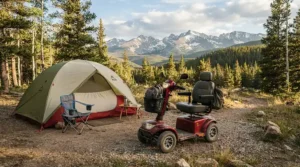
Buyer’s Decision Framework
If your daily terrain is mostly grass, gravel, and short trails on a budget, choose the Shoprider Enduro XL4 because it delivers genuine full suspension and pneumatic tires without the premium price tag. If you need maximum range for full-day outings, choose the Merits Silverado Extreme because its 55-mile capacity outlasts every other model here by a wide margin. If portability for travel or storage is your top priority, choose the Golden Buzzaround XLS-HD because it disassembles into manageable, liftable pieces. If you’re regularly facing steep inclines or deep ruts, choose the Afikim Afiscooter S4 because its 5-inch clearance and 11.3-degree incline rating are the strongest in this comparison. And if long days in the seat are the norm, choose the Drive Medical Cobra GT4 because its adjustable Captain’s Seat and 7-inch clearance were built specifically for that use case.
Long-Term Cost & Maintenance
The sticker price is only the opening bid in what a mobility scooter actually costs over its lifespan. Lead-acid battery packs typically need replacement every 12-18 months with regular outdoor use, and a replacement pair can run several hundred dollars depending on amp-hour rating — the larger 75-100AH packs on the Silverado Extreme and Cobra GT4 cost more upfront to replace than the smaller packs on the Buzzaround. Tire replacement is another recurring cost that’s easy to forget; pneumatic tires wear faster under regular gravel and grass use than they would on smooth pavement, so budget for that difference if your terrain is genuinely rough.
On the ROI side, a heavier-duty scooter with real suspension often costs less over five years than a budget model that needs suspension bushings, frame welds, or motor repairs from absorbing shocks a lighter-duty design wasn’t engineered to handle. Medicare can offset a meaningful share of the purchase for many riders — Medicare Part B covers power-operated vehicles as durable medical equipment when a doctor documents medical necessity, though the standard 20% coinsurance still applies after the deductible. It’s worth a conversation with your physician before assuming a scooter is entirely out-of-pocket.
Safety, Regulations & Coverage Guide
Beyond Medicare’s medical-necessity requirements, the built environment itself plays a bigger role in scooter safety than most buyers expect. Curb ramps must be at least 36 inches wide at the ramp run under federal accessibility standards, which is a big part of why route-planning around known accessible crossings matters as much as the scooter’s own specs — a technically capable scooter still benefits from a properly built ramp rather than an improvised curb hop. You can review the ADA’s accessibility standards for curb ramps and sidewalks if you want to understand what your city is actually required to provide.
On the medical side, research is consistent that assistive device users face a meaningfully elevated risk of falls and are more likely to limit walking outside due to fear of falling compared to non-users — which is precisely the population an all-terrain scooter with real suspension and ground clearance is built to protect, by reducing the jarring and instability that contribute to that risk in the first place. Always follow the manufacturer’s rated weight capacity and speed settings for the surface you’re on, and use the low-speed setting in crowded or uneven areas regardless of how capable your scooter is rated.
Benefits vs. Traditional Mobility Scooters
| Factor | All-Terrain 4-Wheel Scooter | Traditional Indoor Scooter |
|---|---|---|
| Tire type | Pneumatic / deep tread | Solid, flat-free |
| Ground clearance | 4″-7″ typical | 2″-3″ typical |
| Suspension | Full front & rear (most models) | Minimal or none |
| Best surfaces | Grass, gravel, dirt, uneven sidewalks | Smooth indoor floors, flat pavement |
The gap here isn’t subtle — a traditional scooter’s low clearance and solid tires are built for the predictable friction of a flat floor, not the unpredictable give of dirt or gravel. Suspension is really the deciding line: without it, every bump becomes a jolt transmitted straight to the rider’s back and joints, which is exactly why the Silverado Extreme and Cobra GT4 owners in this guide consistently report less end-of-day fatigue than riders of flat-terrain models pushed onto rough ground they weren’t designed for.
Price Range & Value Analysis
| Scooter | Typical Price Range | Value Verdict |
|---|---|---|
| Golden Buzzaround XLS-HD | $1,600-$1,700 | Best entry price with real suspension |
| Shoprider Enduro XL4 | $2,200-$2,900 | Best overall value |
| EWheels EW-72 | $2,800-$3,700 | Best speed-per-dollar |
| Pride Baja Raptor 2 | $3,700-$4,800 | Strong mid-tier all-rounder |
| Drive Cobra GT4 | $3,500-$7,500 | Comfort-focused premium |
| Merits Silverado Extreme | $5,300-$8,700 | Premium range investment |
| Afikim Afiscooter S4 | $6,500-$8,300 | Premium terrain capability |
Looking at the spread, the Shoprider Enduro XL4 stands out as the value sweet spot — it delivers full suspension and real ground clearance at roughly a third of the premium models’ cost. If budget is flexible, the Afiscooter S4 and Silverado Extreme justify their price with genuinely higher engineering ceilings, not just brand markup.
Frequently Asked Questions
❓ What ground clearance do I need for an all-terrain mobility scooter?
❓ Are pneumatic tires better than solid tires for outdoor scooters?
❓ Does Medicare cover an all-terrain 4-wheel mobility scooter?
❓ How much weight capacity margin should I add when choosing a scooter?
❓ Can an all-terrain scooter go on grass and sand?
Conclusion
There’s no single “best” all-terrain 4-wheel mobility scooter — there’s only the best one for your driveway, your daily distance, and your particular hills. If you take one thing from this guide, let it be this: ground clearance, suspension, and tire type work together as a system, and no single spec compensates for weakness in the other two. The Shoprider Enduro XL4 earns its spot as the practical value pick, the Afikim Afiscooter S4 and Merits Silverado Extreme justify premium pricing with genuine terrain and range advantages, and the Golden Buzzaround XLS-HD solves the portability problem the others can’t touch. Whichever one matches your actual terrain, the goal is the same: getting back outside, confidently, on ground that used to feel off-limits.
Recommended for You
- Portable Mobility Scooter: 7 Best Affordable Picks For 2026
- Mobility Scooter For Car Trunk Storage: 7 Top Picks (2026)
- Folding Travel Mobility Scooter for Airline Travel: 7 Best Picks 2026
Disclaimer: This article contains affiliate links. As an Amazon Associate, I earn from qualifying purchases. If you purchase products through these links, we may earn a small commission at no additional cost to you.
✨ Found this helpful? Share it with your friends! 💬🤗
