

In This Article
Somewhere between “I can still walk to the mailbox” and “the grocery store feels like a marathon,” a lot of people start Googling portable mobility scooter options at eleven at night, half-convinced they’re not ready and half-convinced their knees have already made the decision for them. Here’s the short answer: a portable mobility scooter is a compact, battery-powered scooter — usually foldable or quick-disassembling — built to travel with you, not just sit in a garage. It typically weighs less than a full-size scooter, breaks down into liftable pieces or folds flat, and trades some raw range and speed for the ability to fit in a car trunk, a closet, or an airplane cargo hold.

The category has genuinely gotten better. Lithium batteries shaved 20-30 pounds off models that used to require a small crane to load, and remote-controlled auto-folding designs turned a two-person job into a one-button task. Research using the National Health and Aging Trends Study found that roughly a quarter of U.S. adults 65 and older reported using a mobility device, based on in-home interviews with a nationally representative sample of Medicare beneficiaries. That’s a lot of people quietly deciding that independence is worth the investment.
This guide walks through seven real, currently available portable scooters — three budget picks under $900, two solidly mid-range options, and two premium travel-focused machines — with honest specs, real trade-offs, and practical guidance you won’t find on a product listing page.
Quick Comparison Table: Portable Mobility Scooters at a Glance
| Scooter | Total Weight | Heaviest Piece | Range | Price Range | Best For |
|---|---|---|---|---|---|
| Drive Medical Spitfire Scout Compact | ~85 lbs | 29 lbs | Up to 9-15 mi | Under $900 | Tightest budget |
| Vive Health 4-Wheel Scooter | ~88 lbs | 29 lbs | Up to 12.4 mi | Under $800 | First-time buyers |
| Golden Buzzaround EX | ~100-107 lbs | 53 lbs | Up to 18 mi | $1,800-$2,000 range | Longest range |
| Pride Go-Go Elite Traveller Plus | ~85-116 lbs | ~35 lbs | Up to 14.5 mi | $1,400-$1,900 range | Trusted all-rounder |
| Forcemech Traveler | 44 lbs | 44 lbs (auto-fold, no disassembly) | Up to 12.4 mi | $1,900-$2,050 range | Lightest auto-fold |
| EV Rider Transport AF+ | 44-49 lbs | 44-49 lbs (auto-fold) | Up to 10 mi | $2,150-$2,350 range | One-button folding |
| SmartScoot Travel Lightweight | ~40 lbs | 27 lbs | Up to 12 mi | $2,400-$2,550 range | Smallest cars, fastest top speed |
Looking at the numbers above, the split is pretty stark: the two budget models under $900 both disassemble into four pieces and top out around 3.7-4.25 mph, while the three most expensive options either fold automatically or break down to a genuinely liftable 27-pound piece. If your main concern is monthly grocery runs and you’ve got a strong-enough back for a 29-pound lift, Vive Health 4-Wheel Scooter or Drive Medical Spitfire Scout Compact deliver most of the independence for a third of the price. If lifting anything heavier than a gallon of milk is off the table, the auto-folding or ultra-light disassembly models earn their premium.
💬 Found a scooter that fits your life? Tap through to check today’s price and availability before you decide.😊
Top 7 Portable Mobility Scooters: Expert Analysis
1. Drive Medical Spitfire Scout Compact 3-Wheel — most affordable true disassembling scooter
At well under $900, the Drive Medical Spitfire Scout Compact 3-Wheel is the scooter I point budget-conscious readers toward first, and the reason is simple math: 300 pounds of weight capacity and a genuine 3-to-5-piece breakdown for a fraction of what the premium brands charge. The 24V/270W motor and a pair of 12AH batteries get you roughly 9 miles per trip, stretching to about 15 miles if you spring for the 20AH upgrade — plenty for errands, a doctor’s visit, or a slow lap of the neighborhood.
What the spec sheet won’t tell you is how forgiving the delta tiller is for people with limited hand strength; the electromagnetic brakes engage smoothly rather than jerking to a stop, which matters more than most buyers expect until they’ve ridden a cheaper scooter that doesn’t. Reviewers consistently note that assembly takes a few minutes once you’ve done it twice, and that the 29-pound heaviest piece (the front section) is genuinely liftable for most adults, though a few mention wishing the basket were larger.
Pros:
- ✅ Full 300 lb weight capacity at a true entry-level price
- ✅ Disassembles into manageable, liftable sections
- ✅ Simple delta tiller works well for limited dexterity
Cons:
- ❌ Top speed caps at 4.25 mph, slow for longer outdoor trips
- ❌ Standard 12AH battery limits range to around 9 miles
Expect to pay in the $650-$850 range depending on retailer and battery configuration — at that price, it’s hard to beat as a first scooter or a spare for visiting family.

2. Vive Health 4-Wheel Mobility Scooter — best overall value for first-time buyers
The Vive Health 4-Wheel Mobility Scooter (model MOB1027) sits right alongside the Drive Medical in price but edges ahead on stability, thanks to its four-wheel base and 8-inch flat-free tires front and back. It handles inclines up to 6 degrees without drama, and the 265-pound weight capacity covers the vast majority of riders comfortably.
Based on the spec comparison, the standout here is range relative to price: up to 12.4 miles from its dual 12AH batteries, which beats several scooters costing two or three times as much. The seat swivels for easier transfers, the armrests flip back, and the whole unit disassembles into four pieces with a 29-pound heaviest section — nearly identical lift weight to the Drive Medical, but with a smoother ride thanks to the regenerative electromechanical braking. What most buyers overlook about this model is the five-year frame warranty, which is unusually generous for a sub-$800 scooter and signals real confidence from the manufacturer.
Pros:
- ✅ Strong 12.4-mile range for its price point
- ✅ Five-year warranty on front and rear frame sections
- ✅ Swivel seat simplifies getting on and off
Cons:
- ❌ Total assembled weight (88 lbs) is heavier than premium rivals
- ❌ 3.7 mph top speed is best suited to indoor and flat outdoor use
At around $650-$750, the Vive Health 4-Wheel Mobility Scooter is my pick for anyone buying their very first scooter and wanting to test the waters without a four-figure commitment.
3. Golden Technologies Buzzaround EX 4-Wheel — best range in a portable frame
Step up to the Golden Technologies Buzzaround EX 4-Wheel and the whole equation shifts: this is a full-size-feeling scooter that still disassembles for transport, and its 18-mile range per charge is nearly double what the budget models offer. The dual U1 batteries and comfort spring suspension mean it handles cracked sidewalks and gravel driveways with far less jarring than lighter scooters can manage.
Here’s what to weigh: the heaviest piece comes in around 53 pounds, which is genuinely heavy for one person to lift into a trunk regularly. Reviewers consistently praise the ride comfort and the 350-pound weight capacity, and a common thread in feedback is that this scooter feels like “a real scooter” rather than a travel compromise — but several also note that daily disassembly gets old fast if you don’t have help.
Pros:
- ✅ Class-leading 18-mile range on a single charge
- ✅ 350 lb weight capacity, among the highest here
- ✅ Comfort spring suspension smooths rough terrain
Cons:
- ❌ 53 lb heaviest piece is tough for solo lifting
- ❌ Bulkier footprint than true travel-focused models
Priced around $1,850-$1,950, this is the scooter for someone who mostly parks it at home but wants the option to break it down for occasional trips rather than daily transport.
4. Pride Go-Go Elite Traveller Plus — most trusted name in travel scooters
Pride Mobility basically defined this category, and the Pride Go-Go Elite Traveller Plus remains the scooter most occupational therapists mention by name. It disassembles into five genuinely lightweight pieces using a one-hand feather-touch release, with the heaviest section landing around 35 pounds — a meaningful step down from the Buzzaround EX above.
The spec sheet shows a 300-pound weight capacity and up to 14.5 miles of range on the larger 18AH battery option, with a top speed of 4.5 mph that feels noticeably peppier than the budget scooters. What the numbers don’t capture is the maturity of the design: interchangeable red and blue shroud panels, an auto-connecting cable between front and rear sections so you’re not fumbling with wires, and a lifetime frame warranty that reflects decades of iteration. Aggregated review sentiment across major retailers consistently flags reliability and parts availability as strengths, since Pride’s dealer network is enormous compared to newer competitors.
Pros:
- ✅ Five-piece disassembly with a genuinely light 35 lb front section
- ✅ Lifetime frame warranty backed by a large service network
- ✅ Auto-connecting cable simplifies reassembly
Cons:
- ❌ Pricing varies widely by retailer and battery configuration
- ❌ 4.5 mph top speed still trails premium auto-fold models
Prices for the Pride Go-Go Elite Traveller Plus swing from around $1,450 to close to $1,900 depending on retailer and battery size — shop around, because the spread here is unusually wide for an identical spec sheet.
5. Forcemech Traveler — lightest true auto-folding scooter
If the idea of disassembling anything makes you want to close the laptop, the Forcemech Traveler solves that at just 44 pounds total, folding and unfolding as a single unit rather than breaking into pieces. That’s the whole appeal: no parts to lose, no reassembly sequence to memorize, just fold and go.
The 250W motor and 24V 10Ah lithium battery deliver up to 12.4 miles of range, and the quick-swap battery design means heavy users can carry a spare rather than waiting out a full charge cycle. Here’s what to weigh: the aluminum alloy frame keeps weight down but caps capacity at 275 pounds, lower than several disassembling competitors. Reviewers on Trustpilot and the manufacturer’s own channels consistently highlight the LED dash display and lighting as standout touches for nighttime visibility, though the FAA-compliant lithium battery does mean airline staff will want to see the watt-hour rating clearly labeled before check-in.
Pros:
- ✅ Folds and unfolds as one 44 lb unit, no disassembly
- ✅ Quick-swap lithium battery extends effective range
- ✅ Aluminum frame keeps overall weight genuinely low
Cons:
- ❌ 275 lb weight capacity trails several heavier competitors
- ❌ Premium pricing compared to disassembling alternatives
At roughly $1,900-$2,050, the Forcemech Traveler earns its price if a single fold-and-go action matters more to you than raw capacity or range.

6. EV Rider Transport AF+ — best one-button automatic fold
The EV Rider Transport AF+ takes the “no disassembly” idea one step further with a handheld remote that folds and unfolds the entire scooter automatically — genuinely useful for anyone who can’t bend down to manipulate a frame release. At 44-49 pounds depending on configuration, it’s airline-approved and built around an 11.5Ah lithium battery.
Key specs with real-world meaning: the 250-pound weight capacity and 10-mile range are both modest compared to the Golden Buzzaround EX, and the 3.8 mph top speed is on the slower end of this list — but that’s the trade-off for automatic folding hardware, which adds weight and complexity elsewhere in the frame. What most buyers overlook is the actuator lock, a small feature that prevents the fold mechanism from engaging accidentally while you’re riding, which matters more than it sounds once you’ve read about scooters without one. Aggregated customer feedback across retailers is generally positive on the automatic fold reliability, with the recurring caveat that the remote battery needs occasional replacement and is easy to forget about.
Pros:
- ✅ Genuine one-button automatic fold and unfold
- ✅ Airline-approved lithium battery, well under Wh limits
- ✅ Actuator lock prevents accidental folding while riding
Cons:
- ❌ 250 lb capacity and 10-mile range are modest for the price
- ❌ Remote control adds a small extra part to keep charged
Expect to pay in the $2,150-$2,350 range — a real premium, but one that buys genuine hands-free convenience.
7. SmartScoot Travel Lightweight Scooter — smallest footprint, fastest top speed
The SmartScoot Travel Lightweight Scooter closes out this list as the specialist’s choice: its heaviest disassembled piece is just 27 pounds, the lightest of anything on this page, and the whole unit weighs under 40 pounds fully assembled. For anyone driving a compact car or a low-slung sedan with a shallow trunk, that difference is the whole ballgame.
The spec sheet shows a stainless steel frame (trading some weight savings for durability over aluminum), a 36V 8Ah lithium battery good for around 12 miles, and — unusually for this category — a 7 mph top speed, noticeably faster than every other scooter here. That speed comes from a front-wheel-drive motor with a disc brake, a setup more common on performance mobility devices than travel scooters. Reviewers consistently mention how easily the pieces slot into a small trunk or even a large suitcase, and the two-year frame warranty is solid, though a few note the narrower seat runs snug for larger riders.
Pros:
- ✅ Lightest heaviest-piece (27 lbs) of any scooter on this list
- ✅ Fastest top speed at 7 mph
- ✅ Stainless steel frame adds durability without excess bulk
Cons:
- ❌ Narrower 15.75″ seat may feel tight for larger riders
- ❌ Highest price point of the seven
Pricing typically lands in the $2,400-$2,550 range, making it the splurge pick for buyers who’ve already decided that trunk space and speed matter more than saving money.
Practical Usage Guide: Getting the Most From Your First 30 Days
The first month with a new scooter is where most of the avoidable frustration happens, and almost none of it is covered in the box insert. Start by charging the battery fully before first use, even if it arrives partially charged — lithium and sealed lead-acid batteries both benefit from a full initial cycle that calibrates the charge indicator accurately. Practice folding or disassembling the scooter in your driveway or garage three or four times before you actually need to load it somewhere stressful like an airport curb; muscle memory matters more than reading the manual twice.
A common early mistake is leaving the scooter plugged in constantly “just to be safe.” Most manufacturers recommend charging after each use rather than topping off continuously, since overcharging shortens battery lifespan over time, particularly with older sealed lead-acid packs like those in the Golden Buzzaround EX. Check tire pressure monthly if your model uses pneumatic tires rather than flat-free solid ones, and wipe down the frame after wet-weather rides — road salt and moisture are the leading causes of premature corrosion on aluminum frames.
Set a simple maintenance rhythm: weekly visual inspection of tires and cables, monthly battery terminal cleaning, and an annual professional tune-up if your scooter sees regular outdoor use. Most dealers who sell models like the Pride Go-Go Elite Traveller Plus offer this service, and it’s worth the modest cost to catch a fraying cable before it strands you somewhere inconvenient.
Portable Scooter for Seniors on a Budget: Three Real-World Scenarios
Picture Diane, 74, recently widowed, living alone in a one-bedroom apartment two blocks from her pharmacy and grocery store. Her needs are modest: get to appointments, carry a bag of groceries, avoid the exhaustion that used to end her day early. For Diane, a portable scooter for seniors on a budget like the Vive Health 4-Wheel Mobility Scooter covers nearly everything — its 12.4-mile range and 265-pound capacity handle her routine with room to spare, and at under $800, it doesn’t strain a fixed income.
Now picture Marcus, 68, still working part-time and visiting grandchildren three states away twice a year by plane. His scenario calls for something closer to the Forcemech Traveler or EV Rider Transport AF+ — the auto-fold convenience matters more than saving a few hundred dollars, because he’s doing this fold-and-carry routine in crowded terminals, not a quiet driveway.
Finally, consider Rosa, 71, an avid walker whose knees finally gave out but who still wants to cover real distance on weekend outings with her hiking group. The Golden Buzzaround EX‘s 18-mile range and suspension make it her best match — she’s trading portability for endurance, and at her activity level, that trade makes sense.
Affordable Lightweight Scooter for Travel: Solving the Airport, Car Trunk, and Cruise Problem
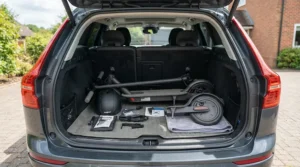
The single biggest question buyers ask isn’t “which scooter is best” — it’s “will this actually fit in my car, and will the airline let me bring it.” Both problems have concrete solutions once you know what to check. For car trunks, measure your trunk opening and depth before buying, not after; a scooter that disassembles into a 29-pound piece still needs physical clearance, and compact sedans sometimes surprise buyers with shallower trunks than expected. The SmartScoot Travel Lightweight Scooter‘s smaller footprint exists specifically to solve this problem.
For flights, battery chemistry is the deciding factor, not scooter size. Lithium-ion batteries installed on a mobility device must be securely attached, protected against damage by the device’s design, and have terminals protected from short circuit, while lithium metal batteries are forbidden entirely on these devices. Every scooter on this list except the sealed-lead-acid versions of the Drive Medical and base Golden Buzzaround uses airline-compliant lithium batteries, but you should still call your airline’s disability services desk 48 hours ahead to confirm watt-hour limits and check-in procedures — policies vary by carrier even when federal rules don’t.
For cruises, the rules are typically more relaxed than air travel, but elevators and narrow cabin doorways are the real bottleneck. Measure your cabin doorway width (often 24-32 inches) against your folded scooter’s dimensions before booking, not after you’ve paid for the cruise.
How to Choose a Portable Mobility Scooter
Picking the right model comes down to seven weighted decisions, roughly in order of importance:
- Weight capacity first. Choose a scooter rated at least 25-50 pounds above your actual body weight — underrating this shortens motor and battery life dramatically.
- Total lift weight second. If you’re loading it yourself, the heaviest single piece (not the total weight) is what matters; anything over 40 pounds should get a hands-on test lift before you buy.
- Range matches your actual trips, not your ideal ones. Track how far you typically walk in a week and double it for a safety margin.
- Folding style fits your strength and patience. Auto-fold costs more but saves real effort daily; disassembly saves money but demands more from your back and hands.
- Speed matters more outdoors than indoors. Indoor-only users can live with 3.7 mph; anyone crossing intersections wants closer to 4.5-5 mph minimum.
- Seat and tiller adjustability affects comfort on longer rides, especially for anyone over 5’8″ or under 5’2″.
- Warranty length signals manufacturer confidence — anything under one year on the frame is a red flag in this category.
What to Expect: Real-World Performance
Spec sheets describe ideal conditions, and real sidewalks rarely deliver those. A scooter rated for 12 miles will typically deliver 8-10 in mixed terrain with a rider near the upper weight limit, since hills, cold weather, and stop-and-go use all drain batteries faster than flat-ground testing. Top speed numbers assume a smooth, flat surface too — expect your actual cruising speed to run about 15-20% below the rated max once you factor in normal caution around pedestrians and curb cuts.
Braking feel varies more than most buyers expect. Electromagnetic brakes, found on models like the Pride Go-Go Elite Traveller Plus, tend to feel smoother and more predictable than the simpler mechanical brakes on some budget units. Ground clearance also matters more in daily life than in a showroom — anything under 2 inches will occasionally catch on uneven sidewalk seams or slightly raised door thresholds, which is worth testing on your own property before committing to daily outdoor use.
Budget Mobility Aids: Portable Scooters vs Walkers, Canes, and Power Chairs
| Mobility Aid | Typical Cost | Range/Endurance | Learning Curve | Best For |
|---|---|---|---|---|
| Cane | $15-$50 | Limited by user stamina | Minimal | Mild balance support |
| Rollator/Walker | $60-$200 | Limited by user stamina | Minimal | Moderate balance, short distances |
| Portable Scooter | $650-$2,550 | 9-18 miles per charge | Short practice period | Sustained outdoor mobility |
| Power Wheelchair | $1,500-$6,000+ | Similar to scooters | Moderate | Users needing full postural support |
Interpreting this table: budget mobility aids like canes and walkers cost far less upfront, but they rely entirely on the user’s remaining stamina and strength, which is exactly the resource running low for most scooter buyers. A Drive Medical Spitfire Scout Compact costs roughly three to four times a quality rollator, but it replaces walking altogether rather than merely supporting it, which is a fundamentally different kind of independence. Power wheelchairs, meanwhile, generally cost more than even premium portable scooters and suit a different population — those needing postural support the scooter’s basic seat can’t provide.
Entry-Level Scooters vs Premium Travel Scooters: What Actually Changes
The gap between entry-level scooters and premium travel models isn’t really about whether the scooter “works” — every option on this list gets you from point A to point B reliably. What changes is the friction around every trip. Entry-level scooters like the Vive Health 4-Wheel Mobility Scooter ask more of your body: heavier total weight, manual disassembly, slower top speed. Premium models like the SmartScoot Travel Lightweight Scooter or EV Rider Transport AF+ remove that friction through lighter materials and automated folding, at a cost roughly three times higher.
The honest answer for most buyers: if you’re transporting the scooter daily — into a car, up stairs, through an airport — the premium tier earns its price quickly in saved effort and reduced injury risk. If the scooter mostly stays in one place with occasional trips, an entry-level model delivers nearly identical day-to-day function for a fraction of the cost.
Lightweight Frame Materials Explained: Aluminum vs Steel vs Carbon Fiber
Most portable scooters use one of three frame materials, and the choice ripples through weight, durability, and price. Aluminum alloy, used in the Forcemech Traveler, offers the best weight-to-strength ratio in this price range — it’s why that scooter hits 44 pounds while carrying a real motor and battery. Stainless steel, found in the SmartScoot Travel Lightweight Scooter‘s frame, trades a bit of weight savings for meaningfully better corrosion resistance and long-term rigidity, which matters if you’ll store the scooter somewhere humid. Standard steel frames, common in budget models, are the heaviest option but also typically the cheapest to manufacture and repair, which is part of why entry-level scooters cost less.
Carbon fiber hasn’t fully arrived in the mainstream portable scooter market the way it has in wheelchairs, but expect to see it more by the late 2020s as costs come down — for now, it remains mostly a premium wheelchair feature rather than a scooter one.
Common Mistakes When Buying a Portable Mobility Scooter
The single most common mistake is buying based on weight capacity alone and ignoring total lift weight — a scooter can easily support your body weight while still being impossible for you to lift into a trunk. A close second is underestimating range needs; buyers who test-ride around a showroom for five minutes often don’t realize how much faster batteries drain outdoors, in cold weather, or with hills involved. Skipping a real-world seat trial is another frequent regret, since seat width and tiller reach that feel fine for ten minutes can become uncomfortable after thirty. Finally, many buyers forget to check their vehicle’s actual trunk dimensions before ordering, assuming “it folds small” means it will fit — always measure first.
Long-Term Cost & Maintenance
| Cost Factor | Budget Scooter | Premium Scooter |
|---|---|---|
| Upfront price | $650-$900 | $1,900-$2,550 |
| Annual battery replacement (avg.) | $80-$150 | $100-$200 |
| Annual tune-up/service | $50-$100 | $75-$150 |
| Typical battery lifespan | 12-18 months (lead-acid) | 2-4 years (lithium) |
The math here rewards patience: budget scooters cost less upfront but often use sealed lead-acid batteries needing replacement every 12-18 months, while premium lithium-powered models like the SmartScoot Travel Lightweight Scooter or Forcemech Traveler can run 2-4 years before a battery swap. Over a five-year ownership window, the total cost gap between a $700 budget scooter and a $2,400 premium one narrows more than the sticker prices suggest — though the budget option still comes out cheaper overall for most owners, just by a smaller margin than day one implies.

Frequently Asked Questions
❓ How much does a portable mobility scooter cost?
❓ Can I take a portable mobility scooter on an airplane?
❓ What is the lightest portable mobility scooter available?
❓ How far can a portable mobility scooter travel on one charge?
❓ Do portable mobility scooters require a prescription?
Conclusion
There’s no single “best” portable mobility scooter, just the right match for how far you actually travel, how much lifting your body can handle, and what your car trunk or airline seat pocket can physically accommodate. If price is the deciding factor, the Vive Health 4-Wheel Mobility Scooter and Drive Medical Spitfire Scout Compact both deliver genuine independence for under $900. If daily portability without disassembly matters most, the Forcemech Traveler and EV Rider Transport AF+ justify their higher price through sheer convenience. And if range or trunk space is your binding constraint, the Golden Buzzaround EX and SmartScoot Travel Lightweight Scooter each solve a specific problem the others don’t.
Whatever you choose, measure your vehicle, check your airline’s current battery policy, and — if at all possible — sit in the seat before you buy. The specs matter, but thirty seconds in the actual seat tells you things a comparison table never will.
Recommended for You
- Mobility Scooter For Car Trunk Storage: 7 Top Picks (2026)
- Folding Travel Mobility Scooter for Airline Travel: 7 Best Picks 2026
- 7 Best Indoor 3-Wheel Mobility Scooters For Tight Spaces (2026)
Disclaimer: This article contains affiliate links. As an Amazon Associate, I earn from qualifying purchases. If you purchase products through these links, we may earn a small commission at no additional cost to you.
✨ Found this helpful? Share it with your friends! 💬🤗
