
In This Article
Here’s the question nobody warns you about until you’re standing in a mobility showroom, overwhelmed by chrome and vinyl: mobility scooter vs power wheelchair — which one actually fits your life? Not the brochure life, not the “senior discount cruise” stock-photo life. Your life, with your driveway, your porch step, your Tuesday grocery run and your niece’s backyard wedding on grass.

A mobility scooter is a battery-powered, tiller-steered device you typically drive from a seated position with your hands on handlebar-style controls, usually with three or four wheels. A power wheelchair, by contrast, is a joystick-controlled chair built around your seating and postural needs, often engineered for tighter indoor turns and, in higher-end models, seat elevation or tilt. Both fall under what the Department of Justice’s ADA guidance broadly protects as mobility devices people can use anywhere pedestrians go, including outdoor areas without defined pedestrian routes when it comes to certain power-driven devices.
This guide skips the vague “it depends” answer and gets specific: seven real machines, budget through premium, with honest analysis of what each spec actually means once you’re on gravel, gauging a hill, or trying to fit through your bathroom door. We’ll cover outdoor power wheelchair comparison points, mobility scooter pros and cons, what actually holds up as a mobility device for outdoor terrain, the outdoor accessibility rules you should know, and a mobility device selection guide you can use today — not after three more dealer visits.
Quick Comparison Table
| Product | Type | Weight Capacity | Best For |
|---|---|---|---|
| Pride Victory 10.4-Wheel | Scooter | 400 lbs | Everyday outdoor value |
| Golden Technologies Buzzaround EX | Scooter | 350 lbs | Travel & car trunk storage |
| Pride Baja Wrangler 2 | Scooter | 450 lbs | Rural land, gravel, hills |
| Shoprider 6Runner 10 | Power Wheelchair | 300 lbs | Tight indoor-outdoor mix |
| Pride Jazzy Air 2 | Power Wheelchair | 300 lbs | Face-to-face seat elevation |
| Merits Health P327 Vision Super | Power Wheelchair | 450 lbs | Bariatric outdoor stability |
| Permobil M3 Corpus | Power Wheelchair | 330 lbs | Rehab-grade customization |
Look at that spread and a pattern jumps out immediately: scooters here skew toward higher top-end weight capacities and longer range, while power wheelchairs skew toward tighter turning radii and richer seating customization. The Pride Baja Wrangler 2 and Merits Health P327 Vision Super both clear 450 lbs, but they get there through completely different chassis philosophies — one built like a small ATV, the other built like a reinforced recliner on a mid-wheel base. If your daily terrain is mostly sidewalks and store aisles, the tighter turning radius of something like the Shoprider 6Runner 10 will matter more than raw range ever will.
💬 Found a model here that fits your terrain? Tap through to check today’s availability before you decide.
Top 7 Mobility Scooters and Power Wheelchairs for Outdoor Terrain: Expert Analysis
1. Pride Victory 10.4-Wheel — steady outdoor value at 400 lbs
The Victory 10 has been Pride’s workhorse full-size scooter for years, and its 4-wheel configuration is exactly why it earns the first spot on a mobility scooter vs power wheelchair shortlist built around outdoor accessibility. Its 400-lb weight capacity — the only scooter in its price range with a generous 400-pound weight capacity — means it isn’t quietly straining under riders that heavier-duty competitors would refuse outright.
Pair that with a top speed around 5.3 mph and a per-charge range up to roughly 16 miles, and you’ve got a scooter built for neighborhood loops and shopping trips, not marathon trail rides. Based on the spec comparison, the standout feature is Pride’s EZ Turn technology, which gives the turning ability of a 3-wheel scooter while maintaining 4-wheel stability — a genuinely clever engineering compromise for anyone who’s ever gotten stuck trying to three-point-turn a full-size scooter in a narrow aisle.
This is a scooter built for the person who wants full-size comfort and stability without needing to babysit a turning radius the size of a pickup truck. Reviewers and retailer feedback consistently point to the feather-touch, one-hand disassembly as a genuine convenience rather than marketing fluff, since caregivers loading it into a trunk don’t need upper-body strength to break it down.
Pros:
- ✅ 400 lb weight capacity — high for this scooter class
- ✅ EZ Turn tech tightens the radius without losing stability
- ✅ One-hand feather-touch disassembly for easier transport
Cons:
- ❌ Around 16-mile range trails true all-terrain scooters
- ❌ Solid tires trade off-road cushioning for low maintenance
Expect this scooter in the mid-$2,000s to low-$3,000s range depending on battery upgrade and retailer promotions — check current price before buying, since dealer discounts shift often. For riders who want dependable, everyday outdoor mobility without stepping up to all-terrain pricing, the Victory 10 remains a smart value anchor.
2. Golden Technologies Buzzaround EX — most trunk-friendly travel scooter
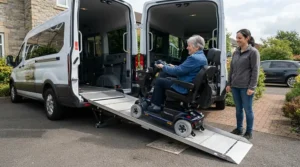
If your outdoor mobility needs revolve around errands, parks, and the occasional road trip rather than rugged land, the Golden Technologies Buzzaround EX earns its keep through portability math most scooters can’t match. Its heaviest piece weighs just 53 lb, making it practical for vehicles, garages, and tight indoor spaces, while still delivering 350 lb capacity, smooth suspension, and up to 18 miles of range.
What most buyers overlook about travel scooters is that manufacturers often sacrifice ground clearance for portability — the Buzzaround EX doesn’t, holding a real 4-inch ground clearance and large 9-inch tires with full front and rear suspension for a smoother ride over uneven surfaces. That combination means it can still handle a bumpy park path or a cracked sidewalk without rattling your fillings loose, which is more than can be said for the ultra-lightweight 3-wheel folders that prioritize airline compliance over comfort.
Aggregated seller and owner commentary frames the EX as the “fastest and farthest” in Golden’s Buzzaround lineup, a reputation that tracks with its top speed and extended U-1 battery setup — though as with any travel scooter, real-world range drops noticeably with rider weight and hills.
Pros:
- ✅ 53-lb heaviest piece — genuinely trunk-manageable
- ✅ 18-mile range, long for a portable scooter
- ✅ Front and rear suspension smooths outdoor bumps
Cons:
- ❌ 9-inch tires still lag true all-terrain tire sizes
- ❌ 350-lb cap is lower than full-size outdoor scooters
Price typically lands in the affordable-to-mid tier of travel scooters, often under $2,000 — always verify the current listing since travel scooters see frequent seasonal promotions. For apartment dwellers and frequent travelers, this is the practical middle ground between a bulky full-size scooter and a flimsy airline folder.
3. Pride Baja Wrangler 2 — built for gravel, grass, and hills
This is where the mobility scooter vs power wheelchair conversation tips hardest toward scooters: nothing on a standard power wheelchair base competes with a purpose-built all-terrain scooter for raw outdoor capability. The Pride Baja Wrangler 2 runs on dual 24-volt/120-amp motors and 14.5-inch tubeless pneumatic tires designed to crush root-strewn paths, gravel, and sandy surfaces, backed by a commanding 8.25-inch ground clearance at mid-frame and 5.5 inches at the motor for clearing rocks, roots, and ruts.
Here’s what the spec sheet won’t tell you outright: that ground clearance figure is roughly double what you’ll find on a typical sidewalk scooter, which is the actual reason this thing can handle a rutted farm lane instead of just posing for outdoor lifestyle photography. With a weight capacity up to 450 lbs and reported speeds up to 11 to 11.4 miles per hour with a single-charge range up to 26.2 miles, it’s engineered less like a mobility scooter and more like a small, street-legal-adjacent ATV for people who need real off-property access.
Owners quoted in retailer reviews describe it as stable on hills and confidence-inspiring for daily property navigation — a sentiment that lines up with the dual-motor, full-suspension architecture rather than sounding like generic marketing praise.
Pros:
- ✅ 8.25-inch ground clearance, rare in this category
- ✅ Up to 26.2-mile range for long outdoor days
- ✅ Dual motors and 450-lb capacity for real load handling
Cons:
- ❌ Bulkier frame makes indoor use impractical
- ❌ Premium pricing reflects its off-road engineering
Expect premium pricing in this category — commonly in the mid-$4,000s and up depending on battery and accessory configuration, so confirm the current price with your dealer. If your outdoor terrain includes anything rougher than a paved sidewalk, this is the scooter built specifically for that reality.
4. Shoprider 6Runner 10 — tightest turning radius indoors
Flip the comparison toward power wheelchairs, and the Shoprider 6Runner 10 shows exactly why some people choose a chair over a scooter even when they’re headed outdoors regularly. Its mid-wheel drive layout, where the primary drive wheels sit directly beneath the center of gravity, lets the chair rotate on its own axis for an incredibly tight turning radius — a real advantage in narrow hallways, cluttered stores, or crowded sidewalks where a scooter’s longer wheelbase becomes a liability.
Reviewers consistently note that its six-point-of-contact chassis, described as keeping all wheels in constant contact with the ground to prevent pitch and instability when climbing small thresholds or navigating uneven pavement, translates into a noticeably more composed ride over curb cuts than cheaper power chairs.
Based on the spec comparison, this is a chair for someone who splits their day between indoor spaces and light outdoor use — sidewalks, driveways, accessible parks — rather than gravel trails or rural property. The retailer itself is candid that it isn’t built for soft or uneven terrain, which is honest framing worth respecting rather than glossing over.
Pros:
- ✅ Exceptionally tight turning radius for indoor spaces
- ✅ Six-point suspension smooths thresholds and curb cuts
- ✅ Compact 23-inch width fits narrow doorways
Cons:
- ❌ Not rated for soft or uneven outdoor terrain
- ❌ 300-lb capacity is modest next to bariatric chairs
At the time of research, list pricing on this chair varies widely by retailer and configuration, so treat any single number skeptically and ask for a current quote. This is a strong pick if “outdoor” mostly means paved routes rather than backcountry ambition.
5. Pride Jazzy Air 2 — rises 12 inches for eye-level chats
Some accessibility problems aren’t about terrain at all — they’re about being looked down at, literally, in every conversation. The Pride Jazzy Air 2 solves that directly with a seat that elevates 12 inches of power adjustable seat height in just 11 seconds, and uniquely, can raise or lower while the unit is in motion.
What most buyers overlook about elevating power chairs is that many competitors lock the drive function during elevation for safety reasons — the Air 2 doesn’t, letting you drive safely at speeds up to 4 mph while elevated, which matters enormously for reaching countertops, greeting people at eye level, or navigating a kitchen without constant re-seating.
Underneath the showpiece feature sits solid engineering: Mid-Wheel 6 with Active-Trac Suspension for enhanced performance and maximum stability both indoors and out, plus a per-charge range up to roughly 15 to 16.6 miles depending on rider weight. One owner review on a retailer page described the chair as helping them feel like “part of their surroundings” rather than sidelined by it — a sentiment that captures the actual design intent better than any spec number could.
Pros:
- ✅ 12-inch power seat elevation, even while driving
- ✅ Active-Trac suspension for indoor-outdoor stability
- ✅ Reclining captain’s seat with adjustable armrests
Cons:
- ❌ Heaviest piece around 100+ lbs complicates transport
- ❌ Premium seat-lift tech raises the price meaningfully
Based on retailer pricing seen during research, this chair commonly lists between roughly $4,000 and $7,500 depending on promotions and seat configuration — always check current price before ordering. For anyone who values social independence as much as physical mobility, that elevation feature is worth the premium.

6. Merits Health P327 Vision Super — highest weight capacity here
Bariatric mobility needs get underserved by a lot of “one-size-fits-most” marketing, which is exactly the gap the Merits Health P327 Vision Super fills. It supports up to 450 lbs without a seat lift and 400 lbs with the optional 10-inch power seat lift, while maintaining a compact footprint and a tight 20-inch indoor turning radius — a rare combination of high capacity and genuine indoor maneuverability that heavier-duty chairs often lose.
Here’s what the spec sheet won’t tell you: dual in-line motors aren’t just a power upgrade, they’re a stability upgrade, because the dual in-line motor setup enhances efficiency, torque, range, and performance specifically under higher loads where single-motor chairs start to strain. Full front and rear suspension paired with 12-inch knobby tires provides superior traction, meaning it isn’t just rated for outdoor terrain on paper — it’s actually built with tire tread meant for it.
Reviewers on retailer platforms who identify as larger individuals specifically call out this chair as a rare fit that doesn’t feel like an afterthought accommodation, which tracks with its purpose-built bariatric engineering rather than a standard chair with a beefed-up frame bolted on.
Pros:
- ✅ 450-lb capacity with a still-tight 20-inch turning radius
- ✅ Dual in-line motors for torque under higher loads
- ✅ 12-inch knobby tires actually built for rough terrain
Cons:
- ❌ Adding the seat lift drops capacity to 400 lbs
- ❌ Heavier overall chair, harder to transport unassisted
Pricing for bariatric power chairs like this typically sits in the mid-$4,000s to $6,000s range depending on seat lift and battery choice — confirm current pricing with an authorized Merits dealer. If weight capacity has been the dealbreaker on every other chair you’ve considered, this is the one built to stop being the dealbreaker.
7. Permobil M3 Corpus — most customizable rehab-grade ride
At the premium end of this outdoor power wheelchair comparison sits the Permobil M3 Corpus, a mid-wheel drive chair engineered less like a mobility aid and more like a precision instrument. Its mid-wheel drive design is built for exceptional comfort, manoeuvrability, and stability, popular among people who need a versatile and dependable chair for both indoor and outdoor use.
What most buyers overlook here is the seating system itself: up to 45 degrees of forward tilt capability and up to 14 inches of seat elevation, empowering users to reach for more and go further with elevated drive speeds up to 3.2 mph while raised. That’s not a gimmick — for people managing pressure relief, transfers, or reach limitations, powered positioning at that range is clinically meaningful, not cosmetic.
On outdoor performance specifically, Flexlink suspension provides advanced vibration reduction and keeps all six wheels on the ground, improving handling and comfort over rougher ground outdoors. Independent reviewers who’ve compared it against similarly pitched rehab competitors like the Quickie Q500M note it holds its own on price-to-feature ratio despite Permobil’s premium reputation — an honest, sourced comparison rather than a “revolutionary” marketing claim.
Pros:
- ✅ Up to 14 inches of powered seat elevation
- ✅ Six-wheel Flexlink suspension for rough outdoor ground
- ✅ Deep seating customization for pressure and positioning needs
Cons:
- ❌ Rehab-tier pricing typically requires insurance/ATP process
- ❌ Complex customization means a longer order lead time
Permobil doesn’t publish consumer list pricing, and rehab chairs like this are generally quoted through a certified provider after an ATP evaluation — expect this to be a five-figure investment before any insurance offset, so treat any online “price” you see as unverified until you get a direct quote. For complex seating or pressure-management needs, though, this is the chair built to actually solve them rather than just accommodate them.
Top 7 Products Comparison
| Product | Top Speed | Range | Ground Clearance | Best For |
|---|---|---|---|---|
| Pride Victory 10.4-Wheel | ~5.3 mph | ~16 miles | Standard | Everyday value |
| Golden Technologies Buzzaround EX | 5 mph | 18 miles | 4 in | Travel & storage |
| Pride Baja Wrangler 2 | 11+ mph | Up to 26.2 mi | 8.25 in | Rural, gravel, hills |
| Shoprider 6Runner 10 | 5 mph | ~10 miles | 3 in | Tight indoor turns |
| Pride Jazzy Air 2 | 4 mph | Up to 16.6 mi | Standard | Elevated seating |
| Merits Health P327 Vision Super | 5 mph | ~20 miles | Elevated | Bariatric outdoor |
| Permobil M3 Corpus | ~6.2 mph | Up to 20 mi | 3 in | Rehab customization |
Looking at the table, ground clearance is really the tell for outdoor readiness — the Pride Baja Wrangler 2‘s 8.25 inches dwarfs everything else here, which is exactly why it’s the only entry rated for true off-road ambition. Meanwhile, the Permobil M3 Corpus and Pride Jazzy Air 2 trade top speed and clearance for seating sophistication, a fair trade if positioning and pressure care matter more to you than mileage. Budget-focused buyers should note that the Shoprider 6Runner 10 posts the shortest range and lowest clearance of the group, which is fine for sidewalk-and-store use but a real limitation the moment gravel or grass enters the picture.
Benefits vs Traditional Alternatives
| Factor | Powered Scooter/Chair | Manual Wheelchair | Cane/Walker |
|---|---|---|---|
| Outdoor range | 10–26+ miles | Arm-dependent, short | Very limited |
| Energy cost to user | Minimal | High (self-propelled) | High |
| Hill/incline handling | Motor-assisted | Difficult unaided | Difficult |
| Independence for errands | High | Moderate | Low-moderate |
| Upfront cost | Higher | Lower | Lowest |
Compared with manual alternatives, powered devices clearly win on preserved energy and outdoor range, which matters enormously for anyone managing a chronic condition where fatigue itself is a limiting factor, not just muscle strength. The trade-off is upfront cost and, for scooters especially, storage footprint — a manual wheelchair folds into a car trunk in seconds, while several models here require partial disassembly. Still, for anyone whose mobility-related activities of daily living are genuinely limited even with a cane or walker — the exact threshold Medicare uses for coverage eligibility — a powered option isn’t a luxury upgrade, it’s the difference between staying home and staying independent.
Practical Usage Guide: Your First 30 Days Outdoors
Getting a new scooter or power chair is a little like getting a new car with an unfamiliar dashboard — the first month is where habits get set, good or bad. Start by charging fully before first use and sticking to a daily charging routine for the first two weeks; most manufacturers, including Golden Technologies, specifically note that batteries need a break-in period to reach their advertised range. Practice your turning radius in an empty parking lot before you take it into a crowded store, since misjudging a scooter’s wheelbase near shopping carts is the single most common early frustration. Check tire pressure weekly if you have pneumatic tires, since underinflation is the quiet killer of both range and ride comfort on models like the Pride Baja Wrangler 2. Learn your device’s actual climbing angle rating rather than assuming — a driveway that looks gentle can exceed a scooter’s rated incline, especially loaded with cargo. Finally, register your model’s warranty immediately; frame warranties on scooters like the Victory 10 often run for the life of the product, but only if you’re on file as the registered owner.
Real-World Scenario: Matching the Device to the Life
Consider three different outdoor realities. First, a retired teacher living in a suburban townhome who wants to walk her dog around the block and make weekly grocery runs — she needs range and stability more than raw power, making the Pride Victory 10.4-Wheel or Shoprider 6Runner 10 the sensible picks depending on whether her routes are mostly paved (scooter) or include tight store aisles (chair). Second, a veteran managing ten acres of rural property who needs to check on livestock and navigate unpaved lanes daily — here, nothing but the Pride Baja Wrangler 2‘s ground clearance and torque genuinely solves the problem; anything less will bottom out on the first serious rut. Third, someone managing a progressive condition who spends long days at a desk and needs pressure relief, reach assistance, and outdoor capability in one chair — that’s precisely the use case the Permobil M3 Corpus or Pride Jazzy Air 2 were engineered around, where positioning technology isn’t optional comfort, it’s medical necessity.
How to Choose Between a Mobility Scooter and Power Wheelchair
- Assess your terrain honestly. Sidewalks and stores favor a power wheelchair’s turning radius; grass, gravel, and hills favor a scooter’s tire size and clearance.
- Weigh your upper-body function. Scooters require gripping a tiller and steady seated balance; power wheelchairs’ joystick control suits limited hand strength or trunk stability.
- Calculate your real daily range. Add 30–40% buffer to any advertised range figure to account for hills, cold weather, and rider weight.
- Check your storage and transport reality. A car trunk favors lighter, disassembling scooters like the Buzzaround EX; a van lift accommodates heavier chairs.
- Factor in seating and positioning needs. Pressure relief, tilt, or elevation needs point firmly toward a rehab-grade power wheelchair, not a scooter.
- Confirm Medicare or insurance criteria early, since documentation requirements differ meaningfully by device category.
- Test-drive before you commit — turning radius and comfort simply can’t be judged from a spec sheet alone.
Common Mistakes When Buying a Mobility Device for Outdoor Terrain
The most frequent and costly mistake is buying based on top speed instead of ground clearance and tire width, which are the actual predictors of outdoor competence — a fast scooter with 3-inch clearance will still get stuck on the same curb a slower, taller model clears easily. A close second is underestimating weight capacity margins; buying a scooter rated exactly at your body weight leaves no room for groceries, a jacket, or a passenger dog, and manufacturers’ rated capacities assume ideal conditions, not a loaded basket on a hill. Buyers also frequently skip the disassembly test, assuming they’ll manage a “53-lb heaviest piece” solo, only to discover that lifting even that weight repeatedly is unsustainable — always test the actual lift before buying, not just read the spec. Finally, people often overlook indoor turning radius entirely when buying “for outdoor use,” forgetting that every outdoor trip starts and ends inside a home, car, or building.
Long-Term Cost & Maintenance
Total cost of ownership extends well past the sticker price. Batteries on both scooters and power wheelchairs typically need replacement every 12–18 months of regular use, and that’s a recurring cost worth budgeting for rather than treating as a surprise. Tires, especially pneumatic ones on all-terrain models like the Baja Wrangler 2, will need periodic replacement if you’re regularly on gravel or rough ground, while solid tires on models like the Victory 10 trade a slightly harsher ride for near-zero tire maintenance. Suspension components and motor brushes on higher-mileage users may need service checks annually. Rehab-grade chairs like the Permobil M3 Corpus typically come with more robust manufacturer service networks given their insurance-billed nature, which can offset some of that premium price over a multi-year ownership period. When you run the numbers, a $2,500 scooter with a $150 annual battery replacement often costs less over five years than a cheaper $1,200 scooter that needs a full battery and tire refresh every year due to lower-quality components.
Safety, Regulations, and Outdoor Accessibility
Outdoor accessibility for powered mobility devices isn’t just a courtesy — it’s federal law in most public spaces. Under the ADA, people with disabilities have the right to choose whatever mobility device best suits their needs, and public and private facilities generally must accommodate wheelchairs and scooters unless a specific safety concern applies. For public trails and outdoor recreational areas, other power-driven devices are generally permitted in any areas open to pedestrian use, with land managers required to make reasonable modifications to permit their use unless safety requirements dictate otherwise. If you’re pursuing Medicare coverage, know that Part B covers power wheelchairs and scooters only when they’re medically necessary, and requires a face-to-face examination and written prescription before coverage kicks in. Falls remain a real concern for anyone transitioning to a new mobility device, and the CDC’s broader STEADI framework for older-adult fall prevention is a useful resource to review alongside your device choice, even though it’s aimed primarily at walking-related falls rather than device operation specifically.
For more detail on federal accessibility protections for outdoor mobility devices, the Department of Justice’s ADA mobility devices guidance is worth reading directly. If you’re navigating coverage, Medicare’s official wheelchairs and scooters page lays out eligibility requirements in plain language. And for general fall-risk awareness while adjusting to a new device, the CDC’s STEADI initiative offers free, evidence-based resources for older adults and caregivers.
Mobility Scooter Pros and Cons vs Power Wheelchair Pros and Cons
Scooters generally win on range, top speed, and outdoor tire capability, plus they tend to feel less “medical” to people newer to mobility devices — an underrated psychological factor. Their downside is turning radius and the requirement for decent trunk and hand strength to grip and steer a tiller reliably over a full day. Power wheelchairs generally win on maneuverability, seating customization, and accessibility for people with limited grip or trunk stability, since a joystick requires far less physical input than steering a tiller. Their downside is typically shorter range and, on rehab-grade models, a steeper price and longer procurement process through insurance. Neither is objectively “better” — the mobility scooter vs power wheelchair decision really comes down to matching the device’s actual engineering trade-offs to your specific terrain, body, and daily routine, which is exactly why we broke down seven real, different models instead of crowning one universal winner.

FAQ
❓ What is the difference between a mobility scooter and a power wheelchair?
❓ Can you use a mobility scooter on grass or gravel?
❓ Does Medicare cover a power wheelchair for outdoor use?
❓ How much weight capacity do I actually need?
❓ Are power wheelchairs faster than mobility scooters?
Conclusion
If this comparison proves anything, it’s that “mobility scooter vs power wheelchair” was never really a fair fight to begin with — they’re built to solve different problems. Need raw outdoor range and the ability to tackle a gravel driveway? A scooter like the Pride Baja Wrangler 2 or Golden Technologies Buzzaround EX does that job well. Need tight indoor maneuverability, seat elevation, or serious postural support alongside light outdoor use? A power wheelchair like the Permobil M3 Corpus or Pride Jazzy Air 2 earns its higher price tag through engineering you’d genuinely miss without it. And if weight capacity has been your dealbreaker on every prior option, the Merits Health P327 Vision Super exists specifically to stop being the exception you have to work around. Whichever direction you lean, test-drive before you buy, confirm real-world range with your own body weight and terrain in mind, and don’t let a flashy top-speed number distract you from the ground clearance and turning radius that actually determine whether a device fits your life.
Recommended for You
- All-Terrain 4-Wheel Mobility Scooter: 7 Best Picks For 2026
- Portable Mobility Scooter: 7 Best Affordable Picks For 2026
- Mobility Scooter For Car Trunk Storage: 7 Top Picks (2026)
Disclaimer: This article contains affiliate links. As an Amazon Associate, I earn from qualifying purchases. If you purchase products through these links, we may earn a small commission at no additional cost to you.
✨ Found this helpful? Share it with your friends! 💬🤗
