
In This Article
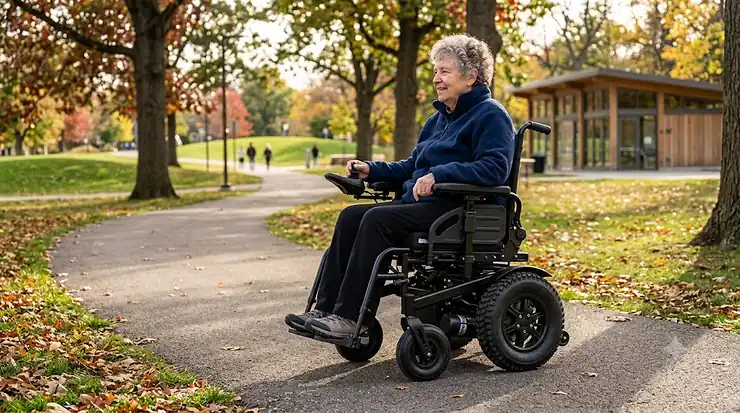
If you’ve spent any time shopping for a power wheelchair, you already know the frustrating part: most “heavy duty” listings bury the one spec that actually matters for outdoor stability — drive wheel position. A rear wheel drive (RWD) power wheelchair puts the motorized wheels at the back, the same layout that’s kept cars predictable on the road for a century. For bigger-bodied users or anyone who spends real time outside the house, that layout translates into a smoother ride, better tracking at speed, and less of that “fishtail” wobble you get from some front-wheel setups on grass or gravel.

This isn’t a niche need, either. According to the CDC’s adult obesity data, more than 2 in 5 U.S. adults have obesity, and over 100 million American adults fall into that category — which is exactly why manufacturers keep expanding their bariatric and heavy-duty power chair lineups. A heavy duty rear wheel drive wheelchair, in plain terms, is a powered mobility chair with reinforced frames, larger rear-mounted drive wheels, and weight capacities typically ranging from 300 to over 500 lbs, designed to give larger or heavier users dependable indoor-outdoor mobility without sacrificing speed or stability.
Below, I’ve pulled together seven real, currently-listed rear-wheel-drive power wheelchairs from Amazon — from budget folding models under $2,000 to premium all-terrain chairs built for daily outdoor use. I dug into actual specs, drive-wheel configuration (a lot of “heavy duty” listings are secretly mid-wheel or front-wheel drive, so I filtered those out), and what real owners tend to say after months of use. Let’s get into it.
Quick Comparison Table
| Wheelchair | Weight Capacity | Top Speed | Range | Best For | Price Range |
|---|---|---|---|---|---|
| Merits Health Gemini P301 | 450 lbs | 5 mph | 20 mi | All-around daily use | $2,000–$3,000 |
| Porto Mobility Ranger Quattro “The Beast” | 500–550 lbs | 6–7 mph | ~15–20 mi | Outdoor/off-road, larger users | $2,800–$3,800 |
| EWheels EW-M51 | 400 lbs | 5 mph | 15 mi | Mid-size users wanting a captain’s seat | $1,700–$2,300 |
| EWheels EW-M47 | 350 lbs | 5 mph | 12 mi | Folding portability + extra width | $1,600–$2,200 |
| EWheels EW-M45 | 350 lbs | 3.7 mph | up to 24 mi | Long battery range, lightest folder | $1,300–$1,800 |
| Shoprider Streamer Sport | 300 lbs | 5 mph | 8–10 mi | First-time buyers on a budget | $1,100–$1,600 |
| Drive Medical Cirrus Plus EC | 300 lbs | 5 mph | 15 mi | Trusted brand, easy folding frame | $1,200–$1,700 |
A few things jump out here. The two heaviest-capacity chairs — the Merits Gemini and the Porto Mobility Beast — both run dual motors and noticeably larger drive wheels, which is exactly what you’d expect from anything rated above 400 lbs. Meanwhile, the three EWheels models show how much variation exists within one brand’s own RWD lineup: the M45 trades top speed for almost double the range, while the M47 trades range for a wider, sturdier seat. If your main concern is simply “can it handle real outdoor distance,” the EW-M45’s 24-mile range is hard to beat at its price point; if it’s raw capacity and ride comfort, the Gemini and the Beast are where the money goes.
💬 Just one click — help others make better buying decisions too!😊
✨ Don’t Miss These Exclusive Deals!
🔍 Take your mobility upgrade to the next level with these carefully selected rear-wheel-drive power wheelchairs. Click on any highlighted product to check current pricing and availability — these picks are built to handle real life, indoors and out.
Top 7 Heavy Duty Rear Wheel Drive Wheelchairs: Expert Analysis
1. Merits Health Gemini P301 (P3017-ARMU)
The Merits Health Gemini is one of the only heavy-duty RWD chairs on the market that still offers an optional power-elevating seat — most manufacturers won’t pair seat elevation with a true rear-drive base because of stability concerns. The 450 lb capacity comes from a reinforced frame and 14″ aluminum cast drive wheels, and what that actually means day-to-day is a chair that won’t feel “tippy” on driveway transitions or slightly sloped sidewalks the way some lighter mid-wheel chairs do. The 22″ captain’s seat reclines and swivels, and the high-density foam seat noticeably softens impact on cracked pavement compared to thinner foam in cheaper models.
Owners in the bariatric power chair space consistently flag two things about the Gemini: the smoothness of the suspension over uneven ground, and the convenience of the joystick-mounted charging port, which means no bending down to plug in. The trade-off is that opting for the power seat elevator drops the weight capacity to 350 lbs, so heavier users should skip that upgrade.
Best for: Users near the upper end of the weight range who want daily indoor-outdoor versatility without stepping up to a bulkier bariatric-specific base.
✅ Pros: 450 lb capacity with true RWD stability · 20-mile range is excellent for the segment · Reclining, swiveling captain’s seat
❌ Cons: Power seat elevator reduces capacity to 350 lbs · Heavier base weight makes it less ideal for frequent disassembly
Price tends to land in the $2,000–$3,000 range depending on configuration — given the elevating-seat option and frame quality, that’s a fair value verdict for anyone who needs the higher capacity.
2. Porto Mobility Ranger Quattro “The Beast”
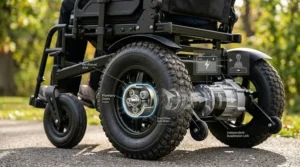
If outdoor terrain is your priority, the Beast is the chair built for it. Dual brushless motors (rated up to 500W each in the upgraded trims) paired with 14″ rear drive wheels and 9″ front casters give it noticeably more torque off pavement than anything else on this list — grass, gravel, and dirt paths that would slow a typical folding power chair barely register. What most buyers overlook about this category of chair is that “foldable” and “heavy duty” usually don’t coexist; the Beast manages both by using a frame design that collapses for transport while still supporting 500–550 lbs.
Real-world feedback on this chair tends to cluster around two themes: people who use it specifically because previous, lighter folding chairs wore out under their weight, and frequent travelers who appreciate that it breaks down small enough for a car trunk despite its capacity. The flip side is that all that motor power and reinforcement adds weight to the base, so while it folds, it’s not a one-handed lift.
Best for: Heavier users who spend significant time outdoors and need a chair that folds for travel without giving up capacity.
✅ Pros: Highest weight capacity on this list (500–550 lbs) · Strong outdoor/off-road performance · Still foldable for transport
❌ Cons: Heavier to lift even when folded · Premium price point relative to the rest of the field
At roughly $2,800–$3,800, it’s the priciest entry here, but for the capacity and outdoor capability, that’s in line with comparable bariatric outdoor chairs that often cost more.
3. EWheels EW-M51
The EW-M51 is the largest model in EWheels’ rear-wheel-drive medical chair family, and the “largest” label isn’t just marketing — the 22″ reclining captain’s seat and 400 lb capacity put it a tier above the brand’s smaller M-series chairs. In my experience comparing folding RWD chairs, what separates a good one from a forgettable one is the suspension setup, and the M51’s stability suspension system is doing real work here, smoothing out the kind of seams and minor curb cuts that would otherwise jolt a stiffer frame.
The 9″ front and 14″ rear tire combination is a textbook RWD layout, and it shows in the handling — predictable tracking at the chair’s 5 mph top speed, which matters more than people expect once you’re navigating a parking lot with traffic. Reviewers tend to mention the swing-away joystick as a practical touch for transfers, since it gets the controller out of the way without removing it entirely.
Best for: Mid-size to larger users who want captain’s-seat comfort without paying premium-tier prices.
✅ Pros: 400 lb capacity at a mid-range price · Reclining captain’s seat is genuinely comfortable · Swing-away joystick eases transfers
❌ Cons: 15-mile range is average, not exceptional · Turning radius is wider than mid-wheel alternatives
Typically priced around $1,700–$2,300, the M51 sits in a sweet spot for buyers who’ve outgrown a 300 lb-capacity chair but don’t need the Gemini’s elevating seat or the Beast’s off-road power.
4. EWheels EW-M47
The EW-M47 is essentially the heavy-duty answer to EWheels’ lighter folding chairs — same folding mechanism, but with a beefier 420W motor and reinforced aluminum frame to push the capacity to 350 lbs. The 21″ seat width is wider than most folding chairs in this price bracket, which matters more than it sounds: an extra inch or two of usable seat width is often the deciding factor between “comfortable for a full day” and “tolerable for an errand.”
What stands out in the folding process is how few steps it actually takes — unplug the batteries, fold the footplates in, lift the cushion, then collapse the backrest. That’s a meaningfully simpler routine than chairs that require removing armrests or disconnecting wiring harnesses first. Owners who travel frequently tend to highlight this as the reason they picked the M47 over a non-folding alternative with a similar capacity.
Best for: Buyers who need both a wider seat and genuine fold-for-transport convenience in one package.
✅ Pros: 350 lb capacity with a wider-than-average 21″ seat · Fast, simple folding sequence · Three-year frame warranty
❌ Cons: 12-mile range is on the shorter side for outdoor use · Top speed caps at 5 mph, same as cheaper models
Generally found in the $1,600–$2,200 range, it’s a strong value pick if folding convenience matters as much as capacity.
5. EWheels EW-M45
The EW-M45 is the lightest folder in this lineup at around 59 lbs, but the number that really matters here is the range: up to 24 miles per charge, which is double what most folding RWD chairs in this price tier deliver. The 12″ rear tires keep the base simple and reliable rather than flashy, and that simplicity is exactly why it tends to be the pick for people who care more about going the distance than going fast — its 3.7 mph top speed is noticeably slower than the rest of this list.
In practice, that range-over-speed trade-off makes the most sense for retirees and frequent travelers who use the chair for entire days out — a full day at a theme park, an airport layover, or a multi-stop errand run — where stopping to recharge isn’t an option. The 19″ seat is on the narrower side, so larger users should size up to the M47 or M51 instead.
Best for: Users who prioritize all-day range and minimal folded weight over top speed or extra seat width.
✅ Pros: Exceptional 24-mile range · Lightest folding frame on this list · 350 lb capacity despite the compact size
❌ Cons: Slower 3.7 mph top speed · 19″ seat width is narrower than the M47/M51
At around $1,300–$1,800, it’s one of the better value plays here if range is your top priority.
6. Shoprider Streamer Sport
The Streamer Sport is the most budget-accessible chair on this list, and Shoprider doesn’t try to disguise that — it’s a straightforward mid-size RWD chair with a 300 lb capacity, 10″ rear tires, and a no-frills 19″ captain’s seat. What it lacks in range (8–10 miles) it makes up for in simplicity: fewer electronics to troubleshoot, a tight turning radius for a rear-drive chair, and a price point that makes sense for someone testing whether a power chair fits their lifestyle before committing to a pricier model.
This is the chair I’d point a first-time buyer toward if their daily use is mostly short trips — around the block, to the mailbox, through a single-story home — rather than long outdoor outings. The shorter range isn’t a flaw so much as a reflection of what the chair is built for.
Best for: First-time power chair buyers with primarily short-distance, indoor/near-home use.
✅ Pros: Lowest price point on this list · Tight turning radius despite RWD layout · Simple, low-maintenance design
❌ Cons: Shortest range here at 8–10 miles · 300 lb capacity is the lowest of the seven
Pricing generally lands around $1,100–$1,600, making it the easiest entry point if budget is the deciding factor.
7. Drive Medical Cirrus Plus EC
The Drive Medical Cirrus Plus EC earns its spot here on brand reputation as much as specs — Drive Medical is one of the more established names in durable medical equipment, and the Cirrus Plus EC has been a go-to folding RWD chair for years. Its double cross-brace frame supports the 300 lb capacity, and the fold-down design (remove the batteries, then collapse the frame) is genuinely simple compared to multi-step folders.
What buyers seem to appreciate most is the adjustable-tension back upholstery — a small detail, but one that lets users dial in firmness rather than being stuck with one fixed seat feel. The programmable PG joystick controller is also a step up from the basic single-speed controllers found on some budget chairs at this price.
Best for: Buyers who want a well-known, widely-supported brand with easy parts and service availability.
✅ Pros: Trusted brand with broad parts/service network · Adjustable-tension seat back · Passed ANSI/RESNA testing standards
❌ Cons: 300 lb capacity ties it for lowest on this list · 4″ ground clearance limits rougher terrain use
Typically priced $1,200–$1,700, it’s a safe, well-supported choice for buyers who value brand longevity over raw capacity numbers.
Real-World Scenarios: Which Chair Fits Which User?
The daily outdoor commuter (250–400 lbs, active lifestyle): Someone who’s out of the house most days — errands, neighborhood walks, visiting family — needs range and stability more than folding convenience. The EWheels EW-M51 or Merits Gemini both handle this well; the Gemini edges ahead if you’re closer to its 450 lb capacity ceiling.
The frequent traveler who needs to fit a trunk or a plane (300–350 lbs): Folding speed and base weight matter most here. The EWheels EW-M45 is the lightest option, while the EW-M47 trades a bit of weight for a wider seat — worth the trade if comfort during long outings matters more than the lightest possible lift. If flying is part of the plan, check the TSA’s official rules on battery-powered wheelchairs before booking, since battery type and removability affect what’s allowed in the cabin versus checked baggage.
The budget-conscious first-time buyer (under 300 lbs, mostly indoor/short-trip use): There’s no reason to overspend on range or capacity you won’t use. The Shoprider Streamer Sport or Drive Medical Cirrus Plus EC both deliver reliable RWD handling at the lowest price points on this list.
Practical Usage Guide: Setup, Charging & First 30 Days
Getting a new power wheelchair set up correctly in the first month prevents most of the early complaints I’ve seen repeated across owner forums and reviews.
✅ Charge fully before first use. Most RWD chairs ship with batteries partially charged; a full 8–12 hour initial charge helps the battery management system calibrate properly.
✅ Avoid letting batteries sit below 50% for extended periods — lead-acid batteries (still standard in most chairs on this list) degrade faster from deep discharges than from frequent partial charges.
✅ Check tire pressure or tread monthly on any model with pneumatic tires, like the Porto Mobility Beast — underinflated drive tires reduce both range and traction noticeably.
✅ Test the joystick sensitivity settings in a wide, open space before using the chair in tight hallways; nearly every model on this list has adjustable speed/sensitivity that’s worth tuning to your comfort level early on.
❌ Common first-30-days mistake: skipping the swing-away joystick adjustment, then struggling with armrest clearance during transfers — five minutes of setup avoids weeks of frustration.
❌ Common first-30-days mistake: folding chairs (EW-M45, EW-M47, Cirrus Plus EC) stored fully collapsed for long periods without occasionally extending the suspension — this can cause it to stiffen.
How to Choose a Heavy Duty Rear Wheel Drive Wheelchair
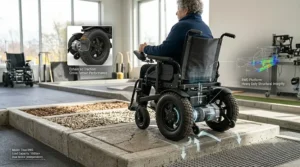
- Confirm true rear-wheel drive, not mid-wheel or front-wheel. Many listings labeled “heavy duty” are actually mid-wheel drive (better for tight indoor turns, worse for outdoor speed and tracking) — check the drive-wheel position explicitly in the spec sheet.
- Match weight capacity with a margin, not exactly. If you’re at 280 lbs, a 300 lb-rated chair leaves almost no buffer for clothing, bags, or weight fluctuation; sizing up a tier is usually the safer call.
- Decide if folding portability outweighs range. Folding chairs (EW-M45, EW-M47, Cirrus Plus EC) trade some range and ground clearance for transport convenience — know which one you actually need before comparing specs side by side.
- Check the turning radius against your home’s layout. Rear-wheel drive chairs generally need more space to turn than mid-wheel models, so measure your tightest hallway or doorway before buying.
- Look at seat width relative to your actual measurements, not just the marketing category — a 19″ seat (EW-M45) and a 22″ seat (Gemini, EW-M51) are meaningfully different experiences for a larger frame.
- Verify the battery type and expected replacement cost up front; most chairs here use sealed lead-acid batteries that typically need replacement every 1–2 years of regular use.
- Read the warranty terms on frame vs. electronics separately — frame warranties often run 3+ years, while electronics/motor coverage is frequently limited to 12–24 months.
Rear-Wheel Drive vs. Front-Wheel & Mid-Wheel Drive
This is the comparison most buyers skip, and it’s the one that actually determines day-to-day satisfaction. According to a clinical resource from mobility equipment provider Numotion, mid-wheel drive chairs require the smallest turn-in-place radius, making front- and mid-wheel configurations generally better for maneuvering in confined indoor spaces. That tracks with what shows up across the seven chairs above — every one of them has a wider turning radius than a comparable mid-wheel chair would.
What that clinical framing leaves out, though, is outdoor performance. A separate clinical breakdown from Permobil’s education team notes that drive-wheel placement is typically the first consideration when prescribing a power chair, precisely because it changes how the chair handles obstacles and turns in different environments. In practice: rear-wheel drive chairs track straighter at higher speeds, absorb bumps more predictably on uneven outdoor surfaces, and tend to feel more “car-like” to new users — which is exactly why every chair reviewed above uses this layout. The trade-off is a wider turning radius indoors, so if your home has narrow hallways or tight bathroom doorways, weigh that against the outdoor benefits before buying.
Common Mistakes When Buying a Heavy Duty Power Wheelchair
Buying based on weight capacity alone is the single biggest mistake — a 450 lb-rated chair with a narrow 18″ seat can still be physically uncomfortable for a wider-framed user well under that weight limit. Seat width and capacity need to be evaluated together, not separately.
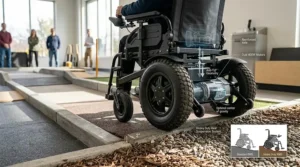
Another frequent misstep is ignoring ground clearance when outdoor use is the goal. The Drive Medical Cirrus Plus EC’s 4″ clearance is fine for sidewalks and smooth driveways but will struggle on gravel or uneven lawns compared to the Porto Mobility Beast’s more rugged tire setup.
Buyers also tend to underestimate battery replacement costs when comparing sticker prices — a cheaper chair with frequent lead-acid battery swaps can cost more over three years than a pricier chair with a longer-lasting battery system. Finally, skipping a turning-radius check against your actual home layout is a near-universal regret reported by people who later need to special-order a different model.
Long-Term Cost & Maintenance
The sticker price is only part of the real cost of ownership. Sealed lead-acid batteries — standard across nearly every chair on this list — typically need replacement every 1 to 2 years with regular use, and that’s a recurring cost worth budgeting for separately from the initial purchase. Tires on folding models tend to need less attention than the pneumatic setup on something like the Porto Mobility Beast, which benefits from occasional pressure checks to maintain both range and ride quality.
Frame warranties (often 3–5 years across these brands) generally outlast electronics warranties (commonly 12–24 months), so it’s worth asking a dealer directly what a motor or controller replacement costs out of warranty before you’re three years in and facing that bill. Chairs with simpler folding mechanisms and fewer moving parts — like the Shoprider Streamer Sport — tend to have lower long-term service costs than premium dual-motor models, simply because there’s less that can go wrong.
Safety, Insurance & Regulations Guide
All seven chairs reviewed here fall under the FDA’s powered wheelchair product classification as Class II medical devices, the same classification used across the power wheelchair industry, which means they’re subject to specific safety and performance standards before they reach the market. Under federal accessibility law, power wheelchairs also qualify as protected mobility devices in public spaces — the ADA.gov guidance on mobility devices defines wheelchairs as manually operated or power-driven devices designed primarily for people with disabilities to get around, and businesses and government facilities are required to accommodate them.
On the insurance side, Medicare’s official coverage page for wheelchairs and scooters confirms that Part B only covers power wheelchairs when they’re deemed medically necessary, following a face-to-face exam and a written prescription from a treating provider — coverage specifics vary by plan and individual case, so confirming directly with Medicare, your insurer, or a durable medical equipment provider before purchase is the safer path.

❓ Frequently Asked Questions
❓ What is a heavy duty rear wheel drive wheelchair?
❓ How much weight can a rear wheel drive power wheelchair hold?
❓ Is rear wheel drive better than front wheel drive for outdoor use?
❓ How much does a heavy duty power wheelchair cost?
❓ Does Medicare cover a heavy duty rear wheel drive power wheelchair?
Conclusion
Rear-wheel drive remains the configuration to beat for anyone who needs a heavy duty power wheelchair that performs as well outdoors as it does in the living room. Across the seven models reviewed here, the right pick really comes down to three honest questions: how close are you to the chair’s weight ceiling, how much do you need it to fold or travel, and how much outdoor distance do you actually cover in a normal week? Answer those first, and the rest of the spec sheet — seat width, range, price — falls into place fast.
✨ Don’t Miss These Exclusive Deals!
🔍 Take your mobility upgrade to the next level with these carefully selected rear-wheel-drive power wheelchairs. Click on any highlighted item above to check current pricing and availability — these picks are built to support real independence, indoors and out.
Recommended for You
- 7 Best Rear Wheel Drive Wheelchairs for Hills That Actually Climb (2026)
- 7 Best Rear Wheel Drive Power Wheelchairs in 2026
- Best Standard Mid Wheel Drive Wheelchair: 7 Top Picks for 2026
Disclaimer: This article contains affiliate links. As an Amazon Associate, I earn from qualifying purchases. If you purchase products through these links, we may earn a small commission at no additional cost to you.
✨ Found this helpful? Share it with your friends! 💬🤗
